The cough and fever eased after several days. Taking each tablet with breakfast and dinner was easier on my stomach than taking it between meals.
Rotorua 7 days 2 Nov 2026Augmentin
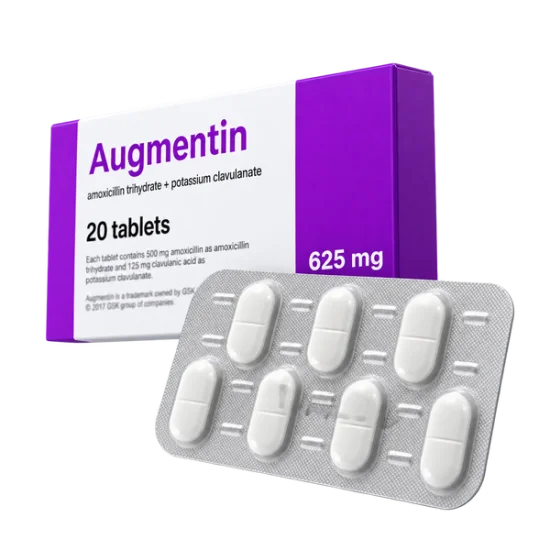
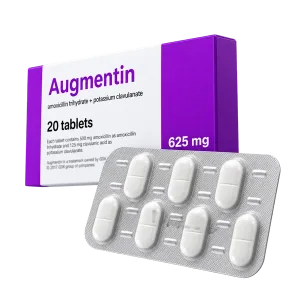
Augmentin is an oral tablet containing amoxicillin trihydrate and potassium clavulanate for selected susceptible bacterial infections. Its combination mechanism helps amoxicillin remain active…
Augmentin is an oral tablet containing amoxicillin trihydrate and potassium clavulanate for selected susceptible bacterial infections. Its combination mechanism helps amoxicillin remain active against some bacteria that produce beta-lactamase enzymes.
Product information
Augmentin contains amoxicillin trihydrate and potassium clavulanate. Amoxicillin is a penicillin derivative, while clavulanic acid is provided as clavulanate potassium. Together, they form the amoxicillin/clavulanate potassium combination also described as Amoxicillin/Clavulanic Acid.
The dose is decided individually, taking age, other medicines, and health conditions into account.
Amoxicillin interferes with bacterial cell-wall construction. Susceptible bacteria cannot maintain their protective outer structure, so the organisms are damaged and destroyed. Clavulanic acid has little antibacterial activity by itself. Its role is to inhibit some beta-lactamase enzymes, which certain bacteria produce to break down penicillin antibiotics.
Directions for use
The product described here is Augmentin in tablet form. Tablets are intended for oral administration and are prescribed using an individually selected regimen. The dose is decided individually, taking age, other medicines, and health conditions into account.
The FDA has approved amoxicillin/clavulanate products for several susceptible bacterial infections, while Medsafe provides New Zealand medicine safety information relevant to prescribing and monitoring. Formulations differ in amoxicillin-to-clavulanate ratio, age suitability, and dosing frequency, so the strength alone does not identify an interchangeable product.
Administration principles
- Take Augmentin by mouth at the beginning of a meal.
- Use the prescribed dose and interval.
- Space doses as evenly as practical across the day.
- Complete the prescribed course unless a serious reaction requires urgent medical attention.
- If a dose is missed, take it when remembered unless the next dose is due soon; do not double the amount.
- Do not use leftover tablets for a later illness.
The tablet should be swallowed with water. Crushing or chewing can make administration unpleasant and may interfere with accurate dosing if the tablet is not designed for that method. A person who cannot swallow tablets needs an appropriate liquid formulation rather than an improvised preparation.
Ingredients
Augmentin contains amoxicillin trihydrate and potassium clavulanate. Amoxicillin is a penicillin derivative, while clavulanic acid is provided as clavulanate potassium. Together, they form the amoxicillin/clavulanate potassium combination also described as Amoxicillin/Clavulanic Acid.
The dose is decided individually, taking age, other medicines, and health conditions into account.
Role of amoxicillin in bacterial eradication
Amoxicillin binds to bacterial proteins involved in peptidoglycan formation. Peptidoglycan provides strength to the bacterial cell wall. When this process is disrupted, actively multiplying bacteria become vulnerable to cell rupture.
Amoxicillin belongs to the beta-lactam group and is related pharmacologically to penicillin. It is bactericidal against susceptible bacteria, meaning it acts directly against the organisms rather than only slowing their growth.
Protection by clavulanic acid
Some bacteria release beta-lactamase enzymes that can deactivate amoxicillin before it reaches its target. Clavulanic acid binds to and inhibits certain beta-lactamases, allowing more amoxicillin to remain active.
This protection has limits. Augmentin is not automatically suitable for every resistant infection, and a resistant organism may require a different antibiotic or microbiological testing.
How it affects the body
Amoxicillin interferes with bacterial cell-wall construction. Susceptible bacteria cannot maintain their protective outer structure, so the organisms are damaged and destroyed. Clavulanic acid has little antibacterial activity by itself. Its role is to inhibit some beta-lactamase enzymes, which certain bacteria produce to break down penicillin antibiotics.
This dual action gives Augmentin broader coverage than amoxicillin alone for infections caused by beta-lactamase-producing bacteria. The combination does not overcome every resistance mechanism, and antibiotic selection still depends on the suspected organism, infection site, local resistance patterns, kidney function, and previous treatment history. Laboratory susceptibility results can help determine whether the combination is appropriate. Clinical assessment remains necessary because coverage varies among bacterial species and infection sites. The FDA prescribing information describes amoxicillin/clavulanate as a combination of a penicillin-class antibacterial and a beta-lactamase inhibitor [1].
Therapeutic indications
Augmentin is prescribed for bacterial infections when the causative organisms are expected to be susceptible to amoxicillin/clavulanate. The 625 mg tablets may be used in adults and selected older adolescents when a clinician has chosen this formulation and dose.
Common clinical uses include:
| Infection area | Examples of prescribed uses | Important limitation |
|---|---|---|
| Respiratory tract | Bacterial sinusitis, selected pneumonia, and lower respiratory infections | Viral coughs, colds, and influenza do not respond |
| Ear, skin, and urinary tract | Middle-ear infection, skin or soft-tissue infection, and urinary tract infection | Diagnosis and kidney function affect antibiotic selection |
| Dental and other tissues | Acute apical abscess and infections involving susceptible bacteria | Dental drainage or other source control may still be required |
Augmentin may be selected for bacterial sinus infections when symptoms, examination findings, or clinical course support a bacterial cause. It can also be used for some bacterial ear infections, skin infections, urinary tract infections, and bacterial pneumonia. Amoxicillin/Clavulanic Acid is listed in clinical references for selected acute apical abscesses, where dental treatment may be needed alongside antibiotic therapy.
A cold, influenza, most uncomplicated sore throats, and many short-lived coughs are viral. Antibiotics do not remove viruses, shorten every viral illness, or prevent all later complications. Unnecessary exposure can cause diarrhoea, allergic reactions, and antibiotic resistance.
Common mistakes
Several practical errors can reduce treatment success or increase adverse effects:
- Taking the tablet without food despite repeated nausea.
- Taking doses only when symptoms feel severe.
- Stopping after the first improvement without completing the prescribed course.
- Doubling the next dose after a missed tablet.
- Using the same tablets for a new cough, dental pain, or urinary symptoms months later.
- Forgetting to mention warfarin, methotrexate, allopurinol, or probenecid.
- Assuming every rash is harmless or every rash proves a permanent penicillin allergy.
- Treating antibiotic-related watery diarrhoea with self-selected anti-diarrhoeal medicine.
- Giving an adult tablet to a child without weight-based prescribing.
- Crushing tablets into food when the full dose may not be consumed.
A common hidden problem is underestimating vomiting. If vomiting occurs soon after a dose, absorption may be incomplete, but repeating the dose automatically can cause excessive exposure. The correct response depends on the timing and the individual regimen.
Reasons not to use it
Augmentin is not suitable for everyone. It is not for you if you have previously experienced anaphylaxis, severe angioedema, or another immediate serious reaction to penicillin, amoxicillin, clavulanate, or a related beta-lactam antibiotic.
It is also unsuitable when you previously developed jaundice or significant liver dysfunction specifically associated with amoxicillin/clavulanate. A clinician should choose another approach in that situation.
Extra caution or dose adjustment may be needed with:
- Chronic kidney disease or reduced creatinine clearance.
- Previous antibiotic-associated colitis.
- Liver disease or unexplained abnormal liver tests.
- Infectious mononucleosis, where an amoxicillin-associated rash is more likely.
- Pregnancy or breastfeeding, after weighing the infection against treatment needs.
- A history of severe allergy, asthma, or multiple medicine reactions.
- Concurrent warfarin, methotrexate, allopurinol, or probenecid.
When this is not for you
Avoid Augmentin and speak with a clinician first if you have ever had a serious reaction to penicillin, amoxicillin, clavulanate, or another beta-lactam antibiotic. You should also avoid it if a previous course caused jaundice or significant liver problems. Tell the prescriber about kidney or liver disease, previous severe diarrhoea after antibiotics, pregnancy or breastfeeding, and all regular medicines.
Unwanted effects
Digestive symptoms are among the most frequent unwanted effects of Augmentin. Diarrhoea, nausea, vomiting, abdominal discomfort, and indigestion may occur because antibiotics alter the intestinal bacterial balance. Taking the medicine with food can help reduce nausea, although it does not prevent every adverse effect.
Mild loose stools often settle after treatment ends. Watery or bloody diarrhoea, severe abdominal cramps, fever, or diarrhoea that begins during treatment or several weeks afterward can indicate antibiotic-associated colitis, including Clostridioides difficile infection. That pattern needs prompt medical assessment.
Skin reactions range from a mild rash to severe hypersensitivity. Hives, facial swelling, wheezing, throat tightness, faintness, or rapidly developing blistering require urgent medical attention. A person with a previous immediate allergy to penicillin or a serious reaction to another beta-lactam requires specific assessment before receiving Augmentin.
Liver-related reactions are uncommon but clinically significant. Possible warning signs include yellowing of the skin or eyes, unusually dark urine, pale stools, intense itching, or persistent pain under the right ribs. Liver injury can appear during treatment or after the course has ended.
| Reaction pattern | Examples | Action |
|---|---|---|
| Common and usually mild | Nausea, loose stools, vomiting, abdominal discomfort, mild rash | Take with food and monitor; report persistent or troublesome symptoms |
| Possible allergy | Hives, swelling, wheeze, throat tightness, collapse | Stop and seek urgent medical care for breathing or swelling symptoms |
| Serious or delayed | Bloody diarrhoea, jaundice, severe blistering rash, seizures | Obtain urgent medical assessment |
A practical detail is easy to miss: a mild rash during a viral illness can be difficult to distinguish from a true penicillin allergy. The timing, appearance, associated symptoms, and previous reactions matter, so future antibiotic choices should not be labelled from memory alone.
Comparison
Augmentin is a combination oral antibiotic: amoxicillin provides the antibacterial action, while clavulanate inhibits certain beta-lactamase enzymes. This differs from a single-ingredient oral antibiotic, which does not include that enzyme-inhibiting component.
What doctors say
In clinical practice, prescribers usually focus on three decisions: whether the illness is bacterial, whether amoxicillin/clavulanate covers the likely organisms, and whether the patient can take the selected formulation safely. A broader antibiotic is not automatically a better antibiotic; it exposes the person to additional adverse effects when narrower treatment would be suitable.
Doctors also pay close attention to kidney function. Amoxicillin is eliminated mainly through the kidneys, so reduced clearance can increase exposure and may require a different strength, interval, or formulation. The 625 mg tablet should not be treated as a universal adult dose.
Treatment response should be judged by the infection being treated. Fever, pain, breathing symptoms, urinary symptoms, or skin inflammation may improve at different rates. A person who deteriorates, develops a new severe symptom, or fails to improve as expected may need examination, culture testing, drainage, imaging, or a change of antibiotic.
WHO antimicrobial-resistance guidance supports using antibiotics only when bacterial treatment is clinically justified and selecting the narrowest suitable option. NICE antimicrobial prescribing guidance also supports this stewardship approach. Medsafe safety information also supports attention to allergy, liver reactions, diarrhoea, and interactions.
What customers often ask
Which symptoms mean stopping Augmentin and seeking urgent medical help?
Hives with facial swelling, wheezing, throat tightness, faintness, or rapidly worsening rash may indicate a serious allergic reaction and require urgent care. Bloody or persistent watery diarrhoea, severe abdominal pain, jaundice, blistering skin, or unusual bleeding also need prompt assessment. Medsafe’s amoxicillin/clavulanate safety information, reviewed in 2024, highlights hypersensitivity, hepatic reactions, and antibiotic-associated colitis as clinically significant concerns. Do not take another dose after a severe allergic reaction unless an emergency clinician specifically directs it.
Can Augmentin tablets be split, crushed, or chewed?
A tablet should be swallowed with water, and chewing is not preferred because the taste can be unpleasant and the full dose may not be taken. Splitting is appropriate only when the specific tablet and prescribed regimen allow it; a scored tablet is easier to divide accurately than an unscored tablet. The FDA Augmentin prescribing information, updated in 2021, distinguishes tablet strengths and formulations, so tablets should not be converted into a liquid dose by guesswork. Children or adults unable to swallow tablets need a suitable prescribed suspension or alternative formulation.
What should be discussed with a doctor before starting Augmentin?
Mention any previous reaction to penicillin, amoxicillin, cephalosporins, or clavulanate, including the symptoms and how quickly they appeared. Provide details of kidney disease, liver disease, previous antibiotic-associated diarrhoea, pregnancy, breastfeeding, and every regular medicine. The EMA product information for amoxicillin/clavulanate from 2023 gives specific attention to allergy history, hepatic reactions, renal impairment, and interacting medicines. Warfarin, methotrexate, allopurinol, and probenecid deserve explicit mention.
Which condition rules Augmentin out completely?
A previous serious immediate allergy to penicillin or another beta-lactam rules out routine use unless a specialist has established a carefully supervised alternative plan. A previous episode of jaundice or significant liver injury caused by amoxicillin/clavulanate is another clear reason to avoid re-exposure. The FDA label, current as a longstanding regulatory reference from 2021, lists serious beta-lactam hypersensitivity and prior Augmentin-associated cholestatic liver dysfunction among the key contraindication concerns. A mild childhood rash without further details should be investigated rather than automatically treated as proof of severe allergy.
Can alcohol be used while taking Augmentin?
Alcohol does not create the specific disulfiram-like reaction associated with some other antibiotics, but it can worsen nausea, dizziness, dehydration, and diarrhoea during an infection. Heavy drinking can also complicate assessment of liver symptoms, which matter because Augmentin can rarely cause hepatic injury. WHO antimicrobial-medicine information from 2023 supports avoiding unnecessary factors that may worsen treatment tolerance while recovering from infection. Avoid alcohol if you feel unwell, have liver disease, or are taking other medicines affected by alcohol.
Do you offer anonymous delivery?
Your order will be securely packed and shipped within 24 hours. This is exactly what your package will look like (images of an actual item sent). It has the size and look of a regular private letter (24x11x0.7 cm) and its contents cannot be seen.
Comparison
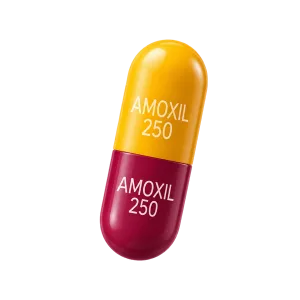
Amoxil
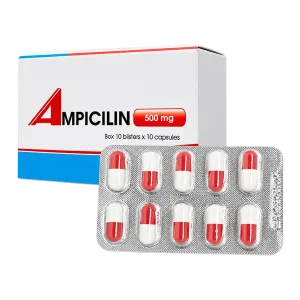
Ampicillin
Augmentin Current
Bactrim
Ciplox
How Buyers Rate Augmentin
Based on 5 reviews
The swelling settled, but I still needed dental treatment. I had loose stools near the end of the course, which stopped afterward.
Whangārei 5 days 6 Oct 2026The facial pressure improved, but the first few days brought nausea. I had expected an immediate change and was nearly tempted to stop early.
Greymouth 7 days 20 Oct 2026The redness became less painful over the week. I had to arrange extra blood-test monitoring because I also used warfarin, which made the treatment feel less straightforward.
Blenheim 7 days 14 Oct 2026The rash appeared after the tablets and spread quickly. I stopped taking further doses and sought urgent medical help rather than waiting to see whether it faded.
Nelson 2 days 24 Oct 2026Sources
- U.S. Food and Drug Administration (2021). Augmentin (amoxicillin/clavulanate potassium) Prescribing Information.