Skip to content
In stock Ampicillin
Antibiotics

Ampicillin

Ampicillin blocks bacterial cell-wall construction, helping treat susceptible infections caused by certain bacteria. Ampicillin capsules are used for infections such as respiratory, urinary-tract…

Guaranteed quality Original product
Delivery: from 4 days Discreet shipping
24/7 Support Always available
Active ingredient: Ampicillin
Select dosage:
Select pack Package Per unit Price
$ 16.08 $ 160.82
$ 9.16 $ 321.64 $ 183.26 Save 43%
$ 6.73 $ 482.46 $ 201.96 Save 58%
$ 3.71 $ 964.92 $ 222.53 Save 77%
$ 2.68 $ 1,447.38 $ 241.23 Save 83%
$ 2.20 $ 1,929.84 $ 263.67 Save 86%
$ 1.57 $ 2,894.76 $ 282.37 Save 90%
$ 1.12 $ 4,342.14 $ 302.94 Save 93%
Best value $ 0.96 $ 5,789.52 $ 344.08 Save 94%
$ 14.96 $ 149.60
$ 8.23 $ 299.20 $ 164.56 Save 45%
$ 6.11 $ 448.80 $ 183.26 Save 59%
$ 3.30 $ 897.60 $ 198.22 Save 78%
$ 2.39 $ 1,346.40 $ 215.05 Save 84%
$ 1.92 $ 1,795.20 $ 230.01 Save 87%
$ 1.64 $ 2,692.80 $ 295.46 Save 89%
$ 1.34 $ 4,039.20 $ 362.78 Save 91%
Best value Free Regular Delivery $ 1.28 $ 5,385.60 $ 460.02 Save 91%

Free delivery on orders from $ 374.00, free express delivery from $ 561.00

Secure payment methods:
VISA AMEX JCB DISCOVER

Ampicillin blocks bacterial cell-wall construction, helping treat susceptible infections caused by certain bacteria. Ampicillin capsules are used for infections such as respiratory, urinary-tract, gastrointestinal, and other bacterial illnesses when a clinician considers them appropriate.

Product information

How much to use and how often depends on the purpose of use and is agreed with a doctor or pharmacist.

Ampicillin belongs to the aminopenicillin group of beta-lactam antibiotics.

Directions for use

Ampicillin capsules are taken by mouth. How much to use and how often depends on the purpose of use and is agreed with a doctor or pharmacist.

Common clinical factors affecting the regimen include:

  • Infection type and location.
  • Severity and duration of symptoms.
  • Age and body size.
  • Kidney function.
  • Previous antibiotic exposure.
  • Results from culture and susceptibility testing.
  • History of allergy to penicillins or related antibiotics.

Take each dose at the prescribed interval. Spacing doses evenly helps maintain antibacterial exposure. Swallow the capsule with water. If stomach upset occurs, the prescriber or pharmacist can explain whether a modified timing plan is suitable for the prescribed regimen.

Complete the prescribed course unless the treating clinician changes it. Stopping when symptoms improve can leave surviving bacteria behind and may contribute to relapse or resistance. Do not save unused capsules for a future illness, and do not use them for another person.

Oral Administration and Clinical Route Selection

Oral capsules are suitable when the patient can swallow, absorb medicines normally, and does not require urgent high-level treatment. Intravenous or intramuscular ampicillin is used in clinical settings when rapid treatment, close monitoring, or reliable drug delivery is needed. A hospital route is not interchangeable with the oral capsule schedule.

Ampicillin absorption can be affected by food. Many oral ampicillin references advise taking doses on an empty stomach, commonly before meals, unless the prescriber gives different instructions. Follow the timing provided for the prescribed course rather than changing it after one uncomfortable dose.

If a dose is missed, take it when remembered unless the next scheduled dose is near. Do not take two doses together to compensate. A double dose can increase adverse effects without restoring the intended schedule.

Set dose times around regular daily activities, such as waking and bedtime, but keep the intervals as even as the prescribed schedule allows.

The course length is not identical for every infection. A short course may be sufficient for one condition, while a deeper, recurrent, or complicated infection may require longer treatment. The prescriber determines duration from the diagnosis and response.

Ingredients

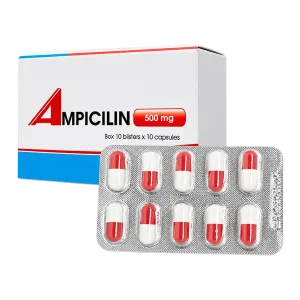
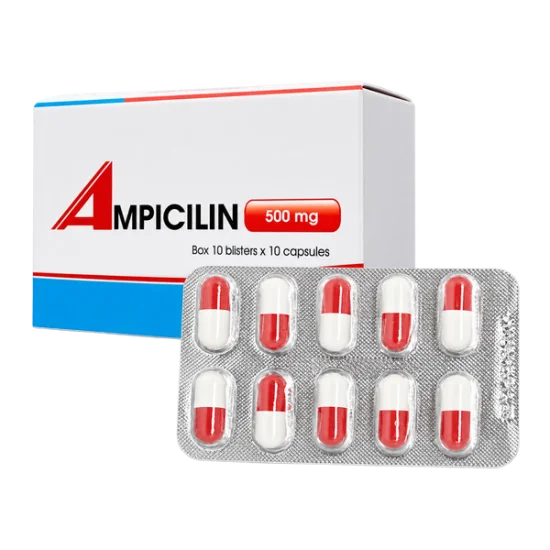
The product is supplied as capsules. The pack is marked AMPICILIN, 500 mg, and contains 10 blisters with 10 capsules each. The exact formulation beyond these pack details is not established here.

How it affects the body

Its active ingredient interferes with bacterial peptidoglycan production, a process bacteria need to maintain their cell walls. Without a stable cell wall, susceptible bacteria can rupture and die.

Ampicillin acts on bacteria rather than viruses. It does not treat colds, influenza, or other viral respiratory infections. The FDA label describes ampicillin as active against selected Gram-positive and Gram-negative organisms, although resistance patterns differ between regions and bacterial strains [1].

Therapeutic indications

Ampicillin may be prescribed for susceptible respiratory, urinary, gastrointestinal, skin, and other bacterial infections. The choice depends on local resistance patterns, culture results when available, allergy history, and the severity of illness. Medsafe and the World Health Organization both emphasise responsible antibiotic selection because unnecessary exposure encourages antimicrobial resistance.

Common mistakes

Several avoidable habits reduce the chance of a smooth course:

  • Taking capsules at irregular times and then taking several together.
  • Stopping after the fever or pain improves.
  • Using leftover ampicillin for a new illness.
  • Sharing capsules with a family member who has similar symptoms.
  • Ignoring a spreading rash or severe diarrhoea.
  • Forgetting to mention kidney disease or a previous penicillin reaction.
  • Assuming an antibiotic will treat influenza, a common cold, or most uncomplicated viral coughs.
  • Taking an oral typhoid vaccine during antibiotic treatment without checking the timing.
  • Failing to report recent antibiotics when a culture or susceptibility test is being planned.

A capsule that was tolerated years ago may still cause a reaction after later exposure. Allergy history should be updated whenever a new antibiotic is prescribed.

Another frequent mistake is judging success only by the first 24 hours. Some bacterial infections improve gradually, while deterioration, severe symptoms, or new warning signs need prompt clinical reassessment rather than self-adjustment of the dose.

Reasons not to use it

Extra caution is needed with:

  • Reduced kidney function.
  • Previous antibiotic-associated colitis.
  • Infectious mononucleosis or a similar glandular-fever illness, because aminopenicillins are associated with a higher risk of rash in this setting.
  • Pregnancy or breastfeeding, where the clinical indication and treatment choice should be assessed.
  • A history of severe drug-related liver or blood reactions.

Cephalosporin allergy does not create identical risk in every patient, but some people with serious penicillin allergy may react to selected cephalosporins. The exact reaction matters. A mild remote rash and previous anaphylaxis should not be treated as equivalent histories.

Interactions Requiring Clinical Review

Allopurinol may increase the likelihood of an ampicillin-associated rash. Oral anticoagulants can require closer monitoring because illness, diet, and antibiotics may alter anticoagulant response. Methotrexate toxicity may increase with some penicillin antibiotics because renal clearance can be affected.

Ampicillin may reduce the reliability of oral typhoid vaccine by preventing the vaccine organisms from multiplying as intended. The timing of vaccination and antibiotic treatment should be managed by a clinician.

Penicillin antibiotics can also affect laboratory results, including some urine glucose tests. Tell the clinician or laboratory staff that ampicillin is being used when a test result could influence treatment.

The EMA’s scientific information on beta-lactam antibiotics supports careful allergy assessment and review of renal function when dosing penicillin-class medicines [3].

When this is not for you

Ampicillin may not be suitable if you have ever had a severe reaction to penicillin or another beta-lactam, such as anaphylaxis, facial swelling, or a serious blistering rash. Tell the prescriber about kidney problems, previous severe antibiotic-related diarrhoea, glandular fever, pregnancy or breastfeeding, and any serious liver or blood reaction caused by a medicine.

If you have ever needed emergency treatment after an antibiotic, describe the symptoms and the medicine involved; “antibiotic allergy” alone does not provide enough detail for safe selection.

Unwanted effects

The most common problems with oral ampicillin involve the digestive system or skin. Reported reactions include nausea, vomiting, loose stools, diarrhoea, abdominal discomfort, and mild rash. The Medsafe data-sheet framework and standard penicillin product information identify allergic reactions and antibiotic-associated diarrhoea as clinically significant safety concerns [2].

A mild rash does not always mean a severe allergy, yet a new rash should be reported promptly because its pattern and timing matter. A rash with blistering, peeling skin, mouth sores, facial swelling, wheezing, or faintness requires urgent medical attention.

Gastrointestinal Effects and Management

Antibiotics can disturb normal intestinal bacteria. Mild diarrhoea may occur during treatment, but watery or bloody diarrhoea, severe cramps, fever, or diarrhoea that continues after the course can indicate Clostridioides difficile colitis. This condition needs medical assessment rather than treatment with an over-the-counter anti-diarrhoeal medicine.

Nausea is often easier to tolerate when fluid intake is maintained and meals are used according to the prescribed timing instructions. Do not stop the antibiotic solely because of mild stomach discomfort without discussing the reaction with the treating clinician.

Other possible reactions include:

  • Headache or general malaise.
  • Oral or vaginal thrush after disruption of normal flora.
  • Temporary changes in bowel habit.
  • Abnormal liver tests or blood counts during treatment.
  • Seizures in patients with very high beta-lactam exposure, severe kidney impairment, or other risk factors.

Severe immediate allergy can progress rapidly. Swelling of the lips or tongue, difficulty breathing, widespread hives, collapse, or severe dizziness warrants emergency care.

One practical detail is easy to miss: a rash appearing after several days can still be medicine-related, even when the first doses caused no reaction. Record when it began and whether it spread, blistered, or involved the mouth or eyes.

Comparison

Ampicillin is one option within beta-lactam antibiotic therapy. The most suitable choice depends on bacterial susceptibility, infection site, allergy history, kidney function, and local prescribing guidance.

Treatment approach Main clinical distinction Practical limitation
Ampicillin Aminopenicillin that blocks bacterial cell-wall synthesis Resistance and penicillin allergy can limit use
Narrow-spectrum penicillin Targets a more restricted group of susceptible bacteria May not cover the suspected organism
Non-penicillin antibiotic Uses a different antibacterial target or class May bring different interactions, adverse effects, or resistance concerns

Ampicillin can be useful when the suspected or confirmed organism is susceptible. A narrow-spectrum option may be preferred when test results identify a sensitive bacterium and narrower coverage is sufficient. A different class may be selected for a serious penicillin allergy, resistance, or an infection requiring another pharmacological profile.

Broader coverage is not automatically better. Unnecessary coverage exposes the gut microbiome to antibiotics without improving treatment when the causative organism is already known.

Tell the prescriber about antibiotic courses taken recently, including the infection treated and whether symptoms returned after treatment ended.

What doctors say

In clinical practice, doctors usually judge ampicillin by three questions: is the illness bacterial, is the organism likely to be susceptible, and can the patient take the medicine reliably? A prescription is less likely to help when the symptoms are viral or when resistance makes the selected antibiotic unsuitable.

Physicians also look for treatment failure. Persistent fever, worsening pain, new breathlessness, dehydration, confusion, or symptoms returning soon after the course can signal complications, resistance, an incorrect diagnosis, or an infection that needs a different route of treatment.

Kidney function deserves attention because many penicillin antibiotics leave the body through the kidneys. Older adults and people with kidney disease may need an adjusted schedule. The WHO antimicrobial-resistance guidance published in 2022 continues to support targeted treatment, culture-led decisions where practical, and avoidance of unnecessary antibiotic exposure [4].

A doctor would also expect the full medication history to include supplements, anticoagulants, gout treatment, cancer medicines, and recent vaccines. These details can change the risk assessment even when the patient feels well.

What customers often ask

Which condition rules out Ampicillin?

A previous severe allergic reaction to penicillin, ampicillin, or a related beta-lactam rules out routine use unless a specialist makes a specific plan. Symptoms such as anaphylaxis, facial swelling, breathing difficulty, or blistering skin reactions are high-risk warning histories. Medsafe safety information treats serious beta-lactam hypersensitivity as a major contraindication. This principle remained part of standard antibiotic safety practice in 2025. The FDA label also advises against routine use after serious beta-lactam hypersensitivity.

How long does an Ampicillin course last, and is long-term use acceptable?

Course length depends on the infection, bacterial susceptibility, response, and the patient’s kidney function. Ampicillin is not intended for open-ended self-treatment; prolonged use is reserved for a defined clinical reason with monitoring. The WHO’s 2022 antimicrobial-resistance guidance supports using antibiotics for the appropriate indication and duration. A longer course can increase diarrhoea, thrush, allergic reactions, and selection of resistant bacteria.

What happens after stopping Ampicillin, and does it require tapering?

Ampicillin does not normally require tapering because it is an antibiotic rather than a medicine that causes a withdrawal syndrome. Stopping early can leave the infection incompletely treated, depending on the diagnosis and the response. The EMA’s 2018 antibiotic safety information supports completing the prescribed course unless a clinician changes or stops it because of an adverse reaction. Severe allergy or serious diarrhoea is a reason to seek urgent clinical advice rather than taking another dose.

Can Ampicillin affect driving, concentration, or work with machinery?

Ampicillin is not generally used as a sedative, so many people can maintain normal concentration. Dizziness, headache, nausea, fever, dehydration, or the infection itself can still impair safe driving or machinery work. Medsafe’s 2024 medicine-safety guidance requires attention to individual reactions, especially when a new treatment begins. Do not drive if you feel faint, confused, unusually unwell, or unable to concentrate.

Is Ampicillin suitable for older adults?

Older adults may receive ampicillin when the infection is susceptible and the benefits justify treatment. Kidney function, hydration, swallowing ability, allergy history, and concurrent medicines need review because reduced renal clearance can increase beta-lactam exposure. WHO antibiotic-stewardship principles published in 2022 support dose selection based on the individual rather than age alone. New diarrhoea, confusion, rash, or reduced urine output deserves prompt assessment.

Can people under 18 use Ampicillin?

Children and adolescents may receive ampicillin for selected bacterial infections, but the regimen is determined by the prescriber using age, body weight, infection severity, and kidney function. The 500 mg capsule may not be suitable for every child who needs ampicillin, especially if swallowing is difficult or a liquid formulation is clinically preferable. The EMA’s 2018 paediatric medicine principles require age-appropriate dosing and formulation decisions. Never give a child capsules prescribed for an adult or another family member.

Do you offer anonymous delivery?

Your order will be securely packed and shipped within 24 hours. This is exactly what your package will look like (images of an actual item sent). It has the size and look of a regular private letter (24x11x0.7 cm) and its contents cannot be seen.

Comparison

How the medicines for Antibiotics compare

How Buyers Rate Ampicillin

Based on 4 reviews

Mark, 59 Verified
Rating: 3.5 out of 5

I used it for a urinary infection. The burning eased after a few days, but I still finished the course. I had loose stools near the end, which settled after treatment.

Invercargill Seven-day course 6 Oct 2026
Harry Z., 38 Verified
Rating: 5 out of 5

The capsules were straightforward to swallow, and my symptoms improved during the course. I made the mistake of taking one dose late after a night shift, so I set reminders for the remaining doses.

Porirua Five days 14 Oct 2026
Gary M., 28 Verified
Rating: 3 out of 5

I developed an itchy rash after several doses and stopped taking further capsules until I had spoken with the clinic. The infection symptoms had started improving, but the rash needed assessment.

Upper Hutt Prescribed course 19 Oct 2026
Neil, 64 Verified
Rating: 3 out of 5

The treatment helped with the infection, although my stomach was unsettled for several days. My doctor reviewed my kidney function and medicines before deciding the schedule.

Tauranga Ten-day course 1 Nov 2026

Sources

  1. U.S. Food and Drug Administration (2018). Ampicillin Capsules, USP — Prescribing Information.
  2. Medsafe, New Zealand Medicines and Medical Devices Safety Authority (2024). Ampicillin — New Zealand Data Sheet.
  3. European Medicines Agency (2018). Summary of Product Characteristics (SmPC) — ampicillin.
  4. World Health Organization (2022). The WHO AWaRe Antibiotic Book: Antibiotic Treatment Guidance for Common Infections.
Get our free app Shop faster and track your orders Install