Skip to content
In stock Nitrofurantoin
Antibiotics

Nitrofurantoin

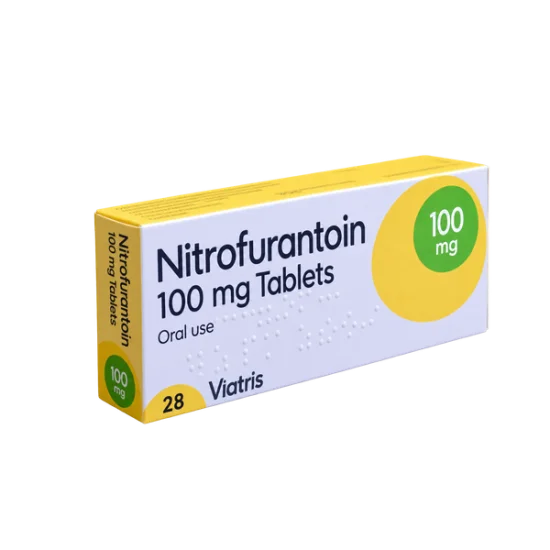
Urinary bacteria convert Nitrofurantoin into reactive compounds that damage essential bacterial DNA and proteins. It is used for adults with uncomplicated lower urinary tract infections and, in…

Guaranteed quality Original product
Delivery: from 4 days Discreet shipping
24/7 Support Always available
Active ingredient: Nitrofurantoin
Select dosage:
Select pack Package Per unit Price
$ 2.71 $ 271.15
Free Regular Delivery $ 2.30 $ 542.30 $ 460.02 Save 15%
Free Express Delivery $ 2.15 $ 813.45 $ 645.15 Save 21%
Free Express Delivery $ 2.06 $ 1,084.60 $ 824.67 Save 24%
Best value Free Express Delivery $ 2.02 $ 1,355.75 $ 1,009.80 Save 26%
Free Express Delivery $ 2.02 $ 1,626.90 $ 1,213.63 Save 25%
$ 2.82 $ 282.37
Free Regular Delivery $ 2.36 $ 564.74 $ 471.24 Save 17%
Free Express Delivery $ 2.21 $ 847.11 $ 663.85 Save 22%
Free Express Delivery $ 2.16 $ 1,129.48 $ 863.94 Save 24%
Free Express Delivery $ 2.11 $ 1,411.85 $ 1,056.55 Save 25%
Best value Free Express Delivery $ 2.06 $ 1,694.22 $ 1,236.07 Save 27%

Free delivery on orders from $ 374.00, free express delivery from $ 561.00

Secure payment methods:
VISA AMEX JCB DISCOVER

Urinary bacteria convert Nitrofurantoin into reactive compounds that damage essential bacterial DNA and proteins. It is used for adults with uncomplicated lower urinary tract infections and, in selected cases, recurrent UTI prevention. Its high concentration in urine targets susceptible bacteria in the bladder while limiting activity elsewhere in the body.

Product information

Nitrofurantoin is a nitrofuran antibiotic supplied as oral tablets. The amount taken at each intake is set individually for each person rather than being one fixed number. It is a first-line option for uncomplicated urinary tract infections, meaning infections limited to the bladder rather than infections involving the kidneys, bloodstream, or prostate.

Directions for use

The amount per intake and the treatment schedule are set individually, taking account of the infection, kidney function, age, and whether the medicine is being used for treatment or prevention.

Common administration errors include:

  • stopping after one or two symptom-free days;
  • taking doses too close together after forgetting one;
  • using leftover tablets from a previous infection;
  • taking the medicine for fever or back pain without reassessment;
  • ignoring new breathlessness, jaundice, or widespread rash.
Take the tablets with food or milk when possible. This can improve absorption and often reduces nausea, which is one of the most common reasons people stop treatment early.
A harmless brown or dark-yellow urine colour can occur with nitrofurantoin. It is different from visible blood in urine, which still needs clinical attention if it persists or comes with pain, fever, or clots.

Nitrofurantoin tablets can cause nausea, reduced appetite, abdominal discomfort, or loose stools. Taking doses with food is a practical way to improve tolerance. The U.S. Food and Drug Administration prescribing information also describes food as increasing nitrofurantoin bioavailability. [1]

Ingredients

This product is supplied as Nitrofurantoin tablets for oral use. The amount per intake is determined individually for each person rather than being one fixed number.

How it affects the body

After absorption from the gut, nitrofurantoin is filtered and secreted into urine. Bacteria in the urinary tract activate the medicine inside their cells, where it disrupts several metabolic processes at once. This multi-target action helps explain why resistance to nitrofurantoin has often remained lower than resistance to some broader-spectrum antibiotics.

The medicine reaches useful levels in urine, not in kidney tissue or the bloodstream.

Therapeutic indications

It is commonly prescribed for acute cystitis, which often causes burning when passing urine, urgency, frequent small voids, and lower abdominal discomfort. A clinician may also use it as part of a prevention plan for recurrent UTIs when repeated infections have been clearly documented.

Nitrofurantoin is not intended for every urinary symptom. Fever, flank pain, vomiting, chills, or feeling systemically unwell can indicate upper urinary tract infection and need different assessment and treatment.

A urine sample may be tested when symptoms recur, fail to improve, or are unusual. Culture testing identifies the bacterium and shows whether it is susceptible to nitrofurantoin.

Common mistakes

A frequent mistake is treating every episode of urinary frequency as bacterial cystitis. Caffeine, dehydration, vaginal infections, sexually transmitted infections, bladder irritation, and some prostate conditions can produce overlapping symptoms.

Another problem is carrying over a previous treatment plan into a new episode. The bacteria causing recurrent UTIs can change, and antibiotic susceptibility can change with them.

People also sometimes take a missed tablet late and then take the next one at the usual time, creating doses that are too close together. This increases stomach upset without improving bacterial clearance.

Long-term prevention deserves periodic review. New cough, shortness of breath, altered liver tests, numbness, or reduced kidney function may alter whether nitrofurantoin remains suitable.

Reasons not to use it

Nitrofurantoin is well suited to many lower UTIs, yet its safety depends strongly on kidney function and the person’s clinical situation. Reduced renal clearance can lower the amount reaching urine while increasing medicine exposure in the blood.

  • allergic reaction to nitrofurantoin;
  • severe kidney impairment or markedly reduced renal function;
  • previous nitrofurantoin-related liver injury or lung disease;
  • known glucose-6-phosphate dehydrogenase deficiency, also called G6PD deficiency;
  • near the end of pregnancy or in labour;
  • suspected infection involving the kidneys, blood, or prostate.

When this is not for you

This medicine may not be suitable if you have a serious kidney problem, have previously reacted badly to nitrofurantoin, or have had liver or lung problems caused by it. It may also be unsuitable if you have G6PD deficiency, are close to delivery or in labour, or have symptoms suggesting an infection beyond the bladder.

Unwanted effects

Most people who develop side effects experience digestive symptoms, headache, dizziness, or darker urine. These effects are often manageable and may settle with food and hydration.

Seek urgent medical assessment for:

  • breathing difficulty, persistent cough, chest pain, or unexplained fever;
  • yellow skin or eyes, dark urine with pale stools, or severe upper abdominal pain;
  • tingling, numbness, burning pain, or new weakness in hands or feet;
  • blistering rash, facial swelling, or trouble breathing;
  • severe or persistent diarrhoea.

Pulmonary reactions can be acute, appearing within days, or chronic after prolonged exposure. Liver inflammation is also uncommon but clinically significant. These risks matter most during extended preventive use, when clinicians may monitor symptoms and liver function more closely.

A new dry cough during a short course can be easy to dismiss as a cold. If it appears with breathlessness, fever, or chest discomfort, treat it as a medicine warning rather than simply taking another dose.

Comparison

Antibiotic choice should match the infection site, local resistance patterns, allergy history, kidney function, and urine culture results when available. Nitrofurantoin is valued because it is concentrated in urine and has relatively limited effects on intestinal bacteria compared with broad-spectrum options.

Option Main role in urinary infection Key limitation
Nitrofurantoin Uncomplicated lower UTI caused by susceptible bacteria Does not treat kidney infection or systemic infection
Trimethoprim-based treatment Selected lower UTIs where susceptibility is likely Resistance may limit usefulness
Fluoroquinolone antibiotics, such as ciprofloxacin Complicated or upper-tract infections when clinically appropriate Greater risk of broad-spectrum adverse effects and resistance selection

Ciprofloxacin, norfloxacin, ofloxacin, and lomefloxacin belong to the quinolone antibiotic group. These medicines penetrate tissues more widely than nitrofurantoin, which can be useful for complicated infections. Their broader activity also creates more pressure for antimicrobial resistance and can expose patients to adverse effects beyond the urinary tract.

WHO classifies nitrofurantoin within the Access group of antibiotics, a group intended to be available for common infections while supporting responsible antimicrobial use. [2] European Medicines Agency stewardship principles similarly favour using the narrowest suitable antibiotic for the diagnosed infection.

Antimicrobial Stewardship and Resistance Profiles

Antimicrobial stewardship means selecting an antibiotic that is effective without unnecessarily affecting bacteria elsewhere in the body. Nitrofurantoin’s urinary focus is an advantage for straightforward bladder infection.

It has limits. It does not cover every urinary bacterium, and it should not be used solely because symptoms resemble a previous UTI. A culture result becomes more useful after recurrent infections, recent antibiotic use, pregnancy, persistent symptoms, or treatment failure.

What doctors say

In clinical practice, prescribers often see rapid relief of burning and urgency when the causative organism is susceptible and the infection is confined to the bladder. Relief does not prove that the infection has cleared. Completing the prescribed course remains essential.

Doctors also look beyond urinary symptoms. Fever, loin pain, nausea, recurrent infections, reduced kidney function, or urinary symptoms in men can change the diagnosis and the treatment choice. Nitrofurantoin is a focused antibiotic, not a catch-all treatment for every urinary complaint.

The key expectation is practical: bladder symptoms often begin easing during treatment, while full recovery may take longer. Persistent symptoms can mean resistance, a different diagnosis, poor urinary drug levels, or an infection outside the bladder.

If symptoms are unchanged or worse after the expected early treatment period, do not double the dose. A urine culture or reassessment is more useful than adding extra tablets.

What customers often ask

Alcohol During Nitrofurantoin Treatment

Alcohol has no well-established direct interaction with nitrofurantoin, yet it can worsen nausea, dizziness, dehydration, and poor sleep while you are unwell. The FDA's 2013 prescribing information does not list alcohol as a formal contraindication, but avoiding heavy drinking during an active UTI is sensible because it may make symptoms harder to judge. Alcohol will not treat urinary discomfort and should not replace regular fluid intake. If alcohol makes you vomit or miss doses, avoid it until treatment is complete. Postponing alcohol can also make it easier to identify worsening symptoms.

Use in Older Adults

Older adults can use nitrofurantoin when renal function is adequate and the infection is limited to the lower urinary tract. Medsafe's 2024 safety information highlights the importance of kidney function because insufficient clearance can reduce urine concentrations and increase toxicity risk. New breathlessness, fatigue, tingling, or jaundice needs prompt review at any age. Extra caution is appropriate during repeated or long-term courses.

Diet, Exercise, and Daily Habits

Water supports normal urine flow, although forcing excessive amounts of fluid will not make the antibiotic work faster. The WHO's 2023 guidance on antibiotic use supports taking antibiotics as prescribed rather than relying on supplements or dietary changes to clear an infection. Limit bladder irritants such as large amounts of caffeine if they aggravate urgency or burning. Light activity is usually reasonable if you feel well, while fever, flank pain, or marked fatigue warrants rest and clinical assessment.

Timing of Daily Doses

The best timing is the schedule prescribed for you, spaced as evenly as practical through the day. Taking Nitrofurantoin with a meal or snack often improves stomach tolerance and supports absorption, as described in the FDA's 2013 product information. Link each dose to a regular meal when that matches your prescribed timing. Do not take two tablets together to simplify the day.

Duration of Activity After a Dose

Nitrofurantoin works while sufficient concentrations are present in the urine, so regular dosing maintains antibacterial exposure over the prescribed course. It does not create lasting protection after a single tablet, and symptom improvement does not mean one dose has eliminated the infection. The European Association of Urology's 2025 guidance describes antibiotic treatment for cystitis as a defined course chosen for the clinical setting. Follow the individual schedule rather than judging treatment duration by how quickly burning settles.

Missed Dose Management

Take a missed dose when you remember unless it is nearly time for the next scheduled dose. If the next dose is close, skip the forgotten dose and resume the normal schedule. Never take a double dose, since it raises the risk of nausea and other adverse effects without improving treatment success. The WHO's 2023 antibiotic guidance stresses completing treatment as directed, which means returning to the planned routine rather than improvising extra doses.

Do you offer anonymous delivery?

Your order will be securely packed and shipped within 24 hours. This is exactly what your package will look like (images of an actual item sent). It has the size and look of a regular private letter (24x11x0.7 cm) and its contents cannot be seen.

Comparison

How the medicines for Antibiotics compare

How Buyers Rate Nitrofurantoin

Based on 3 reviews

Deborah N., 37 Verified
Rating: 5 out of 5

I used the 100 mg tablets for five days for a bladder infection after burning and urgency started suddenly. Taking them after breakfast and dinner made the nausea much easier than my first dose on an empty stomach. The burning had eased after two days, but I finished the prescribed course.

Christchurch Five days 12 Nov 2026
Alison, 26 Verified
Rating: 4 out of 5

I had a previous UTI and assumed this would feel the same, but this time I also had back pain. I was reassessed rather than continuing with the 100 mg tablets alone for five days, which was the right call. For the bladder symptoms, the tablets themselves were straightforward to take.

Hamilton Five days 14 Oct 2026
Catherine T., 27 Verified
Rating: 3.5 out of 5

My urinary urgency improved within a few days of taking the 100 mg tablets for five days, although I had mild nausea and darker urine. I found it easier to remember the doses by linking them with meals. I would have liked the stomach upset to settle faster, but it did not stop me completing treatment.

Taupō Five days 29 Oct 2026

Sources

  1. U.S. Food and Drug Administration (2013). Macrobid: Nitrofurantoin Monohydrate/Macrocrystals Capsules Prescribing Information
  2. World Health Organization (2023). The WHO AWaRe Antibiotic Book
Get our free app Shop faster and track your orders 3.9 · 313 reviews Install