Directions for use
Dosing differs between strengths and between users, so there is no single amount that suits everyone. The prescriber selects the regimen according to the indication, kidney function, age, fluid status, and other glucose-lowering treatments.
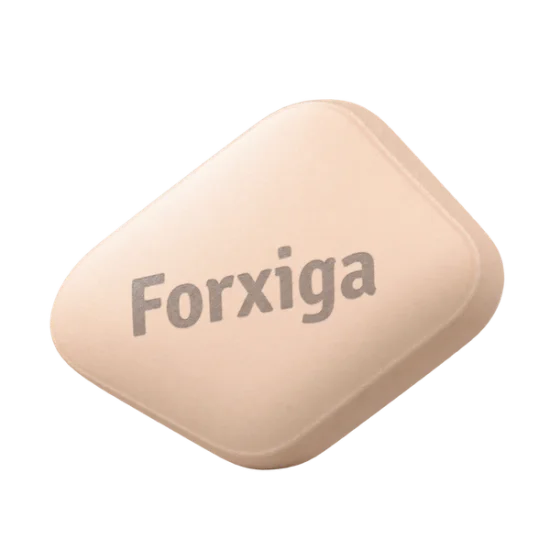
Forxiga tablets are taken orally. Practical administration principles include:
- Take the prescribed dose once daily unless the prescriber gives different instructions.
- Take it at a consistent time to make missed doses less likely.
- It may generally be taken with or without food.
- Swallow the tablet with water.
- Swallow the tablet whole rather than crushing, chewing, or splitting it.
- Maintain the fluid intake recommended for the individual medical condition.
- Continue blood glucose checks when diabetes treatment requires monitoring.
- Arrange kidney-function monitoring when requested, especially after treatment starts or when illness affects hydration.
Before treatment, clinicians commonly assess estimated glomerular filtration rate, or eGFR, along with blood pressure, volume status, and relevant diabetes tests. The eGFR estimates how well the kidneys filter blood. It is not the same as a single blood creatinine result.
If vomiting, diarrhoea, fever, or prolonged fasting makes normal fluid intake difficult, contact the prescribing service promptly about temporary sick-day management. Dehydration can increase the risk of kidney injury and ketoacidosis.
A missed dose should not be replaced with an extra dose. The correct response depends on how close the person is to the next scheduled dose and the instructions provided by the prescriber. Taking two doses together can increase unwanted effects such as dehydration or low blood pressure.
Forxiga is not a substitute for prescribed dietary, glucose-monitoring, heart-failure, or kidney-care plans. It is one part of a treatment programme.
How it affects the body
Dapagliflozin selectively blocks SGLT2 proteins in the proximal renal tubules. These proteins normally return filtered glucose and sodium from the urine back into the bloodstream. When SGLT2 is inhibited, more glucose leaves the body in urine, while sodium reabsorption also falls.
The physiological sequence is:
- Less glucose returns to the bloodstream from the kidney.
- Urinary glucose excretion increases.
- Sodium excretion rises.
- Water follows the additional urinary solute.
- Blood glucose, circulating fluid load, and pressure within the kidney may decrease.
This process is called glucosuria when it refers to glucose in urine. The water movement linked to urinary glucose is called osmotic diuresis.
Increased urination and thirst can occur because of dapagliflozin’s mechanism. Keep fluid intake steady unless a clinician has prescribed fluid restriction for heart failure or another condition.
Renal and Cardiovascular Hemodynamics
The kidneys filter a large volume of blood each day. Excessive sodium and glucose reabsorption can increase pressure inside the glomerulus, the microscopic filtering structure of the kidney. Dapagliflozin changes sodium delivery within the nephron and can reduce this intraglomerular pressure.
This action helps explain why dapagliflozin has a role in chronic kidney disease. The medicine also reduces excess fluid and sodium burden, which can support symptom control in selected people with heart failure. The mechanism remains relevant even when glucose lowering is modest or absent.
The European Medicines Agency recognises dapagliflozin’s clinical role across diabetes, heart failure, and chronic kidney disease indications, with eligibility depending on the approved product information and patient factors [2].
Therapeutic indications
Forxiga is used in appropriate adults for:
- Type 2 diabetes, as part of a broader glucose-management plan
- Heart failure, including treatment intended to reduce the risk of worsening symptoms and hospitalisation
- Chronic kidney disease, where dapagliflozin can help slow loss of kidney function in suitable patients
The medicine is not prescribed for every person with raised blood glucose. Kidney function, fluid status, other medicines, and the specific diagnosis affect whether dapagliflozin is appropriate. The New Zealand Medsafe datasheet and international regulatory information describe dapagliflozin as a treatment with both metabolic and organ-protective roles [1].
Common mistakes
Several practical errors can reduce benefit or increase risk:
- Taking an extra tablet after a missed dose.
- Continuing treatment through repeated vomiting or diarrhoea without obtaining sick-day advice.
- Restricting water excessively to avoid urinating more often.
- Assuming normal blood glucose rules out ketoacidosis.
- Ignoring genital itching, soreness, or urinary burning until symptoms become severe.
- Starting a very low-carbohydrate diet without discussing ketone risk.
- Forgetting to mention dapagliflozin before surgery or a prolonged fasting procedure.
- Taking Forxiga alongside another dapagliflozin-containing product.
- Stopping insulin or another diabetes medicine abruptly because glucose readings improve.
- Treating dizziness as a minor nuisance when it may indicate volume depletion or low blood pressure.
Do not crush, chew, or split the tablet. Altering the tablet can interfere with the intended administration and makes the prescribed dose less predictable.
Before surgery, tell the surgical and anaesthetic teams that you take dapagliflozin. A planned interruption may be required around fasting and the procedure.
Reasons not to use it
Forxiga is not suitable for you if:
- You have a known serious allergy to dapagliflozin or an ingredient in the tablets.
- You are experiencing diabetic ketoacidosis or have symptoms suggesting it.
- You are severely dehydrated or unable to maintain fluid intake.
- Your clinician has identified kidney function below the threshold for your intended indication.
- You have type 1 diabetes unless a specialist has given a specific, closely supervised plan; SGLT2 inhibitors can increase ketoacidosis risk in this setting.
- You are pregnant or breastfeeding unless a specialist has determined that another approach is not suitable.
- You are undergoing major surgery or prolonged fasting without an agreed interruption plan.
Tell the prescriber about loop diuretics, blood-pressure medicines, insulin, sulfonylureas, lithium, and medicines that affect kidney function or fluid balance. Combining dapagliflozin with insulin or a sulfonylurea may increase the chance of hypoglycaemia, although dapagliflozin alone has a low risk of causing low blood glucose.
When this is not for you
One detail patients often miss is that diabetic ketoacidosis can develop without a very high glucose reading. Symptoms matter. A person taking Forxiga who develops vomiting, abdominal pain, unusual breathing, or severe weakness needs urgent assessment.
Avoid strict carbohydrate restriction, prolonged fasting, or heavy alcohol intake without medical guidance. These factors can increase ketone production.
Unwanted effects
Dapagliflozin’s unwanted effects are linked both to urinary glucose loss and to changes in fluid balance. Common problems may include:
- Genital thrush or other genital fungal infection
- Urinary tract infection
- Increased urination
- Thirst or dry mouth
- Dizziness related to reduced circulating fluid
- Constipation or gastrointestinal discomfort in some patients
Genital fungal infections can occur because glucose-rich urine creates conditions that support fungal growth. Symptoms may include itching, soreness, redness, swelling, or unusual discharge. Recurrent infections need clinical assessment rather than repeated self-treatment.
The New Zealand product information identifies rare but urgent reactions, including diabetic ketoacidosis, severe volume depletion, serious urinary or genital infection, and Fournier’s gangrene [3].
| Reaction |
Warning signs |
Required response |
| Diabetic ketoacidosis |
Nausea, vomiting, stomach pain, unusual tiredness, deep or rapid breathing, confusion, or fruity-smelling breath |
Stop activity and seek urgent medical assessment; blood glucose may be normal or only moderately raised |
| Severe dehydration |
Fainting, marked dizziness, very dry mouth, weakness, or inability to keep fluids down |
Obtain urgent clinical advice, especially with heart failure or kidney disease |
| Serious genital or perineal infection |
Severe pain, tenderness, swelling, redness, fever, or rapidly worsening symptoms around the genitals or perineum |
Seek emergency assessment immediately |
Comparison
Forxiga sits within the SGLT2 inhibitor class. Its main difference from metformin, DPP-4 inhibitors, and sulfonylureas is the location and process of its action: dapagliflozin works through the kidney rather than primarily changing insulin sensitivity, incretin signalling, or pancreatic insulin release.
| Treatment category |
Main pharmacological distinction |
| SGLT2 inhibitors such as dapagliflozin, empagliflozin, and canagliflozin |
Increase urinary glucose and sodium excretion; may provide heart and kidney benefits in suitable patients |
| Biguanides such as metformin or modified-release metformin |
Reduce hepatic glucose production and improve insulin sensitivity; gastrointestinal effects and kidney restrictions influence use |
| DPP-4 inhibitors such as sitagliptin, alogliptin, or saxagliptin |
Enhance incretin activity to support glucose-dependent insulin release; usually have a low hypoglycaemia risk without insulin or sulfonylureas |
Jardiance contains empagliflozin, another SGLT2 inhibitor. Invokana contains canagliflozin. These medicines share a broad mechanism but have different regulatory indications, dosing instructions, renal thresholds, and adverse-effect profiles.
Metformin, also known through products such as Glucophage SR, remains a foundational glucose-lowering option for many people with type 2 diabetes. It does not produce the same urinary glucose loss as dapagliflozin, and its heart-failure and kidney-treatment roles differ.
Gliclazide is a sulfonylurea that stimulates pancreatic insulin release. It can lower glucose effectively, but hypoglycaemia and weight gain require attention. Januvia contains sitagliptin, Vipidia contains alogliptin, and Onglyza contains saxagliptin; these DPP-4 inhibitors work through incretin pathways rather than urinary glucose excretion.
Treatment selection depends on diagnosis, kidney function, cardiovascular history, weight, hypoglycaemia risk, and other medicines. A medicine with an attractive mechanism may still be unsuitable if fluid balance or kidney function is unstable.
What doctors say
In clinical practice, doctors often focus on three questions before prescribing dapagliflozin: what condition is being treated, how well the kidneys are functioning, and whether the patient can maintain a stable fluid intake.
For type 2 diabetes, the expected benefit may include lower glucose exposure and reduced treatment burden when dapagliflozin fits the wider regimen. For heart failure or chronic kidney disease, the aim may centre more on reducing disease progression or hospitalisation risk than on producing a dramatic glucose change.
A clinician would also ask about recurrent genital infections, low blood pressure, diuretic use, recent fasting, alcohol intake, and previous ketoacidosis. These details can alter the risk assessment even when the medicine appears suitable on paper.
The American Diabetes Association has continued to place SGLT2 inhibitors within treatment pathways for selected people with type 2 diabetes and cardiorenal risk, while the exact choice remains individualised [4].