Skip to content
In stock Cipro
Antibiotics

Cipro

Cipro is an oral ciprofloxacin tablet for selected bacterial infections in people for whom a fluoroquinolone is appropriate. It works against susceptible bacteria by interfering with enzymes involved…

Guaranteed quality Original product
Delivery: from 4 days Discreet shipping
24/7 Support Always available
Active ingredient: Ciprofloxacin
Select dosage:
Select pack Package Per unit Price
$ 2.29 $ 205.70
$ 1.89 $ 274.27 $ 226.27 Save 18%
$ 1.55 $ 411.40 $ 278.63 Save 32%
Best value Free Regular Delivery $ 1.14 $ 822.80 $ 409.53 Save 50%
$ 3.15 $ 188.87
$ 2.39 $ 283.31 $ 215.05 Save 24%
$ 2.01 $ 377.74 $ 241.23 Save 36%
$ 1.64 $ 566.61 $ 295.46 Save 48%
$ 1.39 $ 849.92 $ 374.00 Save 56%
Best value Free Regular Delivery $ 1.26 $ 1,133.22 $ 452.54 Save 60%
$ 8.35 $ 250.58
$ 5.86 $ 501.16 $ 351.56 Save 30%
Free Regular Delivery $ 4.97 $ 751.74 $ 446.93 Save 41%
Free Regular Delivery $ 4.57 $ 1,002.32 $ 547.91 Save 45%
Free Express Delivery $ 4.15 $ 1,503.48 $ 746.13 Save 50%
Best value Free Express Delivery $ 3.71 $ 3,006.96 $ 1,335.18 Save 56%

Free delivery on orders from $ 374.00, free express delivery from $ 561.00

Secure payment methods:
VISA AMEX JCB DISCOVER

Cipro is an oral ciprofloxacin tablet for selected bacterial infections in people for whom a fluoroquinolone is appropriate. It works against susceptible bacteria by interfering with enzymes involved in bacterial DNA replication. The dose is decided individually, taking age, other medicines, and health conditions into account.

Product information

Cipro contains ciprofloxacin, a synthetic fluoroquinolone antibiotic. Fluoroquinolones act inside bacterial cells, where they interfere with enzymes that control DNA winding, separation, and repair.

Ciprofloxacin does not work against viruses. It will not treat colds, influenza, or viral sore throats. The dose is decided individually, taking age, other medicines, and health conditions into account.

Directions for use

The tablet form is intended for oral use. The dose is decided individually, taking age, other medicines, and health conditions into account. Kidney impairment may require a changed regimen because ciprofloxacin is partly cleared through the kidneys.

Do not split the tablet simply to create a lower dose. The intended dose should be prescribed as a complete regimen, not improvised from tablet fragments.

  • Tizanidine: do not combine with ciprofloxacin. Ciprofloxacin can raise tizanidine exposure sharply, causing marked low blood pressure and sedation.
  • Clozapine: ciprofloxacin may raise clozapine concentrations, increasing the chance of sedation, seizures, or other toxicity.
  • Probenecid: may reduce ciprofloxacin elimination and increase ciprofloxacin concentrations.
  • Warfarin: anticoagulant effect can increase, so INR monitoring may be needed.
  • Theophylline: concentrations can rise to dangerous levels; this combination is generally avoided.
  • Antacids, iron, zinc, calcium, and magnesium supplements: these can bind ciprofloxacin in the gut and reduce absorption.
Keep mineral supplements, antacids, and products containing aluminium, magnesium, calcium, iron, or zinc separate from Cipro. These products can prevent a meaningful amount of ciprofloxacin from being absorbed.

Cipro may be taken with food if this makes nausea less troublesome. Food does not usually prevent treatment from working, but mineral-containing antacids and supplements can reduce ciprofloxacin absorption and must be separated in time. Avoid taking the tablet with milk or yoghurt alone, since calcium can interfere with absorption in that setting. The New Zealand Medsafe ciprofloxacin data sheet published in 2024 describes this chelation interaction and supports planned dose spacing rather than taking tablets alongside mineral products.

Ingredients

Cipro is supplied here as ciprofloxacin tablets. Each tablet contains ciprofloxacin as the antibacterial active ingredient. The dose is decided individually, taking age, other medicines, and health conditions into account.

How it affects the body

DNA gyrase and topoisomerase IV are bacterial enzymes. They allow bacterial DNA to unwind and separate before a cell divides. Ciprofloxacin blocks both targets, creating lethal breaks in bacterial DNA and preventing reproduction.

This mechanism gives ciprofloxacin activity against many Gram-negative bacteria and selected Gram-positive organisms. Human cells use different enzyme systems, though ciprofloxacin can still cause important effects outside the infection site.

Therapeutic indications

Cipro is prescribed when the likely or confirmed bacteria are susceptible to ciprofloxacin and when a fluoroquinolone is an appropriate option. Culture and susceptibility testing can matter greatly, since resistance patterns differ between bacteria and infection sites.

Common clinical uses include:

  • Complicated urinary tract infections and kidney infections
  • Chronic bacterial prostatitis
  • Selected lower respiratory tract infections
  • Certain gastrointestinal or biliary infections
  • Skin, soft-tissue, bone, and joint infections
  • Specific high-risk exposures where ciprofloxacin is indicated

Urinary Tract and Prostatic Infections

Ciprofloxacin reaches urine and can penetrate prostate tissue, which explains its role in selected complicated urinary infections and chronic bacterial prostatitis. Simple cystitis is not automatically a reason to use a fluoroquinolone. EMA restrictions emphasise reserving this antibiotic class when commonly recommended alternatives are unsuitable, especially for milder infections. [1]

A burning sensation when passing urine may improve before the bacterial infection has fully cleared. Stopping early because symptoms settle can allow surviving bacteria to return and may make future treatment harder.

Common mistakes

Several recurring mistakes can make ciprofloxacin less effective or less tolerable:

  • Taking it alongside a multivitamin, mineral supplement, or antacid without separating the doses
  • Continuing strenuous running, gym training, or heavy lifting after tendon discomfort begins
  • Treating a viral illness or self-diagnosed uncomplicated bladder symptoms with an antibiotic
  • Ignoring tingling, burning, new numbness, confusion, or major sleep changes
  • Missing follow-up testing when a clinician has requested a urine culture or INR check
  • Assuming all diarrhoea is harmless, even when it becomes severe, watery, persistent, or bloody

A missed dose should be taken when remembered unless the next scheduled dose is close. Do not take two tablets together to compensate. The FDA prescribing information also lists clinically important interactions and adverse reactions that require tailored monitoring in some patients. [3]

Reasons not to use it

Extra caution is needed when there is a history of tendon problems linked to quinolones, myasthenia gravis, epilepsy or seizure risk, serious kidney impairment, known QT prolongation, low potassium or magnesium, or a prior aortic aneurysm or dissection. Older adults, people with kidney disease, transplant recipients, and people taking systemic corticosteroids have a higher tendon-risk profile.

Pregnancy and breastfeeding require individual clinical assessment. Ciprofloxacin is not selected casually in these settings because treatment choice depends on the infection, available alternatives, and maternal benefit.

When this is not for you

Cipro is not for you if you have had a serious allergic reaction to ciprofloxacin or another quinolone antibiotic, or if you take tizanidine.

Mention steroid tablets or injections before starting Cipro. Prednisone, prednisolone, and similar medicines can materially increase the risk of tendon injury when combined with a fluoroquinolone.

Unwanted effects

Nausea, diarrhoea, abdominal discomfort, headache, dizziness, sleep disturbance, rash, and changes in liver test results are among the more commonly reported effects with ciprofloxacin. Some people notice a metallic taste or feel more restless than usual.

Fluoroquinolones also have rare but serious risks. Tendon inflammation or rupture, peripheral neuropathy, significant mood or nervous-system effects, severe allergic reactions, low or high blood glucose, and heart-rhythm effects can occur. Tendon injury may start during treatment or appear after it has finished, with the Achilles tendon being a familiar site.

Stop Cipro and seek urgent medical assessment for tendon pain or swelling, sudden weakness, numbness or burning sensations, severe mood changes, fainting, a widespread rash, facial swelling, breathing difficulty, or severe persistent diarrhoea. Medsafe’s 2025 reminder highlights the need for early recognition of systemic fluoroquinolone adverse effects. [2]

New heel pain during a ciprofloxacin course is not a training injury to push through. Avoid strenuous exercise and arrange prompt clinical assessment, because tendon damage can worsen if loading continues.

Comparison

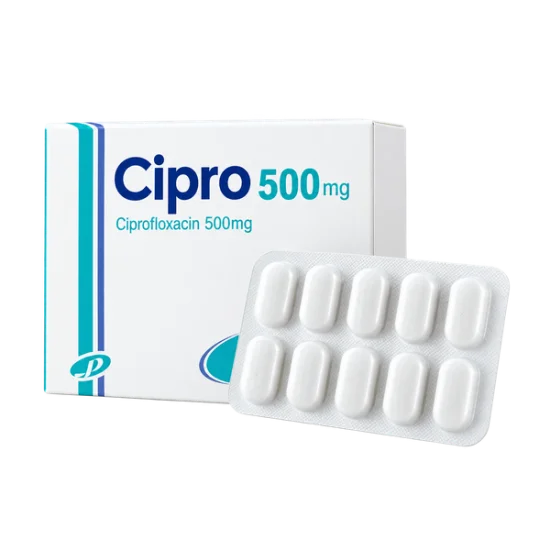
Cipro is a single-ingredient oral antibacterial tablet, differing from topical approaches by delivering treatment through the digestive system and from combination products by containing one antibacterial active ingredient.

What doctors say

In clinical practice, prescribers value ciprofloxacin when the infection site, bacterial susceptibility, and patient factors line up. It can be a useful oral option for selected Gram-negative infections, including situations where tissue penetration matters.

What customers often ask

How long does a Cipro course last, and is long-term use acceptable?

Course length depends on the infection, the bacteria involved, kidney function, and clinical response. A complicated urinary infection may need a different duration from chronic bacterial prostatitis, and longer treatment is sometimes selected for deep-seated infections. Long-term ciprofloxacin use is not a casual maintenance strategy because cumulative exposure can increase the chance of serious fluoroquinolone adverse effects. Medsafe data sheets and the 2025 safety reminder support individualised prescribing rather than a one-size-fits-all duration. Follow-up should confirm that continued treatment remains justified.

What should I do if Cipro does not produce the expected result?

Persistent fever, worsening pain, urinary symptoms that do not improve, breathlessness, or new systemic symptoms can mean the bacteria are resistant, the diagnosis needs review, or a complication is developing. Do not extend the course independently or add leftover antibiotics. A clinician may need a culture, susceptibility test, imaging, or a changed antibiotic plan. WHO antimicrobial stewardship guidance published in 2023 supports targeted therapy that is reassessed when the expected response does not occur.

What should I do after a missed Cipro dose?

Take the missed tablet when remembered unless the next scheduled dose is due soon. In that situation, skip the missed dose and return to the regular schedule. Do not double the next dose, since higher exposure does not reliably improve bacterial killing and may increase adverse effects. The FDA ciprofloxacin prescribing information issued in 2024 advises using the medicine on the prescribed schedule and addressing missed-dose questions with a prescriber when timing is uncertain.

Can Cipro cause tendon pain or tendon rupture?

Yes. Ciprofloxacin can cause tendinitis and, less commonly, tendon rupture; the Achilles tendon is often involved, though other tendons can be affected. Risk rises with older age, kidney impairment, transplant history, and concurrent systemic corticosteroids. Tendon pain, swelling, stiffness, or difficulty walking requires stopping the antibiotic and obtaining urgent medical advice rather than waiting for the next dose. EMA restrictions issued after its 2018 safety review describe these reactions as potentially long-lasting and advise avoiding fluoroquinolones in people with a prior serious quinolone reaction.

Can Cipro be taken with food or on an empty stomach?

Cipro may be taken with food if this makes nausea less troublesome. Food does not usually prevent treatment from working, but mineral-containing antacids and supplements can reduce ciprofloxacin absorption and must be separated in time. Avoid taking the tablet with milk or yoghurt alone, since calcium can interfere with absorption in that setting. The New Zealand Medsafe ciprofloxacin data sheet published in 2024 describes this chelation interaction and supports planned dose spacing rather than taking tablets alongside mineral products.

Do you offer anonymous delivery?

Your order will be securely packed and shipped within 24 hours. This is exactly what your package will look like (images of an actual item sent). It has the size and look of a regular private letter (24x11x0.7 cm) and its contents cannot be seen.

Comparison

How the medicines for Antibiotics compare

How Buyers Rate Cipro

Based on 4 reviews

Darren, 42 Verified
Rating: 5 out of 5

I took Cipro for a complicated urinary infection after the culture came back. The burning eased after two days, but I had nausea if I took it with only coffee. Breakfast and plenty of water made the rest of the course easier.

Rotorua 7-day course 4 Nov 2026
Ian C., 68 Verified
Rating: 3 out of 5

My doctor chose it because the infection had kept returning. I was careful about my calcium supplement and stopped my long walks when my Achilles felt tight. The infection settled, but the tendon warning was not something I took lightly.

Greymouth 4-week prostate infection treatment 6 Oct 2026
Oliver, 49 Verified
Rating: 3 out of 5

The tablets worked for the infection, though I slept poorly for the first few nights and felt more wired than usual. I did not skip doses, and the symptoms were gone by the follow-up appointment.

Masterton 10-day course 22 Oct 2026
Thomas, 60 Verified
Rating: 3 out of 5

I made the mistake of taking one tablet near my antacid on day one. After spacing them apart, I had no further issues. I still had loose stools for a few days, so it was not the easiest antibiotic course I have had.

Oamaru 7-day course 12 Oct 2026

Sources

  1. European Medicines Agency (2018). Disabling and Potentially Permanent Side Effects Lead to Suspension or Restrictions of Quinolone and Fluoroquinolone Antibiotics.
  2. Medsafe (2025). Systemic Fluoroquinolone Antibiotics: Safety Reminder.
  3. U.S. Food and Drug Administration (2024). CIPRO IV (Ciprofloxacin) Prescribing Information.
Get our free app Shop faster and track your orders Install