The stiffness eased enough for me to walk more normally. I took it after meals. I noticed indigestion on the third day, so the treatment was reviewed rather than extended.
Dunedin Several days 15 Nov 2026Voltaren
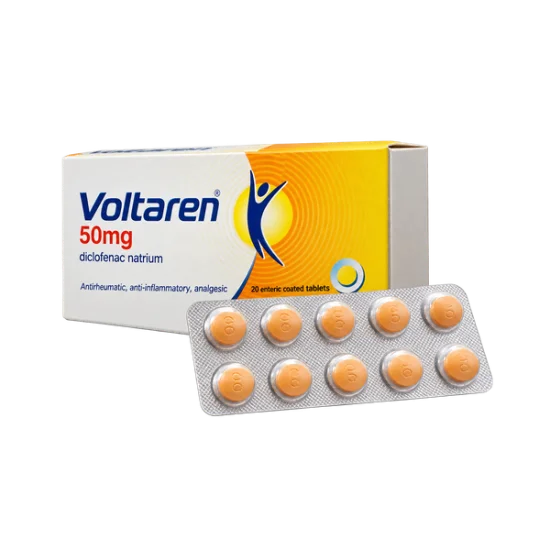
Voltaren is used in adults when oral diclofenac is selected for conditions such as arthritis, musculoskeletal pain, or acute injury. It reduces prostaglandin production, easing pain and swelling, but…
Voltaren is used in adults when oral diclofenac is selected for conditions such as arthritis, musculoskeletal pain, or acute injury. It reduces prostaglandin production, easing pain and swelling, but requires careful dosing because systemic exposure can affect the stomach, kidneys, heart, and liver.
Product information
Diclofenac sodium, a non-steroidal anti-inflammatory drug (NSAID), is the active ingredient of Voltaren tablets for inflammatory pain. The dose is determined individually, taking age, other medicines, and health conditions into account.
Directions for use
Dosage and Administration
The dose of Voltaren is decided individually, taking age, other medicines, and health conditions into account. The prescribed dose should be used for the shortest duration that provides adequate symptom control.
For oral tablets:
- Swallow the tablet with water.
- Take it with food or after food when directed.
- Do not take more tablets or doses than prescribed.
- Avoid combining it with another NSAID unless a prescriber specifically directs this.
- If a dose is missed, take the next scheduled dose as directed rather than doubling the amount.
The tablet should be swallowed whole unless the product’s regulatory instructions specifically allow another method. Crushing, chewing, or splitting a coated tablet can alter how it is taken and may increase local irritation in the mouth or throat. A pharmacist or prescriber can confirm whether a particular tablet can be divided when a smaller dose is required.
Duration matters. Diclofenac is not automatically suitable for continuous self-treatment because gastrointestinal, kidney, cardiovascular, and liver risks can rise with longer exposure. A treatment plan may also include exercise, physiotherapy, weight management, heat or cold therapy, or another pain strategy depending on the condition. Short courses limit exposure. Review the plan regularly.
Common Administration Mistakes
- Taking Voltaren together with ibuprofen or naproxen without medical direction.
- Doubling the next dose after forgetting one.
- Using the tablet to mask worsening pain, fever, black stools, vomiting blood, or severe abdominal pain.
- Continuing it despite ankle swelling, reduced urine, chest pain, breathlessness, or a widespread rash.
- Assuming that a lower pain score means the underlying injury has healed.
Ingredients
Voltaren contains diclofenac sodium, an NSAID with analgesic, anti-inflammatory, and antirheumatic activity. The product is supplied as tablets.
The pharmacological profile includes:
- Active ingredient: diclofenac sodium.
- Drug class: non-steroidal anti-inflammatory drug.
- Dosage form: coated oral tablet.
- Main actions: analgesic, anti-inflammatory, and antirheumatic.
- Typical clinical use: inflammatory joint, muscle, tendon, and acute pain conditions selected by a prescriber.
Diclofenac diethylamine is a different salt used in some topical formulations. It should not be assumed to have the same dosage instructions as diclofenac sodium tablets.
Medsafe and the European Medicines Agency describe these systemic risks in their diclofenac safety information [1].
How it affects the body
Voltaren Pharmacological Profile and Mechanism of Action
Diclofenac works throughout the body after absorption from the digestive tract, unlike topical pain relief products that act mainly near the application site.
Diclofenac blocks cyclo-oxygenase enzymes, including COX-2 and COX-1. These enzymes help produce prostaglandins, chemical messengers involved in pain sensitisation, swelling, and inflammation. Lower prostaglandin production can reduce tenderness, stiffness, and movement-related pain. The same mechanism also explains why diclofenac can affect the stomach lining, kidneys, blood pressure, and cardiovascular system.
Inhibition of Inflammatory Pathways
COX-2 activity rises during many inflammatory processes. Diclofenac reduces the formation of prostaglandin E2, a mediator associated with pain sensitivity and local inflammation. It does not remove the underlying cause of arthritis or repair damaged cartilage. Its role is symptom control, allowing movement and daily activities to become more manageable while the underlying condition is treated.
Therapeutic indications
Therapeutic Indications in Osteoarthritis and Joint Pain Management
Voltaren may be selected for inflammatory pain associated with osteoarthritis, rheumatoid arthritis, acute musculoskeletal injury, sprains, strains, dental pain, or painful menstrual periods. The appropriate indication depends on the diagnosis and the individual treatment plan.
Osteoarthritis is a degenerative joint condition involving cartilage change, altered bone structure, and inflammation around the joint. It commonly affects the knees, hips, hands, spine, and feet. Diclofenac can reduce pain and stiffness, though it does not reverse osteoarthritis or rebuild cartilage.
Targeted Joint Applications
Oral diclofenac may be considered when pain affects more than one joint, when symptoms are severe, or when a topical preparation is unlikely to reach the painful tissue adequately. It can also be used for acute pain where inflammation contributes to symptoms.
Topical diclofenac is often considered for superficial peripheral joints such as the hands or knees. Oral Voltaren has a broader systemic distribution, but this wider exposure brings more interaction and adverse-effect considerations.
Patients with arthritis often make a practical mistake: they judge the tablet only by its pain-relieving effect and forget that reduced pain can encourage excessive activity. A knee may feel better before the irritated tissues have recovered. Increasing walking, lifting, or sport too quickly can prolong the original problem.
Common mistakes
Common Patient Mistakes
Poor results often come from administration errors rather than a lack of pharmacological activity.
- Combining Voltaren with ibuprofen, naproxen, or another NSAID.
- Taking it on an empty stomach despite previous indigestion or ulcer symptoms.
- Forgetting to mention warfarin, an anticoagulant, a steroid, lithium, or a diuretic.
- Continuing the medicine after black stools, severe abdominal pain, facial swelling, or reduced urine appears.
- Taking a double dose after a missed tablet.
- Using leftover tablets for a new pain problem with a different cause.
- Assuming that a 50 mg tablet is suitable for every adult.
- Drinking heavily while taking repeated doses.
- Failing to tell a clinician about kidney disease, high blood pressure, heart disease, or a previous ulcer.
One detail patients often miss is that swelling of the ankles may reflect fluid retention rather than simple inflammation. Another is that a stomach-protective medicine, when prescribed, does not eliminate all bleeding risk. It reduces risk in selected patients but does not make excessive NSAID use harmless.
Reasons not to use it
Contraindications and Important Interactions
Voltaren is not suitable for everyone. It should not be used by people with a previous serious allergic reaction to diclofenac, aspirin, or another NSAID, including asthma, nasal swelling, or hives triggered by these medicines.
Important interactions include:
- Anticoagulants, such as warfarin, apixaban, or rivaroxaban, which can increase bleeding risk.
- Antiplatelet medicines, including aspirin or clopidogrel.
- Corticosteroids, which can raise the risk of gastrointestinal ulceration.
- Selective serotonin reuptake inhibitors, which may add to bleeding risk.
- ACE inhibitors, angiotensin receptor blockers, and diuretics, which may increase kidney problems or reduce blood-pressure control.
- Lithium, methotrexate, ciclosporin, or tacrolimus, because diclofenac may increase exposure or toxicity.
- Other NSAIDs, including ibuprofen, naproxen, ketoprofen, and high-dose aspirin.
Alcohol can add to stomach irritation and may worsen dizziness or poor judgement around dosing. Heavy alcohol use also increases concern about liver injury and gastrointestinal bleeding. Regular alcohol intake should be discussed as part of the medication assessment.
When this is not for you
This Medication Is Not for You If
- You currently have, or have recently had, a stomach or intestinal ulcer.
- You have active gastrointestinal bleeding.
- You have severe kidney, liver, or heart failure.
- You have established cardiovascular disease where diclofenac risk is unacceptable.
- You have had a serious NSAID-related allergic reaction.
- You are recovering from coronary artery bypass surgery.
- You are in late pregnancy, where systemic NSAIDs may harm the fetus and affect labour.
- A clinician has specifically advised against diclofenac because of your medical history.
Unwanted effects
Safety Profile and Adverse Effects
The most common problems with oral diclofenac involve the digestive system. Possible effects include indigestion, nausea, abdominal discomfort, diarrhoea, constipation, headache, dizziness, and skin rash. Some people tolerate it well for a short course; others develop stomach symptoms early.
More serious reactions require urgent medical attention. These include:
- Black or bloody stools.
- Vomiting blood or material resembling coffee grounds.
- Severe or persistent abdominal pain.
- Swelling of the face, lips, tongue, or throat.
- Wheezing or difficulty breathing.
- Chest pain, sudden weakness, or speech difficulty.
- A marked reduction in urine.
- Yellowing of the skin or eyes.
- A blistering or peeling skin reaction.
NSAIDs can increase the risk of gastrointestinal ulceration and bleeding. Diclofenac can also affect kidney function, fluid balance, blood pressure, liver enzymes, and cardiovascular risk. The risk is higher with older age, previous ulcer disease, dehydration, kidney disease, heart disease, high blood pressure, anticoagulant use, corticosteroids, or prolonged treatment.
A useful practical distinction is that oral Voltaren has systemic effects. A topical diclofenac product may produce more local skin reactions but generally causes lower systemic exposure when used correctly. Oral tablets can be more suitable for widespread or deeper pain, yet they carry a broader interaction profile.
Sun sensitivity and skin reactions are also possible with NSAIDs. A rash that spreads, blisters, or involves the mouth or eyes needs prompt assessment. Medsafe’s diclofenac safety information describes gastrointestinal, cardiovascular, kidney, liver, and hypersensitivity risks associated with systemic use [2].

Comparison
Comparative Analysis of Voltaren and Alternative Analgesic Options
The most suitable pain reliever depends on whether inflammation is present, where the pain is located, the required duration, and the person’s medical history.
| Option | Main characteristics |
|---|---|
| Voltaren: diclofenac sodium | Oral NSAID that reduces prostaglandin production; useful for inflammatory joint and musculoskeletal pain but carries gastrointestinal, kidney, liver, and cardiovascular risks. |
| Ibuprofen or naproxen | Oral NSAIDs with similar anti-inflammatory principles; they share bleeding, kidney, blood-pressure, and cardiovascular precautions. |
| Acetaminophen, celecoxib, meloxicam, or tramadol | Different mechanisms and risk profiles; suitability depends on liver function, cardiovascular risk, sedation risk, inflammation, and the type of pain. |
Topical diclofenac can be preferable for a small, superficial joint when systemic exposure needs to be limited. Oral Voltaren may be considered for wider pain distribution or when topical treatment cannot adequately reach the affected tissues. Celecoxib and meloxicam are also anti-inflammatory medicines, while acetaminophen is mainly analgesic and antipyretic, with less direct anti-inflammatory activity. Tramadol acts through central nervous system pathways and can cause dizziness, constipation, dependence, and breathing-related complications.
No NSAID is automatically the safest choice for every person. A history of ulcer bleeding may favour a different strategy from a history of heart failure, chronic kidney disease, or liver disease. NICE osteoarthritis guidance recommends matching treatment to symptoms, comorbidities, and risk factors rather than using a single medicine for every patient [3].
What doctors say
Doctor Perspectives on Voltaren
In clinical practice, prescribers usually treat diclofenac as a targeted course rather than a permanent solution for recurring pain. They assess the diagnosis, the expected duration, other medicines, and the patient’s gastrointestinal, kidney, liver, and cardiovascular history before selecting the dose.
A doctor may also ask whether the pain is changing character. New night pain, fever, unexplained weight loss, progressive weakness, a hot swollen joint, or pain after significant trauma can indicate a problem that needs assessment beyond analgesia.
Older adults often need closer monitoring because kidney function, stomach protection, blood-pressure control, and medicine interactions become more significant with age. Reduced thirst can also make dehydration less obvious, and dehydration increases the risk of NSAID-related kidney injury.
The practical goal is usually the lowest suitable exposure for the shortest useful period. Pain relief should support rehabilitation and normal movement without hiding symptoms that require review.
What customers often ask
What is the best time of day to take Voltaren?
The best timing depends on the prescribed schedule, the pain pattern, and other medicines. Taking an oral tablet with food or immediately after food may reduce stomach irritation, although it does not prevent ulceration or bleeding. Medsafe’s 2024 diclofenac data sheet treats food as a tolerability measure rather than protection from serious NSAID complications.
Can alcohol be used while taking Voltaren?
Alcohol can increase stomach irritation and may add to the risk of gastrointestinal bleeding, especially with repeated doses or a history of ulcers. It can also worsen dizziness and make accidental double-dosing more likely. The WHO 2020 guideline supports limiting factors that add gastrointestinal or liver stress while diclofenac is being used.
Is Voltaren suitable for older adults?
Older adults can use diclofenac in selected circumstances, but age-related changes in kidney function, cardiovascular health, and stomach protection may increase the risk of complications. The dose is decided individually, taking age, other medicines, and health conditions into account. The EMA’s 2013 diclofenac referral assessment report supports careful risk assessment and the shortest suitable treatment duration for systemic diclofenac.
Can the Voltaren tablet be split, crushed, or chewed?
The tablet should be swallowed with water unless a prescriber or pharmacist confirms that another method is suitable for that specific formulation. Crushing or chewing can change how a coated tablet is taken and may increase irritation in the mouth or stomach. Medsafe’s 2024 diclofenac data sheet supports following the dosage-form instructions for oral diclofenac rather than altering the tablet independently.
How long does one Voltaren dose keep working?
The duration of pain relief varies with the condition, the dose, individual metabolism, and the severity of inflammation. A further dose should not be taken simply because pain returns early; the prescribed interval must be followed. The EMA’s 2013 diclofenac referral assessment report supports using the lowest suitable exposure and avoiding extra doses outside the treatment plan.
Do you offer anonymous delivery?
Your order will be securely packed and shipped within 24 hours. This is exactly what your package will look like (images of an actual item sent). It has the size and look of a regular private letter (24x11x0.7 cm) and its contents cannot be seen.
Comparison
How Buyers Rate Voltaren
Based on 4 reviews
The pain settled within the first day and I could sleep. I felt slightly dizzy after one dose, so I avoided driving and changed the timing with medical advice.
Auckland One day 19 Nov 2026It helped the movement, but it did not fix the shoulder itself. I stopped after the planned course and continued the exercises because relying on tablets alone was not enough.
Queenstown Several days 10 Nov 2026The relief was useful, but I developed stomach burning and needed a different plan. I had assumed a short supply could not cause problems, which turned out to be wrong.
Palmerston North Several days 22 Oct 2026Sources
- European Medicines Agency (2013). Diclofenac-containing medicines: referral assessment report and cardiovascular safety information.
- Medsafe (2024). Diclofenac sodium: data sheet and consumer medicine information.
- National Institute for Health and Care Excellence (2022). Osteoarthritis in over 16s: diagnosis and management, NICE guideline NG226.