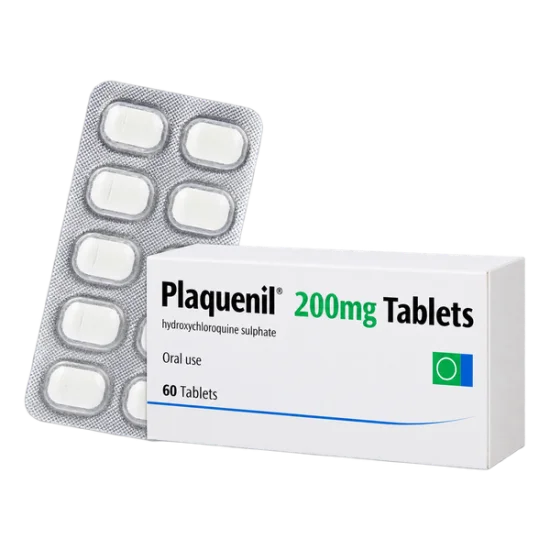
I used Plaquenil at the prescribed dose for about four months for lupus-related joint stiffness. The first few weeks brought mild nausea, which improved when I took it with dinner. My hands felt less stiff by the third month, although I still needed another treatment during flares.
Dunedin About four months 10 Nov 2026Plaquenil
It is prescribed for malaria and chronic inflammatory conditions such as rheumatoid arthritis and systemic or discoid lupus erythematosus. Plaquenil reduces parasite activity and modulates immune…
It is prescribed for malaria and chronic inflammatory conditions such as rheumatoid arthritis and systemic or discoid lupus erythematosus. Plaquenil reduces parasite activity and modulates immune signalling that drives inflammation.
Product information
Hydroxychloroquine sulfate, the active ingredient of Plaquenil, is an aminoquinoline medicine used as an antimalarial and disease-modifying antirheumatic drug.
Directions for use
Plaquenil is supplied as tablets. The appropriate amount differs between strengths and between users, so there is no single amount that suits everyone. The prescriber selects the regimen according to the indication, body weight, kidney and liver function, age, interacting medicines, and the required treatment duration.
Common prescribing principles include:
- Rheumatoid arthritis and lupus treatment may use a regular daily dose, divided or taken once daily according to the prescribed plan.
- Long-term dosing is calculated with retinal safety in mind. The American Academy of Ophthalmology uses actual body weight when assessing hydroxychloroquine exposure and retinal risk.
- Malaria prevention is commonly prescribed as a weekly regimen for adults when hydroxychloroquine is appropriate for the destination.
- Malaria treatment uses a different short-course schedule and should follow the prescriber’s written instructions.
- Tablets are taken orally with food or milk. This can reduce nausea and stomach discomfort.
- Swallow tablets with water. Do not crush or chew them unless a prescriber has specifically directed an alternative method.
- If a dose is missed, take it when remembered unless the next scheduled dose is close. Do not take two doses together to compensate.
Kidney impairment can increase exposure to hydroxychloroquine and may require a lower dose or closer monitoring. The same applies to some people with liver disease, older age, or multiple interacting medicines.
An overdose can cause dangerous low blood pressure, low blood sugar, seizures, rhythm disturbances, and breathing problems. Suspected overdose requires urgent emergency assessment, even when the person initially feels well.
Ingredients
Plaquenil tablets contain hydroxychloroquine sulfate. The medicine belongs to the aminoquinoline class and is classified as a conventional synthetic DMARD, or disease-modifying antirheumatic drug, for inflammatory rheumatic disease. Its ATC classification is P01BA02.
Hydroxychloroquine is used orally. Its chemical structure allows it to accumulate inside acidic cellular compartments, including lysosomes, and interfere with processes involved in parasite survival and immune activation. The New Zealand Medicines and Medical Devices Safety Authority, Medsafe, recognises hydroxychloroquine as a medicine requiring careful attention to retinal, cardiac, and blood-related risks.
Active Ingredient and Chemical Structure
The active pharmaceutical ingredient is hydroxychloroquine sulfate. It is related chemically to chloroquine, but the two medicines have different clinical profiles and should not be substituted without a prescriber’s direction.
As a DMARD, Plaquenil does not simply suppress pain for a few hours. It changes immune activity over time, so improvement in rheumatoid arthritis or lupus symptoms can develop gradually. Plaquenil is not an antidepressant, tranquilizer, or sedative.
How it affects the body
Hydroxychloroquine is an aminoquinoline that accumulates in acidic cellular compartments such as lysosomes, where it alters processes involved in parasite survival and immune activation. By modifying antigen processing and inflammatory signalling, it reduces immune activity and parasite activity.
Therapeutic indications
Plaquenil has two main therapeutic roles: antimalarial treatment or prevention, and long-term control of autoimmune inflammation. The dosage, treatment duration, and monitoring plan differ sharply between these uses.
| Clinical use | Main therapeutic goal | Typical treatment context |
|---|---|---|
| Rheumatoid arthritis | Reduce inflammatory joint activity and prevent disease progression | Long-term DMARD treatment |
| Systemic or discoid lupus erythematosus | Control immune-driven symptoms affecting skin, joints, and other tissues | Long-term specialist-guided treatment |
| Malaria | Treat or prevent susceptible malaria infection | Travel prophylaxis or treatment of susceptible parasites |
Management of Autoimmune Inflammatory Conditions
For rheumatoid arthritis, Plaquenil may be used when joint inflammation is mild, as part of combination treatment, or when a clinician wants a DMARD with a different monitoring profile from methotrexate. It can reduce joint pain, stiffness, and swelling by modifying antigen processing and inflammatory signalling.
Systemic lupus erythematosus, or SLE, can affect the skin, joints, blood cells, kidneys, nervous system, and other organs. Hydroxychloroquine is commonly used as a foundation treatment for many people with lupus because it can help control ongoing disease activity and reduce flare frequency. Discoid lupus mainly affects the skin, although wider assessment may be needed when symptoms suggest systemic involvement.
The benefit is gradual. A patient may notice early changes in skin or joint symptoms before the full DMARD effect develops. Stopping after a few days because symptoms have not changed is a frequent cause of apparent treatment failure.
Prevention and Treatment of Malaria
Hydroxychloroquine can prevent or treat malaria caused by parasites that remain susceptible to it. Resistance is common in some regions, including areas where Plasmodium falciparum is prevalent, so the destination, parasite species, and local resistance pattern determine whether Plaquenil is suitable.
For travel prevention, treatment usually begins before exposure and continues after leaving the risk area. Treatment of established malaria requires a specific regimen and medical assessment, especially when fever, confusion, breathing difficulty, vomiting, or weakness is present.
The WHO malaria guidelines distinguish between malaria species, geographic resistance, and uncomplicated versus severe infection. Plaquenil should not be treated as a universal malaria medicine for every destination or infection.

Common mistakes
Several practical errors can reduce benefit or increase risk:
- Taking an extra tablet after a missed dose.
- Stopping treatment after one or two weeks because joint or skin symptoms remain.
- Taking Plaquenil with a medicine that prolongs the QT interval without reporting the combination.
- Forgetting to mention tamoxifen, digoxin, antiarrhythmics, or diabetes treatment.
- Missing retinal screening during long-term therapy.
- Assuming that malaria prevention is suitable for every travel destination.
- Using leftover tablets to treat a new fever after travel.
- Reporting only eye pain while failing to mention blurred central vision or missing visual areas.
- Changing the schedule repeatedly because the tablet is taken at inconsistent times.
One subtle issue is that reduced kidney function can increase drug exposure even when the tablet strength has not changed. A dose that was tolerated years earlier may require reassessment after kidney function declines.
Reasons not to use it
- Existing maculopathy or retinopathy unrelated to hydroxychloroquine.
- Previous serious allergy to hydroxychloroquine or related aminoquinoline medicines.
- Significant heart rhythm disease, prolonged QT interval, or use of several QT-prolonging medicines.
- Severe kidney or liver impairment without an adjusted treatment plan.
- G6PD deficiency, where haemolysis may occur in susceptible individuals.
- Existing blood disorders, muscle weakness, or neuromuscular disease requiring clinical review.
- Pregnancy or breastfeeding when the indication, dose, and monitoring plan have not been assessed.
- Concomitant tamoxifen use, which increases concern about retinal toxicity.
The Royal College of Ophthalmologists and ophthalmology guidance stress structured screening rather than relying only on symptoms [1].
When this is not for you
Plaquenil is NOT for you if a prescriber has identified a contraindication, serious interaction, or monitoring problem. Tell the prescriber if you have eye disease, heart rhythm problems, kidney or liver disease, G6PD deficiency, blood or neuromuscular disorders, or if you are pregnant, breastfeeding, or taking tamoxifen.
Unwanted effects
Retinal damage can be irreversible and may progress after hydroxychloroquine is stopped. Long-term users should report new difficulty reading, blurred central vision, missing areas in the visual field, light sensitivity, or unusual changes in colour perception. Do not wait for pain: hydroxychloroquine retinal toxicity can develop without early discomfort.
Hydroxychloroquine may rarely cause cardiomyopathy or conduction abnormalities after prolonged exposure. Unexplained breathlessness, ankle swelling, fainting, palpitations, or marked exercise intolerance requires medical assessment.
Long-term treatment may also be associated with muscle weakness, nerve symptoms, or blood abnormalities.
Comparison
Plaquenil occupies one position among conventional synthetic DMARDs. Choice depends on diagnosis, pregnancy plans, kidney and liver function, infection risk, disease severity, and the organs affected by lupus or rheumatoid arthritis.
| Treatment approach | Main monitoring focus | Typical clinical role |
|---|---|---|
| Hydroxychloroquine | Retinal screening, blood tests, cardiac risk review | Mild-to-moderate inflammatory disease, lupus foundation therapy, combination treatment |
| Methotrexate | Blood counts, liver function, kidney function, lung and infection risks | Common first-line rheumatoid arthritis treatment and escalation therapy |
| Leflunomide or sulfasalazine | Liver and blood monitoring; gastrointestinal or allergic reactions | Alternatives or combination DMARDs when methotrexate is unsuitable |
Methotrexate often has a stronger role when rheumatoid arthritis is aggressive or threatens joint structure, while hydroxychloroquine may be selected for milder disease or lupus-related symptoms. Leflunomide can be useful when methotrexate is unsuitable, but pregnancy planning requires careful attention because of its prolonged elimination. Sulfasalazine is another conventional DMARD with its own blood and liver monitoring requirements.
Chloroquine is pharmacologically related to hydroxychloroquine, yet the medicines are not interchangeable on a tablet-for-tablet basis. Their toxicity profiles, dosing, and clinical suitability differ.
What doctors say
In clinical practice, prescribers usually judge Plaquenil over months rather than days when treating rheumatoid arthritis or lupus. The medicine may reduce inflammatory activity without producing a noticeable immediate sensation after each tablet.
A rheumatologist will often ask about morning stiffness, swollen joints, rashes, mouth ulcers, fatigue, steroid use, and flare frequency. A stable symptom diary can reveal gradual improvement that is difficult to remember from one appointment to the next.
Doctors also balance benefit against cumulative exposure. The retinal dose, kidney function, age, tamoxifen use, and screening history influence whether long-term treatment remains appropriate. Medsafe safety information supports ongoing vigilance for visual, cardiac, blood, and neuromuscular effects [2].
A common prescribing mistake is to increase the dose simply because symptoms remain active early in treatment. The better approach is to confirm adherence, check the diagnosis and disease activity, review interactions, and allow the expected onset period when clinically appropriate.
What customers often ask
Can Plaquenil affect driving, concentration, or work with machinery?
Plaquenil is not a sedative, so routine drowsiness is not its defining effect. Visual changes, dizziness, low blood sugar, weakness, or cardiac symptoms can make driving or machinery work unsafe. Medsafe guidance available in 2021 describes visual and neurological effects that should prompt caution, while the WHO recognises hydroxychloroquine as a medicine requiring indication-specific monitoring. Do not drive if vision becomes blurred, central areas appear missing, or dizziness affects control. A clinician can advise when these symptoms have resolved.
What should I do after a missed Plaquenil dose?
Take the missed tablet when remembered unless the next dose is due soon. Skipping the missed dose is safer than doubling the next one. The FDA Plaquenil prescribing information reviewed in 2023 gives the same general principle for avoiding dose accumulation after a missed dose. For malaria prevention, a missed weekly dose may require a revised schedule, especially if travel or exposure has already occurred.
What should be checked before starting Plaquenil?
Before treatment, the prescriber should review retinal disease, kidney and liver function, heart rhythm history, fainting, G6PD deficiency, blood disorders, neuromuscular disease, pregnancy, breastfeeding, and every current medicine. The EMA hydroxychloroquine safety referral published in 2020 highlights QT-prolonging combinations and cardiac risk factors. A baseline eye assessment is relevant when long-term treatment is planned, while ECG or blood testing depends on the person’s risk profile.
What happens if the expected result does not come?
For rheumatoid arthritis or lupus, response may take several weeks or longer, and persistent symptoms do not automatically mean that the dose should be increased. NICE guidance for rheumatoid arthritis, published in 2020, supports reviewing disease activity and adjusting DMARD treatment when control remains inadequate. The prescriber may assess adherence, interactions, kidney function, disease severity, and whether another DMARD is needed. New fever, severe weakness, sudden visual symptoms, chest palpitations, or breathing difficulty requires prompt medical assessment rather than waiting for the medicine to work.
Is Plaquenil suitable for older adults?
Older adults may use Plaquenil, but kidney function, heart rhythm, vision, body weight, and interacting medicines deserve closer attention. The British Society for Rheumatology monitoring guidance published in 2022 describes age and renal impairment as factors that can alter toxicity risk. Older people are also more likely to take digoxin, amiodarone, diuretics, or glucose-lowering medicines, which can change the monitoring plan. A lower dose may be selected when exposure is increased by reduced clearance.
Can Plaquenil be used during pregnancy or breastfeeding?
Hydroxychloroquine may be continued during pregnancy for some autoimmune conditions when disease control benefits the mother and fetus, but the decision is individual. The American College of Rheumatology reproductive health guideline published in 2020 supports hydroxychloroquine use in many pregnancies with rheumatic disease when clinically indicated. Breastfeeding decisions depend on dose, maternal disease, and the infant’s health, with specialist review of the current treatment plan. Do not stop treatment abruptly during pregnancy without discussing the effect of uncontrolled lupus or rheumatoid arthritis.
What happens when Plaquenil is stopped, and does it need tapering?
Plaquenil does not usually require tapering in the same way as corticosteroids, but stopping can allow autoimmune symptoms to return because the disease-modifying effect fades gradually. The British Society for Rheumatology guideline published in 2022 recommends treatment decisions based on disease activity, remission stability, and the wider DMARD plan. Malaria prophylaxis also has a defined post-exposure period, so stopping early can leave a protection gap. A planned discontinuation should include a replacement or monitoring strategy when Plaquenil has been controlling lupus or rheumatoid arthritis.
Do you offer anonymous delivery?
Your order will be securely packed and shipped within 24 hours. This is exactly what your package will look like (images of an actual item sent). It has the size and look of a regular private letter (24x11x0.7 cm) and its contents cannot be seen.
Comparison
How Buyers Rate Plaquenil
Based on 4 reviews
I took 200 mg daily for rheumatoid arthritis and noticed less morning stiffness after several weeks. The eye appointment was easy to postpone, so I was glad the clinic contacted me. The medicine helped, but it was not enough on its own when my joints became very swollen.
Queenstown Several weeks 15 Oct 2026Plaquenil at the prescribed dose helped my skin symptoms after roughly eight weeks. I developed headaches at the beginning and missed a few doses because I changed my work routine. Taking it with food made the stomach upset easier, but I still needed regular reviews.
Whanganui Roughly eight weeks 30 Oct 2026I used hydroxychloroquine at the prescribed dose for several months during a lupus flare plan and stopped after discussing it with my rheumatology team. I did not notice a dramatic change from one tablet, but the longer-term pattern of rashes was better. The screening appointments felt inconvenient, although I understood why they were required.
Wellington Several months 23 Oct 2026Sources
- Royal College of Ophthalmologists (2020). Recommendations on screening for hydroxychloroquine and chloroquine users in the United Kingdom.
- Medsafe (2021). Plaquenil Data Sheet.