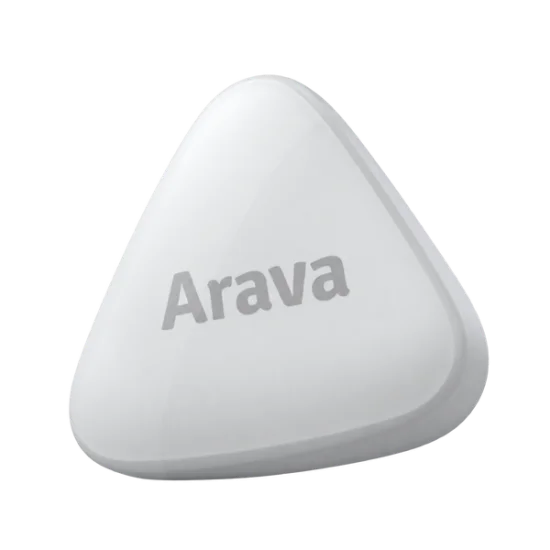
I used Arava for several months for rheumatoid arthritis. My hands became less stiff in the mornings, and I could manage tools at work more easily. The first weeks included loose stools, which settled, but the blood tests were a regular part of treatment.
Timaru Several months 6 Oct 2026Arava
Rheumatoid arthritis and psoriatic arthritis can cause persistent inflammation, stiffness, pain, and progressive joint damage. Arava contains leflunomide, a disease-modifying anti-rheumatic drug…
Rheumatoid arthritis and psoriatic arthritis can cause persistent inflammation, stiffness, pain, and progressive joint damage. Arava contains leflunomide, a disease-modifying anti-rheumatic drug (DMARD) prescribed for adults with these inflammatory joint conditions.
Product information
It reduces immune-cell activity through inhibition of pyrimidine synthesis, helping control disease activity rather than only easing pain. The course of inflammation can vary between individuals. Treatment decisions therefore combine symptoms, examination findings, and laboratory results.
Directions for use
Arava is taken by mouth as tablets. The prescribed regimen differs between strengths and between users, so there is no single amount that suits everyone. A clinician may use an initial phase followed by a maintenance regimen, or may choose a slower approach when tolerability is a concern.
The treatment plan should specify:
- The tablet strength
- The number of tablets per dose
- The dosing frequency
- Whether an initial loading regimen is used
- The intended review schedule
- Blood-test timing
- The plan for missed doses or treatment interruption
Take the tablets exactly at the prescribed frequency, with water. Swallowing them at a consistent time can make adherence easier. Do not alter the regimen because joint symptoms improve; DMARD treatment is intended to maintain control over time.
Leflunomide has a long half-life. A missed dose should not be replaced by taking extra tablets unless a prescriber gives that instruction. If a dose is remembered close to the next scheduled dose, the usual approach is to omit the missed dose and resume the regular schedule.
Alcohol can add to liver stress, especially when liver enzymes are already elevated or another liver-affecting medicine is being used. Ask the prescribing clinician for a specific alcohol limit rather than assuming that occasional drinking is harmless.
Ingredients
Arava contains leflunomide as its active substance. Leflunomide reduces immune-cell activity by inhibiting pyrimidine synthesis and is used as a disease-modifying treatment for inflammatory joint conditions.
How it affects the body
After oral administration, leflunomide is converted to an active metabolite that blocks dihydroorotate dehydrogenase, an enzyme involved in the production of pyrimidines. Pyrimidines are building blocks needed by cells to make DNA and RNA.
Activated lymphocytes need increased pyrimidine production when they multiply during an autoimmune response. By limiting this pathway, leflunomide reduces the expansion of certain overactive immune cells. The result is a more controlled immune response in tissues affected by rheumatoid arthritis or psoriatic arthritis.[1]
Inhibition of pyrimidine synthesis
The biochemical pathway can be understood in four stages:
- Autoimmune stimulation activates lymphocytes.
- Activated lymphocytes require pyrimidines to multiply.
- Leflunomide’s active metabolite inhibits dihydroorotate dehydrogenase.
- Reduced pyrimidine production limits further lymphocyte proliferation.
This mechanism differs from ordinary analgesics. Paracetamol and anti-inflammatory pain medicines may reduce symptoms, but they do not modify the immune process that drives rheumatoid arthritis. Leflunomide is therefore classified as a pyrimidine synthesis inhibitor and a conventional synthetic DMARD.
Targeted immune-system suppression
Leflunomide does not switch off every immune function. Its main pharmacological effect is directed toward activated immune cells that depend on de novo pyrimidine production. The immune system remains active, but some processes involved in autoimmune inflammation are reduced.
This action also explains several safety considerations. Reduced immune-cell activity can increase vulnerability to infection, while effects on liver enzymes and blood-cell production require medical monitoring. The long persistence of leflunomide’s active metabolite means adverse reactions may continue after stopping unless a clinician uses an accelerated elimination procedure.[2]
Therapeutic indications
Arava is used to manage rheumatoid arthritis and psoriatic arthritis. Leflunomide belongs to the DMARD class, which means it acts on immune-driven disease activity and may help limit structural joint damage over time. Pain relievers can reduce discomfort for several hours, while a DMARD addresses inflammatory processes that contribute to swelling, stiffness, and loss of function.
Treatment goals may include:
- Reducing swollen and tender joints
- Improving morning stiffness and movement
- Preserving hand, wrist, foot, and larger-joint function
- Reducing inflammatory activity
- Limiting progression of joint damage
- Supporting daily physical activity and independence
The response develops gradually. Arava is not intended to provide immediate pain relief after one tablet.
| Condition | Main clinical pattern | Treatment goal |
|---|---|---|
| Rheumatoid arthritis | Autoimmune inflammation affecting multiple joints, often symmetrically | Reduce inflammation and protect joint function |
| Psoriatic arthritis | Inflammatory arthritis associated with psoriasis or related skin disease | Control joint inflammation and preserve mobility |
Management of rheumatoid arthritis
Rheumatoid arthritis occurs when the immune system attacks tissues around the joints. Persistent inflammation can damage cartilage, bone, tendons, and ligaments. Small joints in the hands and feet are often affected, although knees, shoulders, elbows, hips, and other joints can also become involved.
Arava may be selected when a patient needs a conventional DMARD to control inflammatory disease. Its purpose is not simply to make painful joints feel more comfortable for a short period. By reducing abnormal immune activity, leflunomide can help lower disease activity and support functional capacity.
Morning stiffness can be a useful day-to-day marker. A gradual reduction in stiffness, fewer swollen joints, or easier hand movement may indicate improvement before pain scores change dramatically.
Management of psoriatic arthritis
Psoriatic arthritis combines musculoskeletal inflammation with psoriasis-related disease. It may affect the spine, fingers, toes, knees, or other joints. Some people develop whole-finger or whole-toe swelling, tendon pain, or stiffness at the points where tendons attach to bone.
Arava may help control the joint component of psoriatic arthritis. Skin symptoms may not improve to the same degree, because joint inflammation and skin inflammation can respond differently to treatment. A rheumatologist may assess both joint findings and dermatological symptoms when judging the result.
Common mistakes
- Stopping as soon as joint pain improves
- Skipping blood tests because there are no symptoms
- Taking extra tablets after a missed dose
- Starting another immune-modifying medicine without informing the prescriber
- Failing to mention regular alcohol use
- Ignoring diarrhoea that continues for several days
- Treating fever as an ordinary cold without considering immune suppression
- Forgetting to discuss contraception or pregnancy plans
- Assuming a skin flare means the joint treatment has failed
- Using leftover tablets after a treatment interruption
Reasons not to use it
Formal contraindications and important clinical precautions include:
- Pregnancy or plans to become pregnant during treatment
- Breastfeeding
- Severe liver disease
- Significant unexplained liver-enzyme elevation
- Severe immune deficiency
- Serious infection that is not controlled
- Major impairment of bone-marrow function
- Severe anaemia, low white-cell count, or low platelet count
- A previous serious allergic reaction to leflunomide or its components
Important medicine interactions include other hepatotoxic drugs, medicines that suppress bone marrow, and additional immune-modifying treatments. Warfarin and some other medicines may require closer monitoring when treatment changes. Regular alcohol use can increase concern about liver toxicity.
When this is not for you
Arava is not suitable for everyone. This treatment is not for you if any of the following apply unless a specialist has made a documented decision that treatment is appropriate:
- You are pregnant or plan to become pregnant during treatment.
- You are breastfeeding.
- You have severe liver disease or unexplained abnormal liver tests.
- You have a serious infection that is not controlled.
- You have severe immune deficiency or a major blood-cell problem.
- You have previously had a serious allergic reaction to leflunomide or its components.
Pregnancy prevention is a major issue because leflunomide can remain in the body for a prolonged period. Anyone who becomes pregnant while taking Arava should contact the prescribing team urgently. A drug-elimination procedure may be required before pregnancy can be considered.
A persistent cough, unexplained weight loss, recurrent infections, numbness, severe rash, or new breathing difficulty also deserves prompt medical attention. These symptoms can reflect infection, allergic reaction, nerve toxicity, or another complication requiring treatment review.
Unwanted effects
Leflunomide can cause gastrointestinal symptoms, headache, dizziness, skin reactions, hair thinning, raised blood pressure, and changes in liver enzymes. Some reactions are mild and temporary. Others require prompt assessment or treatment interruption.
Commonly reported effects include:
- Diarrhoea or loose stools
- Nausea or reduced appetite
- Headache
- Mild respiratory infections
- Hair loss or hair thinning
- Skin rash
- Increased blood pressure
- Abnormal liver-function results
Diarrhoea may settle with time, but persistent or severe diarrhoea needs medical review. Hair thinning can be distressing even when medically mild. It may improve after treatment changes, although the timing differs between patients.
Hepatotoxicity risks and hepatic monitoring
Leflunomide can cause drug-related liver injury. Liver-function testing is generally performed before treatment and at regular intervals during therapy. Tests commonly include alanine aminotransferase, aspartate aminotransferase, bilirubin, and other laboratory measures chosen by the clinician.
Routine blood monitoring may also include:
- Full blood count
- Platelet count
- Liver enzymes
- Kidney-function assessment when clinically indicated
- Blood pressure checks
The exact testing schedule depends on local practice, results, concurrent medicines, and individual risk. Medsafe safety information and European regulatory guidance emphasise liver monitoring because clinically significant enzyme elevations can occur during treatment.[4]
Seek urgent medical assessment for yellowing of the skin or eyes, dark urine, pale stools, severe upper abdominal pain, persistent vomiting, marked weakness, or widespread itching. These symptoms can signal significant liver dysfunction.
General tolerability profile
A patient may tolerate Arava well but still require regular testing because liver injury or blood-count changes can develop without dramatic symptoms. Feeling well does not replace laboratory monitoring.
Infection risk also deserves attention. Fever, breathlessness, painful urination, persistent cough, or a rapidly worsening local infection should be reported promptly. Vaccination planning is best discussed before treatment begins, since some live vaccines may be unsuitable during immune-modifying therapy.
Comparison
The best DMARD depends on disease pattern, previous treatment, pregnancy plans, liver health, infection risk, and the patient’s response. These medicines should not be switched or combined without a rheumatology-led plan.
| Treatment approach | Main mechanism | Typical clinical distinction |
|---|---|---|
| Leflunomide | Inhibits dihydroorotate dehydrogenase and pyrimidine synthesis | Oral DMARD with a long-persistent active metabolite |
| Methotrexate | Modifies folate-dependent pathways and immune-cell activity | Frequently used as a first-line conventional DMARD |
| Sulfasalazine | Modulates inflammatory pathways | Used in selected inflammatory arthritis patterns and combination regimens |
Leflunomide may suit a person who needs an oral conventional DMARD and has an appropriate liver and blood-count profile. Methotrexate may be preferred in other situations because clinicians have extensive experience with its use and monitoring. Sulfasalazine can be considered for specific disease patterns, including some peripheral arthritis presentations.
The trade-off with leflunomide is its prolonged persistence in the body. This can be inconvenient if a serious adverse reaction develops or pregnancy becomes a concern. Cholestyramine or activated charcoal may be used under medical supervision to accelerate elimination in selected circumstances.[3]
What doctors say
Rheumatologists generally judge Arava by disease activity rather than pain relief after an isolated dose. Useful measures include swollen-joint counts, morning stiffness, hand function, walking tolerance, inflammatory markers, and patient-reported daily limitations.
A doctor may continue treatment when mild early gastrointestinal symptoms are manageable and laboratory results remain acceptable. A persistent adverse effect, rising liver enzymes, repeated infection, or inadequate improvement may lead to dose adjustment, an elimination procedure, or a change in DMARD strategy.
One practical point is frequently missed: leflunomide’s active metabolite can persist for a long time. Stopping the tablets does not always mean the medicine has immediately left the body. The elimination procedure is prescribed selectively, not used automatically for every missed dose or minor side effect.
Treatment decisions should also include vaccination status, tuberculosis or other infection risks where clinically relevant, reproductive plans, alcohol intake, and all prescription or non-prescription medicines. The American College of Rheumatology treatment recommendations support a structured, disease-activity-based approach to rheumatoid arthritis management.[5]
What customers often ask
How does Arava differ from methotrexate?
Arava contains leflunomide, which inhibits dihydroorotate dehydrogenase and limits pyrimidine synthesis in activated lymphocytes. Methotrexate affects folate-related pathways and immune signalling through a different mechanism. The American College of Rheumatology guideline published in 2021 treats both as conventional DMARD options, with selection based on disease features, risks, previous response, and patient priorities.
How long does an Arava course last, and is long-term use acceptable?
Arava treatment may continue for months or years when disease activity is controlled and monitoring remains acceptable. It is not normally prescribed as a short course for occasional joint pain. Medsafe information published in 2022 supports ongoing clinical and laboratory assessment because liver, blood-count, infection, and pregnancy-related risks can remain relevant during long-term therapy.
What should I do if the expected result does not come?
Do not increase the dose or stop treatment independently when improvement is limited. The prescriber may assess adherence, disease activity, blood results, other inflammatory conditions, and whether a different DMARD strategy is needed. European Medicines Agency product information published in 2004 supports treatment review when response is inadequate or adverse effects outweigh benefit.
How soon does the effect of Arava become noticeable?
Arava does not usually provide immediate relief after the first tablet. Improvement in stiffness, swelling, or function may develop gradually over several weeks, with the timing varying between individuals. NICE guidance published in 2020 supports judging chronic inflammatory treatment through sustained clinical response rather than a single day’s symptoms.
Which symptoms mean I should stop and seek urgent medical help?
Yellow skin or eyes, dark urine, severe abdominal pain, widespread blistering rash, facial swelling, breathing difficulty, or a serious infection require urgent medical assessment. Do not take another dose until the prescribing team gives clear instructions when a severe reaction is suspected. Medsafe safety guidance published in 2022 identifies severe liver symptoms, serious infection, and major hypersensitivity reactions as reasons for immediate clinical attention.
Which diet, exercise, or habits help or hinder the result?
Regular low-impact activity, joint-friendly strength work, adequate sleep, and weight management can support mobility while DMARD treatment controls inflammation. Excess alcohol can increase concern about liver toxicity, and smoking can worsen inflammatory arthritis outcomes. NICE clinical guidance reviewed in 2025 supports exercise and lifestyle measures as part of inflammatory arthritis care, alongside disease-modifying treatment.
What should I do after a missed dose?
Take the missed tablet only when there is sufficient time before the next scheduled dose, according to the instructions from the prescribing team. If the next dose is due soon, skip the missed dose rather than doubling. The EMA product information for Arava, published in 2004, advises against compensating for a missed dose with extra medicine unless a clinician specifically directs it.
Do you offer anonymous delivery?
Your order will be securely packed and shipped within 24 hours. This is exactly what your package will look like (images of an actual item sent). It has the size and look of a regular private letter (24x11x0.7 cm) and its contents cannot be seen.
How Buyers Rate Arava
Based on 4 reviews
The joint swelling improved gradually rather than suddenly. I noticed better walking after about a month, though I still needed separate pain relief at times. Hair thinning bothered me, so my rheumatology team reviewed whether continuing was worthwhile.
Invercargill About one month 15 Oct 2026Arava helped my peripheral joint pain and finger stiffness. I missed one monitoring appointment because I felt well, and the clinic reminded me that laboratory checks still mattered. After that, I kept the appointments in my calendar.
Ashburton 20 Oct 2026I stopped taking the tablets after nausea and diarrhoea became persistent. The symptoms did not disappear immediately, so the doctor arranged further assessment and discussed accelerated drug elimination. The long-lasting nature of leflunomide was something I had not understood at first.
Hamilton 2 Nov 2026Sources
- European Medicines Agency (2004). Arava: European public assessment report and product information for leflunomide.
- European Medicines Agency (2019). Leflunomide-containing medicinal products: product information and risk-minimisation guidance.
- Medsafe (2022). Arava Data Sheet: leflunomide tablets.
- Medsafe (2022). Leflunomide: safety information and monitoring considerations.
- American College of Rheumatology (2021). 2021 American College of Rheumatology Guideline for the Treatment of Rheumatoid Arthritis.