My night coughing reduced during the first few weeks, and walking uphill became easier. I still needed a separate reliever during a winter chest infection, so the inhaler did not solve every breathing problem.
Wellington Several months 19 Oct 2026Symbicort
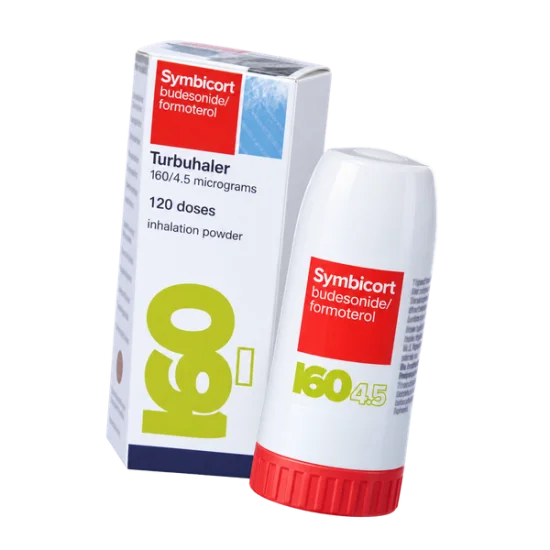
Symbicort is a Turbuhaler inhaler for people with asthma or chronic obstructive pulmonary disease. Its two inhaled medicines help reduce airway inflammation and relax airway muscles to improve…
Symbicort is a Turbuhaler inhaler for people with asthma or chronic obstructive pulmonary disease. Its two inhaled medicines help reduce airway inflammation and relax airway muscles to improve airflow and help prevent breathing symptoms.
Product information
Symbicort is a Turbuhaler inhaler containing budesonide and formoterol for asthma and chronic obstructive pulmonary disease (COPD). Inhaled budesonide reduces airway inflammation, while formoterol relaxes airway muscles to improve airflow and help prevent breathing symptoms.
Directions for use
- Dose: Use the prescribed Symbicort Turbuhaler strength; the amount differs between strengths and between users, so there is no single dose in mg/ml that suits everyone.
- Frequency: Take the number of inhalations and use them at the times prescribed for asthma or COPD; the schedule varies between users.
- Timing: Use at the prescribed time of day. No before- or after-meal timing is specified for this inhaler.
- Duration: Continue for the duration prescribed for the respiratory condition; do not extend or change treatment based only on symptoms.
- Route: Inhale through the mouthpiece. Load a dose, keep the mouthpiece dry, and inhale strongly and deeply.
- Handling: Do not shake the Turbuhaler between doses, and do not breathe out into the mouthpiece.
Ingredients
Symbicort Turbuhaler 160/4.5 contains two inhaled medicines: budesonide, an inhaled corticosteroid, and formoterol, a long-acting beta2-agonist. Each inhalation delivers 160 micrograms of budesonide and 4.5 micrograms of formoterol. This combination addresses two different causes of airflow limitation: airway inflammation and tightening of the bronchial muscles.
The inhaler contains 120 doses. Symbicort is used in asthma and COPD treatment plans, with the exact dosing schedule selected according to the condition, symptom pattern, age, lung function and other prescribed medicines. The dose counter helps track remaining inhalations. It does not replace the prescribed schedule. Technique should be checked regularly.
Role of budesonide in reducing airway inflammation
Budesonide acts locally in the airways. It reduces inflammatory activity in the bronchial lining and lowers the release of substances that contribute to swelling, mucus production and increased airway sensitivity. Over time, this can reduce wheezing, coughing and night-time symptoms.
An inhaled corticosteroid does not work like an immediate painkiller. Regular use is needed when Symbicort has been prescribed as maintenance treatment. Missing repeated doses may allow inflammation to build again even when breathing feels comfortable.
Role of formoterol as a long-acting beta2-agonist
Formoterol stimulates beta2 receptors in airway smooth muscle. The muscles relax, the airway diameter increases and breathing becomes easier. Formoterol has a relatively rapid onset compared with some other long-acting bronchodilators, while its effect is sustained.
The fast onset can make formoterol suitable for certain maintenance-and-reliever treatment plans. This applies only when the prescriber has specifically instructed the patient to use Symbicort in that way. A maintenance-only plan and a maintenance-and-reliever plan are not interchangeable.
How it affects the body
Inhaled budesonide reduces airway inflammation, while formoterol relaxes airway muscles to improve airflow and help prevent breathing symptoms.
Budesonide acts locally in the airways. It reduces inflammatory activity in the bronchial lining and lowers the release of substances that contribute to swelling, mucus production and increased airway sensitivity.
Formoterol stimulates beta2 receptors in airway smooth muscle. The muscles relax, the airway diameter increases and breathing becomes easier.
Therapeutic indications
Symbicort is prescribed for respiratory diseases involving reversible or persistent airflow limitation. Asthma is driven by airway inflammation, variable narrowing and increased sensitivity to triggers. COPD involves persistent airflow limitation, often with chronic cough, sputum production and exertional breathlessness.
The product is not assigned one universal dose for every patient. Dosing differs between strengths and between users, so there is no single amount that suits everyone.
| Condition | Treatment goal | Role of Symbicort |
|---|---|---|
| Asthma | Control inflammation and prevent symptoms or exacerbations | Maintenance therapy, or maintenance-and-reliever therapy when prescribed |
| COPD | Improve airflow and reduce daily respiratory symptoms | Maintenance treatment for selected patients |
| Acute severe breathing difficulty | Rapid clinical assessment and stabilisation | Does not replace urgent medical treatment |
Management of mild and moderate-to-severe asthma
In mild asthma, treatment aims to reduce the risk of severe flare-ups as well as control symptoms. Some patients use an inhaled corticosteroid-formoterol combination when symptoms occur, while others use it regularly with a separate reliever. The correct arrangement depends on the treatment plan prescribed for that person.
For moderate-to-severe asthma, Symbicort may be used regularly to suppress airway inflammation and maintain bronchodilation. Symptoms, night waking, activity limitation, reliever use and lung-function results help clinicians assess control.
Therapeutic application in COPD
COPD treatment focuses on reducing breathlessness, improving exercise tolerance and lowering the risk of exacerbations. Symbicort may be considered when an inhaled corticosteroid is appropriate alongside a long-acting bronchodilator.
The balance between benefit and risk is reviewed in patients with repeated chest infections, pneumonia risk or features suggesting that another inhaled regimen may be more suitable. Smoking cessation, pulmonary rehabilitation and vaccination remain important parts of COPD care.
Common mistakes
Poor results often come from technique or treatment-plan errors rather than a failure of the active ingredients.
- Breathing out through the mouthpiece: moisture can affect the dry powder.
- Inhaling too gently: the Turbuhaler needs a strong, deep inhalation.
- Forgetting to load the dose: turning the grip without completing the loading movement may leave no dose ready.
- Taking extra doses without a plan: dosing differs between users and treatment regimens.
- Stopping when symptoms improve: airway inflammation can remain active without obvious symptoms.
- Using another long-acting bronchodilator at the same time: duplicate beta2-agonist treatment can increase adverse effects.
- Failing to rinse the mouth: this raises the chance of oral thrush and dysphonia.
- Assuming a remaining-dose indicator is exact: the device may continue to feel as if powder is present after the labelled dose supply has been used.
The inhaler should be stored dry, with the cap firmly closed. Do not wash the device or place it under running water.
Reasons not to use it
Symbicort is not suitable for a person with a known allergy to budesonide, formoterol or an excipient in the inhaler. It is also not a stand-alone treatment for an acute severe asthma attack or rapidly deteriorating COPD symptoms.
Extra caution is needed with:
- previous severe reactions to inhaled medicines;
- heart rhythm disorders, rapid heartbeat or uncontrolled hypertension;
- diabetes or difficult-to-control blood glucose;
- low potassium;
- untreated low thyroid function;
- glaucoma or cataracts;
- osteoporosis;
- active or previous tuberculosis;
- recurrent chest infections or pneumonia;
- severe liver impairment;
- pregnancy or breastfeeding, where the expected benefit and treatment plan should be reviewed.
Medicines that may require review include beta-blockers, some diuretics, xanthine medicines, systemic corticosteroids, tricyclic antidepressants, monoamine oxidase inhibitors and medicines that prolong the QT interval. Strong CYP3A4 inhibitors, including some antifungal and antiviral medicines, can increase corticosteroid exposure.
Combining Symbicort with another long-acting beta2-agonist can increase the risk of cardiovascular and other beta-agonist effects.
When this is not for you
Not for you if you have an allergy to budesonide, formoterol or another ingredient in the inhaler. Do not rely on it alone if you are having an acute severe asthma attack or your COPD symptoms are rapidly getting worse. Tell the prescriber if you have heart rhythm problems, diabetes, low potassium, glaucoma, osteoporosis, recurrent chest infections, severe liver problems, or if you are pregnant or breastfeeding.
Unwanted effects
The most common effects relate to either the inhaled corticosteroid or the beta2-agonist component. Budesonide may cause oral thrush, hoarseness or throat irritation. Formoterol may cause tremor, headache, muscle cramps, palpitations or a fast heartbeat.
Rinsing the mouth after regular doses helps reduce local steroid effects. A dry-powder inhaler can also leave a mild powder sensation in the mouth; this does not mean the full dose failed.
Possible adverse effects include:
- oral candidiasis, with white patches or soreness in the mouth;
- hoarseness or voice changes;
- throat irritation or cough after inhalation;
- tremor or nervousness;
- headache;
- palpitations or a fast heartbeat;
- muscle cramps;
- sleep disturbance;
- low potassium or raised blood glucose in susceptible patients;
- paradoxical bronchospasm, where breathing worsens immediately after inhalation.
Seek urgent medical assessment for severe breathlessness, chest pain, fainting, marked palpitations, facial swelling, widespread rash or breathing that becomes worse directly after inhalation. Severe symptoms can represent an asthma or COPD exacerbation, a serious allergic reaction or paradoxical bronchospasm.
A useful practical distinction is timing. Hoarseness that gradually develops during regular treatment often relates to local corticosteroid exposure. Sudden wheezing immediately after a dose requires prompt clinical attention.
Comparison
Symbicort Turbuhaler is a breath-actuated dry-powder inhaler. It does not require a propellant canister or hand-breath coordination. The patient loads a dose and inhales strongly and deeply through the mouthpiece.
A pressurised metered-dose inhaler releases an aerosol from a canister. It normally requires the patient to begin a slow inhalation while pressing the canister. A spacer can make this coordination easier and may improve delivery to the lungs.
| Feature | Symbicort Turbuhaler | Pressurised metered-dose inhaler |
|---|---|---|
| Delivery system | Breath-actuated dry powder | Propellant-driven aerosol |
| Inhalation technique | Fast, deep inhalation through the mouthpiece | Slow inhalation coordinated with canister actuation |
| Spacer use | Not used with the Turbuhaler | May be used with compatible inhalers |
Turbuhaler technique has one practical consequence: a weak or hesitant inhalation may deliver less medicine to the lungs. A spacer cannot correct this because the device is designed for direct dry-powder inhalation.
Formoterol is a long-acting beta2-agonist. Salbutamol, also known as albuterol, is a short-acting beta2-agonist that is commonly used for rapid relief of bronchospasm. Both relax airway smooth muscle, but their expected duration and place in treatment differ.
Salbutamol is generally used as a separate quick-relief inhaler. Formoterol provides longer bronchodilation and is combined in Symbicort with budesonide, which treats the inflammatory component of asthma.
Symbicort should not automatically replace a prescribed salbutamol inhaler. Some people are prescribed Symbicort as maintenance treatment and still keep a short-acting reliever. Others follow a specific maintenance-and-reliever regimen using budesonide-formoterol. The written plan determines which approach applies.
What doctors say
In clinical practice, doctors usually assess Symbicort by looking at function rather than a single good day. Useful measures include night waking, exercise tolerance, work or school disruption, wheeze, cough, rescue-inhaler use and exacerbations.
A physician will also ask the patient to demonstrate the Turbuhaler technique. This often reveals the cause of poor control before the dose needs changing. Common findings include failing to load the dose correctly, exhaling into the device, inhaling too gently or stopping treatment when symptoms improve.
The New Zealand Medicines and Medical Devices Safety Authority, Medsafe, advises careful attention to inhaler use, treatment indication and adverse effects in respiratory medicines. The Global Initiative for Asthma strategy also places inhaled corticosteroid-containing treatment at the centre of asthma control, with the specific regimen matched to the patient [1].
One clinical limitation deserves plain language: Symbicort can improve airflow and reduce inflammation, but it cannot remove exposure to tobacco smoke, occupational dust, allergens or untreated reflux that may keep symptoms active.
What customers often ask
How should Symbicort be stored at home and while travelling?
Keep Symbicort at room temperature in a dry place, with the cap closed when it is not being used. Medsafe storage advice for inhaled medicines emphasises protection from moisture and excessive heat; this remains relevant in 2025 and 2026. Do not store the Turbuhaler in a steamy bathroom, leave it in a hot vehicle or place it in checked baggage where temperatures can vary widely.
Can Symbicort affect driving, concentration or work with machinery?
Symbicort is not expected to impair driving in most people, according to the pharmacological safety information used by the EMA in its product documentation. Headache, tremor, dizziness, palpitations or sleep disturbance can affect concentration in an individual patient, especially after treatment changes, as reflected in the EMA's 2024 product documentation. Avoid driving or operating machinery if these effects make you feel unsafe.
How should the Symbicort Turbuhaler be cleaned and handled?
The mouthpiece should be wiped with a dry cloth when needed, and the device must not be washed or immersed in water. The Turbuhaler technique described by Medsafe in its 2024 inhaler information requires loading the dose, breathing away from the device, sealing the lips around the mouthpiece and inhaling strongly and deeply. Do not breathe out into the mouthpiece, shake the device or use a spacer with it.
Which diet, exercise and daily habits help or hinder treatment?
Regular physical activity can improve exercise tolerance when asthma or COPD is stable, while smoke exposure can worsen airway inflammation and reduce symptom control. WHO respiratory-health guidance published in 2023 supports avoiding tobacco smoke and maintaining appropriate physical activity for people with chronic respiratory disease. A balanced diet supports general health, but no specific food makes Symbicort work faster; excessive caffeine may make tremor or palpitations more noticeable in some people.
How long does a Symbicort course last, and is long-term use acceptable?
Symbicort may be used for months or years when the clinical benefit continues and the treatment is reviewed. The EMA's 2024 asthma and COPD medicine information supports regular reassessment of symptom control, exacerbations, inhaler technique and adverse effects rather than an automatic stopping date. Do not stop long-term treatment suddenly without a plan, because airway inflammation can return even when symptoms have settled.
What should be discussed with a doctor before starting Symbicort?
Discuss previous inhaler reactions, heart rhythm problems, high blood pressure, diabetes, low potassium, thyroid disease, glaucoma, osteoporosis, recurrent infections and current medicines. The EMA's 2024 product information also identifies interactions involving beta-blockers, diuretics, systemic steroids, some antidepressants and strong CYP3A4 inhibitors. Confirm whether Symbicort is intended as maintenance treatment, a maintenance-and-reliever regimen, or part of a plan that includes a separate short-acting reliever.
Is Symbicort suitable for older adults?
Older adults can use Symbicort when the prescriber considers the combination appropriate, and age alone does not determine the dose. WHO guidance published in 2023 supports individual assessment of respiratory disease, frailty, comorbidities, inhaler technique and treatment burden. Heart rhythm symptoms, osteoporosis, cataracts, diabetes and recurrent pneumonia deserve closer review because they may alter the balance of treatment benefits and adverse effects.
Do you offer anonymous delivery?
Your order will be securely packed and shipped within 24 hours. This is exactly what your package will look like (images of an actual item sent). It has the size and look of a regular private letter (24x11x0.7 cm) and its contents cannot be seen.
Comparison
How Buyers Rate Symbicort
Based on 5 reviews
The dry powder device was easier than coordinating a canister. I had a mild sore throat at first and improved that by rinsing after every dose.
Queenstown 24 Oct 2026The quick improvement during early symptoms was useful. I initially took extra inhalations too casually, then learned that my written plan had a daily limit.
Christchurch 31 Oct 2026Breathing during ordinary tasks improved after several weeks, though I noticed occasional hand tremor. My doctor checked the technique and reviewed my other inhalers rather than simply raising the dose.
Palmerston North Several weeks 8 Nov 2026The first device felt confusing because I could not tell whether the dose had left the inhaler. A demonstration helped, but I still preferred keeping my written instructions nearby.
Pukekohe 17 Nov 2026Sources
- Global Initiative for Asthma (2025). Global Strategy for Asthma Management and Prevention