Skip to content
In stock Atrovent
Asthma

Atrovent

Atrovent is a pressurised inhaler used through the mouth to open narrowed airways in people with chronic obstructive pulmonary disease (COPD) and, in selected cases, asthma. Breathing may feel easier.

Guaranteed quality Original product
Delivery: from 4 days Discreet shipping
24/7 Support Always available
Active ingredient: Ipratropium bromide
Select pack Package Per unit Price
$ 61.71 $ 61.71
$ 56.10 $ 123.42 $ 112.20 Save 9%
$ 50.49 $ 185.13 $ 151.47 Save 18%
$ 42.08 $ 246.84 $ 168.30 Save 32%
Best value $ 36.65 $ 308.55 $ 183.26 Save 41%

Free delivery on orders from $ 374.00, free express delivery from $ 561.00

Secure payment methods:
VISA AMEX JCB DISCOVER

Atrovent is a pressurised inhaler used through the mouth to open narrowed airways in people with chronic obstructive pulmonary disease (COPD) and, in selected cases, asthma. Breathing may feel easier.

Product information

It delivers ipratropium bromide directly to the lungs, where it reduces vagal nerve signals that tighten airway muscles. Atrovent Inhaler contains ipratropium bromide, an inhaled anticholinergic bronchodilator.

Directions for use

Use Atrovent only by inhalation through the mouth. How much to use and how often depends on the purpose of use and is agreed with a doctor or pharmacist.

A reliable inhaler routine follows these steps:

  1. Sit or stand upright and remove the protective cap.
  2. Breathe out fully, away from the mouthpiece.
  3. Seal your lips around the mouthpiece.
  4. Begin a slow, deep breath in and press the canister once as you continue inhaling.
  5. Hold your breath briefly, if comfortable, then breathe out gently.
  6. If more than one actuation is prescribed, wait briefly before repeating the process.

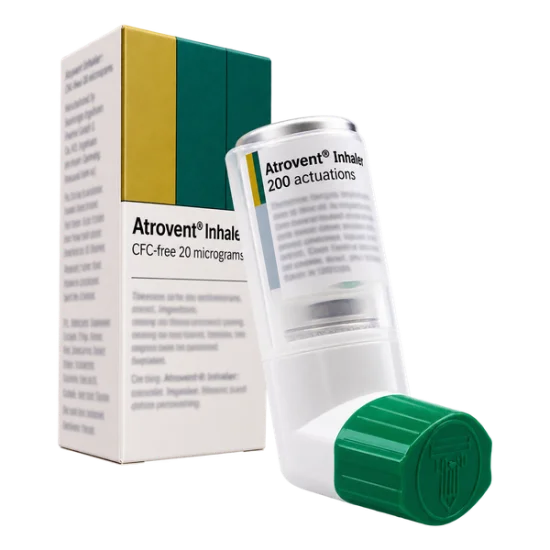
Atrovent is supplied as a pressurised metered-dose inhaler with 200 actuations. Each actuation releases a measured amount of medicine, but the dose reaching the lungs depends heavily on breathing coordination.

A spacer can make the inhaler easier to use for people who struggle to press and inhale at the same time. It slows the aerosol cloud and gives more time for a calm inhalation. Clinicians may use nebulised bronchodilator treatment in some acute-care situations, yet this does not change the role of Atrovent inhaler as a portable maintenance device.

Delivery approach Practical role Technique focus
Pressurised Atrovent inhaler Regular prescribed bronchodilation Slow inhalation coordinated with actuation
Inhaler with spacer Helpful when coordination is difficult One actuation at a time, then steady breathing
Nebulised bronchodilator treatment Used in selected clinical situations Set-up and dose are directed by clinical staff

A common mistake is firing several puffs into a spacer at once. One actuation should be inhaled before the next one, because aerosol particles can settle on the spacer walls if left there.

Before leaving home, place the inhaler and spacer together in the same routine location. Missed doses often come from separating the device from the rest of a person’s daily medicines.

Ingredients

Atrovent Inhaler contains ipratropium bromide, an inhaled anticholinergic bronchodilator. It acts mainly within the airways, so only a small amount reaches the bloodstream when the inhaler is used with good technique.

Active ingredient properties

Ipratropium bromide blocks muscarinic receptors that respond to acetylcholine, a natural nerve chemical that can constrict bronchial smooth muscle. Blocking this signal relaxes the airway muscles and can reduce vagally driven mucus secretion. It does not contain a corticosteroid and does not treat airway inflammation in the same way as a preventer inhaler.

The bronchodilator effect is local and is not intended to give the very rapid relief associated with a short-acting beta₂-agonist. The FDA prescribing information describes ipratropium as a maintenance bronchodilator for COPD rather than a first-choice rescue treatment for a sudden severe breathing attack. [1]

Use a slow, deep breath when actuating Atrovent. A fast, shallow inhalation often leaves more medicine in the mouth and less in the lungs.

How it affects the body

Ipratropium bromide blocks muscarinic receptors that respond to acetylcholine, a natural nerve chemical that can constrict bronchial smooth muscle. Blocking this signal relaxes the airway muscles and can reduce vagally driven mucus secretion. Ipratropium’s anticholinergic action can reduce glandular secretions as well as bronchial muscle contraction.

Therapeutic indications

Atrovent Inhaler is used for regular management of bronchospasm associated with COPD, including chronic bronchitis and emphysema. Doctors may also add ipratropium to asthma treatment when symptoms remain troublesome or when a person needs an additional bronchodilator with a different mechanism.

COPD causes persistent airflow limitation, often with cough, sputum, wheeze, and exertional breathlessness. It can ease bronchospasm. It does not reverse lung damage or replace smoking cessation, vaccination, pulmonary rehabilitation, or a personalised COPD plan.

In asthma care, Atrovent has a more specific role. It may be used alongside a short-acting reliever during an acute exacerbation, especially in urgent care settings. It is not an asthma preventer inhaler, because it does not control the underlying inflammatory process that inhaled corticosteroids address.

  • COPD maintenance: helps reduce vagally mediated airway narrowing across the day.
  • Asthma add-on treatment: may be combined with a reliever during a flare when directed by a clinician.
  • Not a stand-alone rescue plan: sudden severe breathlessness needs the reliever plan already agreed with the treating clinician.
  • Not a steroid inhaler: it opens airways but does not replace anti-inflammatory asthma preventer treatment.

The 2025 Global Initiative for Chronic Obstructive Lung Disease report includes short-acting muscarinic antagonists such as ipratropium among bronchodilator options for COPD symptom management. [2]

Common mistakes

Several avoidable errors reduce the benefit of Atrovent:

  • Taking quick, shallow breaths while pressing the canister.
  • Spraying before inhaling or after the breath has already finished.
  • Directing the mist toward the eyes.
  • Treating sudden severe breathlessness with repeated Atrovent doses instead of following an urgent reliever plan.
  • Stopping treatment after a single symptom-free day without discussing the change.
  • Ignoring new difficulty passing urine, eye pain, or vision changes.
  • Assuming a dry mouth means the medicine has stopped working.

Another frequent problem is not cleaning the mouthpiece according to the device-care instructions provided for the inhaler. A blocked mouthpiece can alter spray delivery even when the canister still contains actuations.

Reasons not to use it

  • Narrow-angle glaucoma: accidental eye exposure may raise eye pressure and trigger pain, redness, blurred vision, or coloured halos.
  • Urinary retention or enlarged prostate: anticholinergic effects may make it harder to pass urine.
  • Severe allergic airway reactions: sudden wheeze directly after inhalation needs urgent assessment rather than repeated dosing.
  • Other anticholinergic medicines: combining treatments can increase dry mouth, constipation, blurred vision, and urinary symptoms.
  • Heart rhythm symptoms: palpitations or chest discomfort should be assessed, especially if other bronchodilators are also being used.

Medsafe’s Atrovent inhaler information highlights eye effects, urinary retention, hypersensitivity, and paradoxical bronchospasm among the key precautions for ipratropium treatment. [4]

When this is not for you

This medication is not for you if you have had a serious allergic reaction to ipratropium bromide, atropine-like medicines, or any component of the inhaler.

Keep the mouthpiece away from the eyes during use if you are susceptible to eye problems. Tell a doctor or pharmacist if you have urinary difficulty, prostate enlargement, heart rhythm symptoms, or use other anticholinergic medicines.

Unwanted effects

Many people tolerate inhaled ipratropium well. Dry mouth, throat irritation, cough after inhalation, headache, nausea, and an unpleasant taste can occur. These effects are often mild, though persistent symptoms deserve review because they can also signal poor inhaler technique.

Some side effects need faster action. Stop using the inhaler and seek urgent assessment for facial swelling, rash with breathing difficulty, sudden worsening of wheeze immediately after inhalation, severe eye pain, halos around lights, or sudden vision changes. These can indicate an allergic reaction, paradoxical bronchospasm, or acute angle-closure glaucoma in a susceptible person.

Urinary difficulty is another issue that is easy to miss. Anticholinergic medicines can worsen urinary retention, especially in men with prostate enlargement or in people with bladder-outflow obstruction.

If your mouth feels dry, rinse after using the inhaler and spit out the water. This can improve comfort without changing the inhaler’s airway effect.

Comparison

Atrovent is one of several inhaled approaches used to manage obstructive airway disease. The best option depends on the condition, symptom timing, inhaler technique, and other medicines already in use.

Medicine class Main mechanism Typical role
Ipratropium bromide Blocks muscarinic receptors COPD maintenance or asthma add-on treatment
Short-acting beta₂-agonist Relaxes airway muscle through beta₂ receptors Fast symptom relief
Inhaled corticosteroid Reduces airway inflammation Asthma prevention and selected COPD care

A beta₂-agonist often acts faster during sudden symptoms. Ipratropium may add further bronchodilation because it works through a separate pathway. Inhaled corticosteroids are valuable for inflammatory asthma, yet they do not replace a bronchodilator when airway muscles are acutely constricted.

The 2025 Global Initiative for Asthma strategy continues to place inhaled anti-inflammatory treatment at the centre of asthma control, with anticholinergic bronchodilators used for defined add-on situations. [3]

What doctors say

In clinical practice, respiratory clinicians often focus on technique before changing a bronchodilator plan. A person may report that an inhaler does nothing, then improve once they slow the inhalation and coordinate the actuation correctly.

Doctors also separate day-to-day COPD breathlessness from a true respiratory emergency. Atrovent can be useful for regular airway opening, but escalating breathlessness, fever, chest pain, confusion, or a major fall in exercise tolerance may point to an infection, exacerbation, heart problem, or another cause requiring assessment.

Consistency matters with maintenance treatment. Using an inhaler only when symptoms become severe can leave COPD symptoms poorly controlled and makes it harder to judge whether the prescribed plan is helping.

What customers often ask

How long does one use of Atrovent keep working?

Ipratropium begins to open the airways after inhalation, though it is not designed to act as quickly as a typical short-acting beta₂ reliever. The FDA’s 2023 prescribing information describes bronchodilation that can continue for several hours, with the individual response varying by airway condition and inhaler technique. Its duration does not make it suitable as the only treatment for a severe, sudden breathing attack. Your agreed schedule should not be changed merely because symptoms improve for part of the day.

Driving, concentration and machinery use

Atrovent does not usually impair concentration in the way sedating medicines can. Medsafe information current before 2026 still advises caution if blurred vision, dizziness, or eye symptoms occur, since these effects could make driving or machinery work unsafe. Avoid driving until vision is normal and you feel steady. Eye exposure from poor inhaler positioning is a preventable cause of visual symptoms.

Pregnancy and breastfeeding

Ipratropium has limited absorption into the bloodstream after inhalation, yet pregnancy treatment decisions still depend on asthma or COPD severity and the full medicine list. The 2025 GINA strategy stresses that maintaining asthma control during pregnancy is clinically valuable because uncontrolled asthma can create risks for both parent and baby. WHO guidance supports continued management of chronic respiratory disease during pregnancy where needed. Breastfeeding decisions should consider the inhaled route, the prescribed treatment plan, and the infant’s health.

Course length and long-term use

Atrovent may be used for an ongoing period when a clinician has prescribed it for COPD or another chronic airway condition. The 2025 GOLD report treats bronchodilator therapy as part of long-term symptom management when it improves breathing and daily function. Long-term use should include periodic review of breathlessness, exacerbations, urinary symptoms, vision effects, and inhaler technique. Do not stop a maintenance inhaler abruptly during a respiratory deterioration without arranging advice.

Urgent symptoms requiring medical review

Sudden chest tightness or worse wheeze immediately after Atrovent, swelling of the face or tongue, severe eye pain, coloured halos around lights, or inability to pass urine needs urgent assessment. Medsafe's 2022 Atrovent Inhaler Data Sheet lists paradoxical bronchospasm and eye complications among clinically significant concerns linked to inhaled ipratropium exposure. Severe breathlessness at rest, blue lips, confusion, chest pain, or difficulty speaking full sentences also require urgent care. Repeated inhaler use without relief is not a reason to delay assessment.

Points to discuss before starting Atrovent

Discuss glaucoma, prostate enlargement, previous urinary retention, allergies to atropine-like medicines, and all inhalers or anticholinergic medicines you use. The FDA label updated in 2023 advises clinicians to consider the potential for additive anticholinergic effects when medicines with similar actions are combined. Mention whether you have frequent asthma attacks, recent COPD exacerbations, palpitations, or difficulty using pressurised inhalers. A spacer may be useful where hand-breath coordination is difficult.

Do you offer anonymous delivery?

Your order will be securely packed and shipped within 24 hours. This is exactly what your package will look like (images of an actual item sent). It has the size and look of a regular private letter (24x11x0.7 cm) and its contents cannot be seen.

How Buyers Rate Atrovent

Based on 5 reviews

Christopher, 66 Verified
Rating: 4.5 out of 5

I used Atrovent as part of my COPD routine for several months. The first improvement I noticed was getting from the letterbox back up the drive with less stopping. Dry mouth was annoying at first, but rinsing my mouth after each use helped.

Ashburton Several months 6 Oct 2026
Gareth L., 34 Verified
Rating: 3 out of 5

My doctor added it during a chest flare when my usual asthma reliever was not enough by itself. I learned that a slow inhale made a real difference. When I rushed it, I mostly tasted the spray.

Dunedin 20 Oct 2026
Jack B., 32 Verified
Rating: 5 out of 5

I had used the inhaler for six weeks during ongoing wheeze after a respiratory infection. It did not replace my asthma preventer, but it gave an extra opening effect when I followed the prescribed schedule.

Auckland Six weeks 22 Oct 2026
Stephen, 50 Verified
Rating: 4 out of 5

The inhaler helped my morning chest tightness, although I had to change how I used it. I was pressing the canister too early, and the pharmacist showed me how to breathe in slowly with the spray.

Palmerston North 31 Oct 2026
Robert, 39 Verified
Rating: 3.5 out of 5

I stopped after two days because my eyes felt blurry once after I used it. I had aimed the mouthpiece too high and some mist reached my face. The symptom settled, but I arranged a review before trying it again.

Queenstown Two days 3 Nov 2026

Sources

  1. U.S. Food and Drug Administration (2023). Atrovent HFA Prescribing Information
  2. Global Initiative for Chronic Obstructive Lung Disease (2025). Global Strategy for the Diagnosis, Management, and Prevention of COPD
  3. Global Initiative for Asthma (2025). Global Strategy for Asthma Management and Prevention
  4. Medsafe (2022). Atrovent Inhaler Data Sheet
Get our free app Shop faster and track your orders Install