The first month brought night sweats and I woke up tired. Keeping the tablet at the same evening time helped me stop missing doses, and the flushes became less disruptive after a few weeks.
Rotorua Four months 14 Oct 2026Nolvadex
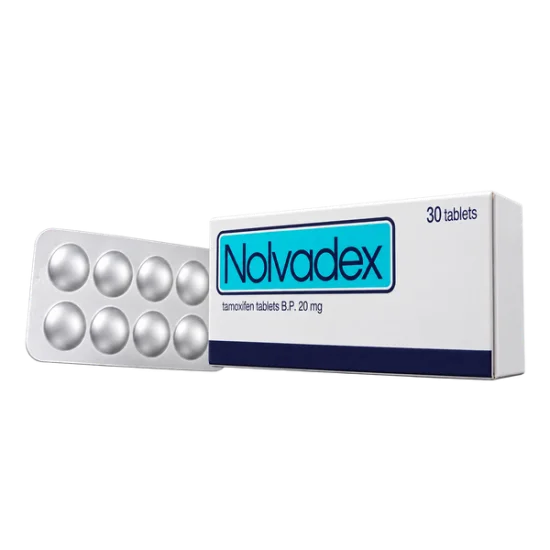
Nolvadex is a tamoxifen tablet for specialist-directed endocrine treatment when breast cancer receptor testing indicates it may add value. By acting on oestrogen receptors, it can help reduce…
Nolvadex is a tamoxifen tablet for specialist-directed endocrine treatment when breast cancer receptor testing indicates it may add value. By acting on oestrogen receptors, it can help reduce hormone-related growth signals.
Product information
Each tablet contains tamoxifen and is used under specialist direction when endocrine treatment fits the tumour’s biology. The amount taken at each intake is set individually for each person rather than being one fixed amount. [1] (medsafe.govt.nz)
Nolvadex contains tamoxifen, a non-steroidal selective oestrogen receptor modulator, or SERM. This means its effect differs by tissue: it blocks oestrogen-driven stimulation in breast cells while showing partial oestrogen-like activity in tissues such as bone and the uterus.
Directions for use
Administration Pattern
Nolvadex is taken by mouth. The total amount and timing are set individually by the treating specialist rather than following one fixed schedule for every person.
- Swallow the prescribed tablet dose with water.
- Take it at the same time each day to make a long-term treatment routine easier to maintain.
- If a dose is missed, do not take extra tablets to catch up; continue with the next prescribed dose.
- Early breast cancer treatment often continues for years, because endocrine therapy is designed to reduce recurrence risk over time.
Ingredients
Nolvadex contains tamoxifen, a non-steroidal selective oestrogen receptor modulator, or SERM. This means its effect differs by tissue: it blocks oestrogen-driven stimulation in breast cells while showing partial oestrogen-like activity in tissues such as bone and the uterus.
Active Ingredient Specification
- Active ingredient: tamoxifen
- Drug class: selective oestrogen receptor modulator
- Dosage form: oral tablet
- Primary therapeutic role: endocrine treatment for breast cancer where hormone receptors are relevant
The amount taken at each intake is set individually for each person rather than being one fixed amount.
Hormone-receptor-positive breast cancer cells may use oestrogen as a growth signal. Tamoxifen occupies the receptor and reduces that signal inside the cell. The WHO includes tamoxifen tablets among essential treatment options for early and metastatic breast cancer. [2] (iris.who.int)
How it affects the body
Tamoxifen reaches breast cancer cells through the bloodstream and binds to oestrogen receptors. It prevents oestrogen from activating many of the genes that can support tumour-cell growth.
Receptor Blockade Dynamics
In breast tissue, tamoxifen acts mainly as an anti-oestrogen. In the uterus and some other tissues, it can act more like a weak oestrogen. That mixed action explains both its clinical value and some of its longer-term risks, including endometrial changes and abnormal vaginal bleeding.
Tamoxifen is also converted in the liver into active metabolites, including endoxifen. Some antidepressants can reduce this conversion by blocking the CYP2D6 enzyme, which is why the full medicines list matters during treatment. (medsafe.govt.nz)
Therapeutic indications
This does not mean every breast cancer responds to tamoxifen. Receptor testing helps the oncology team identify cancers where endocrine treatment is likely to add value. This result helps guide treatment selection.
Common mistakes
Several avoidable mistakes can make Nolvadex harder to tolerate or less reliable.
- Stopping after hot flushes begin: early symptoms may be manageable with timing changes, sleep measures, and targeted treatment.
- Adding an antidepressant without checking interactions: CYP2D6 inhibitors can lower active endoxifen exposure.
- Assuming all vaginal bleeding is a routine menopausal change: unexpected bleeding needs prompt assessment.
- Doubling up after a missed dose: extra tablets increase exposure without restoring the missed schedule.
- Ignoring one-sided calf swelling after a long trip or period of reduced mobility: tamoxifen raises the need to take clot symptoms seriously.
- Crushing tablets to make swallowing easier without individual advice: this can make the dose harder to take accurately.
Reasons not to use it
- A previous deep-vein thrombosis or pulmonary embolism
- Use of coumarin-type anticoagulants, because the anticoagulant effect may increase
- Treatment with medicines that inhibit CYP2D6, including paroxetine, fluoxetine, or bupropion
- Existing QT-prolongation risk or significant cardiac disease
- Liver disease, because tamoxifen is extensively metabolised in the liver
- Hereditary angioedema, which tamoxifen may worsen
- Breastfeeding, because use during lactation is not recommended
When this is not for you
Nolvadex is not for you if you are pregnant or if you have had a hypersensitivity reaction to tamoxifen or any ingredient in the tablet. Pregnancy should be excluded before treatment begins in people who could become pregnant, and non-hormonal contraception is usually required during therapy and for nine months after treatment ends. (medsafe.govt.nz)
Urgent assessment is needed for chest pain, sudden shortness of breath, coughing blood, one-sided leg swelling or pain, sudden weakness, severe headache, vision changes, or unexpected vaginal bleeding. These symptoms can signal serious complications such as a blood clot, stroke, eye toxicity, or endometrial disease.
Unwanted effects
Hot flushes, night sweats, tiredness, nausea, headache, leg cramps, and fluid retention can occur with tamoxifen. In clinical practice, hot flushes are one of the symptoms most likely to disrupt sleep and make a previously manageable routine feel difficult. They often settle after the first phase of treatment, though the intensity varies widely.
| Physical effect | What it may feel like | Practical response |
|---|---|---|
| Hot flushes or sweats | Sudden warmth, sweating, disturbed sleep | Use light bedding, layered clothing, and a cool bedroom |
| Nausea or indigestion | Queasiness, stomach discomfort | Taking the prescribed dose with food may help |
| Fatigue | Low energy that does not fully improve with rest | Plan demanding tasks for the part of the day with better energy |
| Leg cramps or muscle aches | Night-time cramps or aching legs | Maintain hydration and report persistent symptoms |
| Vaginal changes | Discharge, dryness, irritation, menstrual changes | Report unexpected bleeding or persistent pelvic symptoms promptly |
Medsafe lists hot flushes, gastrointestinal intolerance, headache, light-headedness, fluid retention, and hair thinning among reported reactions. In metastatic breast cancer studies, hot flushes, nausea, and vomiting occurred in up to one quarter of patients. (medsafe.govt.nz)
Low mood, irritability, anxiety, sleep disruption, and concentration difficulties can be difficult to separate from the stress of cancer treatment itself. Tamoxifen can also contribute to mood changes. Depression is listed among very common reported adverse reactions in New Zealand product information. (medsafe.govt.nz)
Mood symptoms deserve a direct conversation with the oncology team. A useful description is specific: when the symptoms began, whether sleep changed first, whether daily tasks feel harder, and whether thoughts of self-harm have appeared. This detail helps distinguish a temporary adjustment problem from depression that needs urgent treatment.
Psychological Side-Effect Management
Do not stop Nolvadex quietly because mood changes feel embarrassing or hard to explain. The treatment plan may be adjusted, supportive care may be added, or an antidepressant can be chosen with attention to CYP2D6 interactions.
Paroxetine, fluoxetine, and bupropion can reduce formation of endoxifen and are generally avoided where alternatives are suitable. (medsafe.govt.nz)

Comparison
| Treatment approach | Main action | When it may be considered |
|---|---|---|
| Nolvadex / tamoxifen | Blocks oestrogen receptors in breast tissue | Often used for hormone-receptor-positive disease, including in premenopausal patients |
| Aromatase inhibitor | Reduces oestrogen production | Often considered after menopause or with ovarian suppression |
| Ovarian suppression plus endocrine therapy | Reduces ovarian oestrogen production | May be added for selected premenopausal patients with higher-risk disease |
The choice is not simply “tamoxifen versus another tablet.” Menopausal status, tumour receptor results, previous treatment, clotting history, bone health, and tolerance all shape the plan. Long-term trial evidence shows that appropriately selected patients with oestrogen-receptor-positive disease gain sustained protection from recurrence and breast-cancer mortality with adjuvant tamoxifen. [3] (pubmed.ncbi.nlm.nih.gov)
What doctors say
Oncology clinicians usually focus on consistency, not perfection. A delayed tablet now and then is less concerning than repeated gaps that gradually become a pattern. The more useful conversation is often about what makes the schedule difficult: nausea, insomnia, hot flushes, fear of side effects, mood changes, or confusion about interacting medicines.
Long treatment courses can feel abstract at the start. The evidence is clearer when framed around outcomes: a 2023 long-term randomised study found lower mortality from all causes and breast cancer after five years of adjuvant tamoxifen compared with two years in the studied postmenopausal population. [4] (pubmed.ncbi.nlm.nih.gov)
A clinician may also review gynaecological symptoms, clotting history, liver function, blood counts, and eye symptoms at relevant points during therapy. These checks are targeted. They are not a sign that treatment is expected to go badly.
What customers often ask
Can Nolvadex tablets be split, crushed, or chewed?
The 20 mg tamoxifen tablet may be scored, yet splitting should only be done when the prescribing specialist has set out that approach. Do not crush or chew Nolvadex as a routine workaround for swallowing difficulties. Medsafe’s 2025 data sheet describes oral tablet administration and an individually prescribed regimen; a pharmacist or oncology clinician can arrange a safer administration plan when swallowing is difficult. (medsafe.govt.nz)
Can Nolvadex be used under 18?
No. Tamoxifen is not indicated for children in the New Zealand Medsafe data sheet. Paediatric hormone-related conditions require specialist assessment because growth, puberty, reproductive development, and treatment goals differ from adult breast-cancer care. The WHO’s 2025 essential medicines guidance lists tamoxifen in adult breast-cancer treatment contexts rather than as routine paediatric therapy. (iris.who.int)
Does pregnancy rule out Nolvadex?
Yes. Nolvadex must not be used during pregnancy because tamoxifen can affect fetal development and pregnancy outcomes. Medsafe’s 2025 product information advises non-hormonal contraception during treatment and for nine months after the final dose for people who could become pregnant. A pregnancy concern needs prompt contact with the treating oncology team before further doses are taken. (medsafe.govt.nz)
Which symptoms mean Nolvadex should be stopped and urgent medical help sought?
Stop taking Nolvadex and seek urgent medical assessment for chest pain, sudden breathlessness, coughing blood, sudden one-sided leg swelling, fainting, stroke-like symptoms, severe allergic swelling, or persistent visual disturbance. These may indicate pulmonary embolism, deep-vein thrombosis, angioedema, or serious eye effects. Medsafe’s 2025 safety information identifies thromboembolic events and ocular complications as clinically significant risks. (medsafe.govt.nz)
Can Nolvadex be taken with food or on an empty stomach?
Nolvadex can be taken with or without food. If nausea or indigestion occurs, taking the prescribed dose after a meal may be more comfortable. Breast Cancer Now’s tamoxifen guidance, updated for current patient information in 2026, notes that nausea is often most noticeable early in treatment and may improve when the timing changes. (breastcancernow.org)
What is the best time of day to take Nolvadex?
The best time is the time you can take it consistently each day. Some people choose morning dosing; others prefer evening dosing if early nausea occurs or if the tablet fits better with their routine. The 2025 Medsafe data sheet allows a once-daily or divided schedule within the specialist-directed total dose, so timing should match the regimen your oncology team has prescribed. (medsafe.govt.nz)
Do you offer anonymous delivery?
Your order will be securely packed and shipped within 24 hours. This is exactly what your package will look like (images of an actual item sent). It has the size and look of a regular private letter (24x11x0.7 cm) and its contents cannot be seen.
Comparison
How Buyers Rate Nolvadex
Based on 5 reviews
I had nausea at the beginning, mostly when I took it before breakfast. Taking it after food made a real difference. My oncologist also reviewed my antidepressant rather than leaving me to guess.
Taupō Seven months 22 Oct 2026I expected hot flushes but not the fatigue. I started planning errands in the morning and stopped treating the tiredness as laziness. The routine became easier once I wrote symptoms down before appointments.
Christchurch One year 26 Oct 2026I found the treatment more difficult than I expected, though leg cramps woke me at night for a while. The difficult part was remembering that new vaginal bleeding was not something to ignore, even when it seemed minor.
Te Awamutu Six months 2 Nov 2026The tablets were straightforward, but my mood dipped more than I expected. I raised it early and got support instead of stopping the medicine on my own. That was the right decision for me.
Upper Hutt Three months 12 Nov 2026Sources
- Medsafe (2025). Tamoxifen Sandoz (tamoxifen citrate) film-coated tablets: New Zealand Data Sheet.
- World Health Organization (2025). WHO Model List of Essential Medicines – 24th List.
- Early Breast Cancer Trialists’ Collaborative Group (2011). Relevance of breast cancer hormone receptors and other factors to the efficacy of adjuvant tamoxifen: Patient-level meta-analysis of randomised trials.
- Nordenskjöld, A. et al. (2023). Breast cancer survival and incidence of second primary cancers after 30 years in a randomized study of two versus five years of adjuvant tamoxifen therapy.