Directions for use
Neem is taken orally as tablets. Dosing differs between strengths and between users, so there is no single amount that suits everyone.
Use the selected amount consistently rather than taking extra tablets after a breakout. Acne cycles are slow, so judging a skin routine after only a few days can lead to unnecessary changes. Avoid combining several new herbal products at once, since this makes tolerability harder to assess.
Common routine errors include:
- Taking extra tablets in an attempt to speed up visible results.
- Pairing Neem with several strong exfoliating skincare products, then assuming every flare is caused by the tablets.
- Expecting an oral herbal supplement to treat painful nodules or acne scars.
- Continuing despite a new rash, facial swelling, or persistent stomach upset.
- Stopping established prescribed acne treatment without a clinical reason.
Keep a simple weekly note of new spots, skin dryness, menstrual-cycle timing where relevant, and any new skincare products. Acne often fluctuates for reasons unrelated to one tablet.
Ingredients
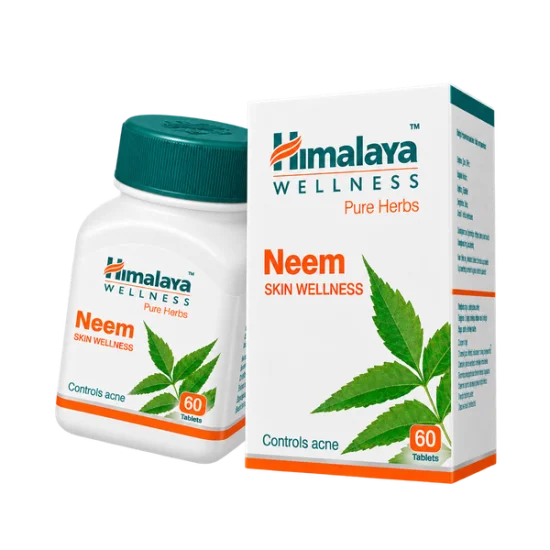
Neem is an oral herbal tablet product containing neem, the common name for Azadirachta indica. The pack contains 60 tablets and is positioned for skin wellness and acne-prone skin support.
Neem has a long history in Ayurvedic practice. Laboratory research has identified limonoids and other plant compounds in Azadirachta indica with antimicrobial, antioxidant, and anti-inflammatory activity. These findings help explain the interest in neem for skin concerns, though laboratory activity does not prove that an oral herbal product will clear acne in every person. [1]
Neem tablets are best viewed as a supportive skin-wellness option. Persistent, painful, or scarring acne needs a treatment plan directed at the cause of the breakouts.
The key limitation is evidence quality. Human studies of oral neem for acne remain limited, and results can vary with acne severity, skincare habits, hormones, diet, and concurrent treatment.
How it affects the body
Acne develops through several overlapping processes: increased sebum production, blocked follicles, growth of Cutibacterium acnes, and inflammation. Neem’s plant compounds have been studied for actions that may be relevant to inflammation and microbes.
Research on neem includes antimicrobial activity against several organisms in laboratory settings and anti-inflammatory effects in experimental models. These findings are promising, yet they are not interchangeable with controlled clinical evidence for acne treatment. [2]
Common mistakes
The most frequent mistake is treating every spot as proof that a routine has failed. Acne lesions can take weeks to form under the skin before becoming visible.
Another mistake is mixing Neem with aggressive scrubs, strong acids, frequent picking, and multiple supplements. The result may be irritation rather than improvement. Skin that feels tight, stings with water, or flakes heavily often needs a simpler routine.
A third issue is waiting too long with deep painful lesions. These spots can scar, and an oral wellness supplement is not designed to manage that level of inflammation.
If acne leaves dark marks, avoid picking and protect exposed skin from strong sunlight. Post-inflammatory marks often outlast the active spot itself.
Reasons not to use it
Extra care is needed for people with diabetes, autoimmune conditions, liver disease, fertility concerns, or those using medicines that affect blood glucose or immune activity. Neem has been discussed in experimental research for possible effects on glucose regulation and immune pathways, so combining it with treatment for these conditions requires individual clinical advice.
Do not use Neem as the sole response to acne accompanied by fever, rapidly spreading redness, severe pain, scarring, or emotional distress. Those features may need prompt medical treatment.
Medsafe encourages reporting suspected adverse reactions through New Zealand’s established monitoring channels. This helps build safety information for products used in everyday practice. [4]
Unwanted effects
Neem tablets are often tolerated without major problems, though herbal products can still cause unwanted effects. Possible reactions include nausea, abdominal discomfort, loose stools, headache, or an allergic skin reaction.
Stop using Neem and seek urgent medical care for facial or throat swelling, wheezing, fainting, severe vomiting, yellowing of the skin or eyes, very dark urine, or a widespread blistering rash. These symptoms need assessment regardless of the suspected cause.
Reports of serious neem toxicity are most associated with concentrated neem oil and accidental ingestion, especially in children. Oral herbal products are not suitable for children simply because they are plant-based. The World Health Organization highlights the need to monitor suspected adverse reactions to herbal medicines with the same care used for other health products. [3]
A new itchy rash that begins soon after starting a herbal tablet is a reason to stop it rather than trying to manage the reaction with more products.
Comparison
Skin-support approaches
| Approach |
Main role |
Main limitation |
| Oral Neem tablets |
Plant-based support for skin wellness |
Clinical evidence for acne clearance is limited |
| Gentle topical skincare |
Cleansing and barrier support |
Does not always control inflammatory acne alone |
| Clinician-directed acne care |
Targets acne severity and complications |
Requires individual assessment and follow-up |
For mild, occasional breakouts, a gentle cleanser, non-comedogenic moisturiser, and steady routine may be enough alongside Neem. For inflammatory lesions, blackheads that do not settle, or marks that remain after spots heal, direct acne therapy can be more appropriate.
Neem does not work like a topical exfoliant. It also does not physically unblock pores. Its potential value lies in oral botanical support, with effects that may be gradual and subtle.
What doctors say
In clinical practice, skin concerns are assessed by severity, duration, scarring risk, and the impact on confidence or wellbeing. A clinician is unlikely to promise that a herbal tablet will clear acne. They may accept Neem as a supportive choice when it is well tolerated and does not delay care for persistent inflammatory acne.
Doctors also look for clues that acne is linked to another condition. Sudden severe acne, excess facial hair, irregular periods, unexpected weight changes, or acne after starting a medicine may deserve further assessment.