Directions for use
Albendazole tablets are taken orally. The dose is decided individually, taking age, other medicines and health conditions into account. The treatment length, frequency and food instructions vary by infection.
A prescribed regimen may depend on:
- The identified parasite and its life stage.
- The site of infection, such as the intestine, liver, lung or brain.
- Age, body weight and liver function.
- Pregnancy status and reproductive plans.
- Other medicines, including cimetidine, corticosteroids and anticonvulsants.
- The need for liver-function tests or blood counts during prolonged treatment.
The appropriate regimen is not universal for every worm infection. A regimen used for pinworm cannot be transferred to neurocysticercosis or hydatid disease. Children require clinician-directed dosing because age, weight and formulation suitability affect treatment decisions.
Take each tablet exactly as prescribed. If a dose is missed, take it when remembered unless the next scheduled dose is close; in that situation, skip the missed dose and continue the planned schedule. Do not double the next dose unless a prescriber has specifically instructed this.
Write down the treatment days when a course involves repeated doses. Missed doses are easier to identify when the schedule is recorded rather than remembered from memory.
Food instructions can vary with the infection and regimen. Some specialist courses use food to improve absorption, while other treatment plans may specify different instructions. Follow the prescribed directions for the diagnosed condition rather than applying advice from a different worm infection.
Ingredients
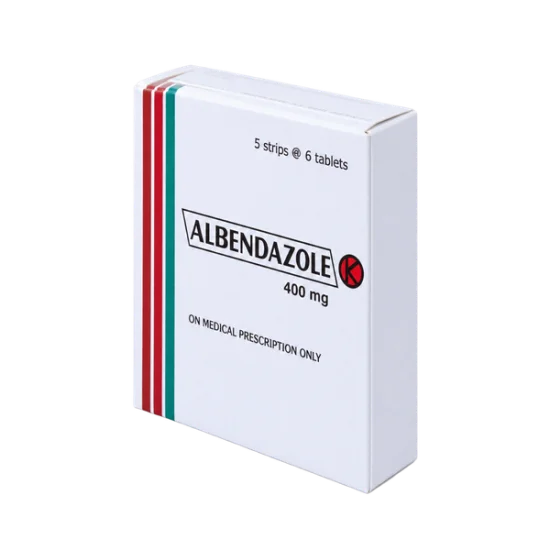
The product is supplied as tablets, with six tablets in the pack. The active ingredient is albendazole. The dose is decided individually, taking age, other medicines and health conditions into account.
Albendazole may be used for intestinal worm infections and for tissue infections requiring specialist care. A stomach ache alone does not establish a worm infection. Diagnosis may involve stool testing, blood tests, imaging or assessment of exposure history.
The medicine is used differently for a short intestinal infection than for neurocysticercosis or cystic hydatid disease. These conditions can involve the brain, muscles, liver or other tissues and require planned monitoring.
Do not copy a dose used by another household member. Two people with similar symptoms can have different parasites, different treatment lengths and different monitoring requirements.
How it affects the body
Albendazole enters susceptible parasites and interferes with tubulin, a protein needed to form microtubules. Microtubules act like internal support and transport structures inside cells. When this system is disrupted, the parasite cannot maintain its structure or use nutrients normally.
The medicine also interferes with energy production. Depleted energy stores leave the worm unable to move, grow or maintain essential cell functions. The parasite then dies or becomes sufficiently damaged for the body to clear it.
This mechanism explains why albendazole can act against several worm species. The amount of medicine reaching the parasite depends on the species, the infection site, the formulation, food intake and the length of treatment. Intestinal worms may be exposed directly in the gut, while tissue infections require a regimen that reaches affected tissues.
Symptoms may not disappear immediately after treatment. Abdominal discomfort, fatigue or neurological symptoms can persist because inflammation, tissue injury or a high parasite burden may continue after the worms are damaged. The pharmacological action of albendazole against susceptible worms is described in regulatory product information from the FDA and Medsafe [1].
Therapeutic indications
Albendazole may be prescribed for several parasitic infections. The indication and treatment plan depend on the confirmed or strongly suspected parasite.
| Condition or parasite |
Main site and clinical setting |
Treatment considerations |
| Intestinal worms, including hookworms and pinworm |
Intestinal tract; often managed with a short regimen |
Local guidance, reinfection risk and household exposure may affect treatment |
| Neurocysticercosis |
Brain or nervous system; caused by larval pork tapeworm |
Specialist diagnosis, imaging and monitoring are required |
| Cystic hydatid disease |
Liver, lungs or other tissues; linked to dog tapeworm |
Often requires prolonged specialist management and assessment for surgery |
Neurocysticercosis results from the larval stage of the pork tapeworm, Taenia solium. Cystic hydatid disease is associated with the larval stage of the dog tapeworm, Echinococcus granulosus. These tissue infections are distinct from uncomplicated intestinal worm infections.
Albendazole may also be selected for some other helminth infections when the parasite is susceptible. Hookworms and pinworm may be treated with different medicines depending on local recommendations, age, pregnancy status and the risk of reinfection.
A person with a suspected brain or tissue infection should not begin a short deworming course without a confirmed clinical plan. When parasites die inside tissue, inflammation can temporarily worsen symptoms. WHO guidance describes albendazole as an important treatment for selected helminth infections, with regimen choice linked to the parasite and clinical setting [2].
Common mistakes
Several avoidable errors reduce the safety and usefulness of treatment:
- Taking a family member’s leftover dose.
- Repeating treatment whenever abdominal symptoms return.
- Stopping a prescribed course as soon as discomfort improves.
- Failing to mention cimetidine or Tagamet.
- Not disclosing pregnancy or pregnancy plans.
- Assuming mebendazole or praziquantel can always replace albendazole.
- Missing liver tests or blood counts during a prolonged course.
- Treating symptoms without confirming the likely parasite.
- Taking an intestinal-worm schedule for a tissue infection.
- Doubling a dose after a missed tablet.
Symptom relief does not prove that every parasite has been cleared. Some infections need repeat testing, imaging or follow-up after treatment.
One practical problem is forgetting that stomach-acid medicines may count as relevant medicines. Another is assuming that an old prescription remains suitable after a new diagnosis. A third is failing to attend monitoring because the tablets themselves feel easy to take.
Albendazole, mebendazole and praziquantel have different activity profiles. Substitution should be diagnosis-led rather than based on convenience.
Unwanted effects
Albendazole can cause gastrointestinal symptoms, headache, dizziness and changes in liver enzymes. Mild nausea or abdominal discomfort may occur during treatment and does not by itself prove that the medicine is failing.
Longer or higher-intensity courses carry greater monitoring needs than a short intestinal-worm regimen. Clinicians may arrange liver-function tests and full blood counts, especially when treating neurocysticercosis, hydatid disease or another infection requiring repeated courses.
Seek urgent medical help for facial or throat swelling, breathing difficulty, fainting or a widespread blistering rash. Severe headache, repeated vomiting, seizures, confusion, vision changes or worsening neurological symptoms require urgent assessment because tissue infections and treatment-related inflammation can increase pressure around the brain.
Report yellowing of the skin, unusually dark urine, severe fatigue, fever, sore throat or unexplained bruising during a prolonged course. These symptoms can signal liver or blood complications and should not be ignored.
Comparison
Mebendazole, praziquantel and albendazole are all anthelmintic medicines, but they are not interchangeable by default.
| Medicine or class |
Common clinical role |
Selection factors |
| Albendazole |
Selected intestinal and tissue helminth infections |
Parasite species, tissue penetration, treatment duration and monitoring |
| Mebendazole |
Selected intestinal nematode infections |
Susceptibility, local guidance, age and infection type |
| Praziquantel |
Several susceptible fluke and tapeworm infections |
Parasite location, neurological involvement and interaction profile |
Mebendazole may be preferred for some uncomplicated intestinal nematode infections. Praziquantel acts against different parasite groups and may be selected when the suspected organism is susceptible to it. Albendazole may be favoured when the clinical situation requires activity against a particular worm or larval stage.
Praziquantel and albendazole can appear together in specialist treatment plans, including selected tissue infections. Combination therapy requires a defined diagnosis and medical supervision because adverse effects, drug exposure and inflammatory reactions may be more difficult to assess.
What doctors say
Doctors match albendazole to the parasite, infection site, disease severity and patient risk factors. For uncomplicated intestinal infections, the plan may be relatively brief. Neurocysticercosis and cystic hydatid disease require a more structured pathway.
What doctors assess
- Evidence supporting a specific parasite.
- Stool, blood or other laboratory findings.
- Imaging for cysts or lesions in the brain, liver, lungs or other tissues.
- Liver function and blood counts when treatment is prolonged.
- Pregnancy status and potential drug interactions.
- The need for corticosteroids, anticonvulsants, surgery or specialist follow-up.
In neurocysticercosis, imaging helps determine the number, location and stage of lesions. In cystic hydatid disease, imaging can help identify cyst location and complications. Treatment can trigger inflammation as parasites die, so symptoms may change even when the medicine is acting against the infection.
The clinician’s goal is not simply to select a tablet. It is to match the antiparasitic regimen with the organism and the affected tissue, then monitor the body’s response.