I took the prescribed tablets early in the attack and the toe settled over the next day. I had loose stools that evening, so I did not take any more until I had spoken with the clinic.
Taupō One gout flare 1 Nov 2026Colchicine
Colchicine is used for gout and other inflammatory conditions, including selected cardiovascular settings under specialist direction. It reduces inflammation by limiting immune-cell movement and…
Colchicine is used for gout and other inflammatory conditions, including selected cardiovascular settings under specialist direction. It reduces inflammation by limiting immune-cell movement and inflammatory signalling.
Product information
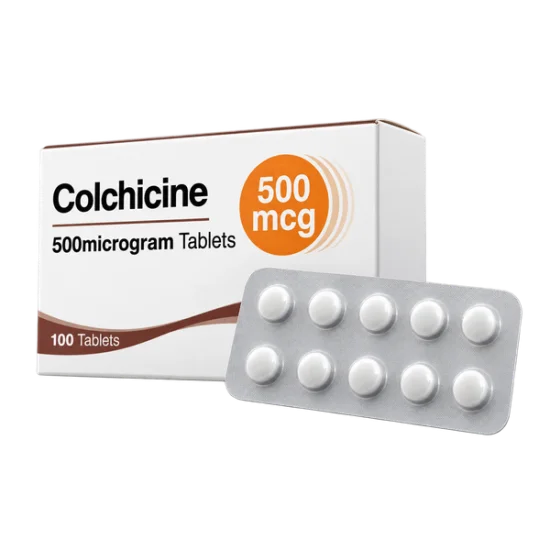
Adults with gout or another colchicine-responsive inflammatory condition may be prescribed Colchicine to reduce inflammation, pain, and swelling. Each tablet contains 500 micrograms of colchicine, an anti-inflammatory alkaloid that acts on immune-cell movement and inflammatory signalling.
Directions for use
Colchicine dosing differs between strengths and between users, so there is no single amount that suits everyone. The prescribed schedule depends on whether the medicine is being used for an acute gout flare, flare prevention, familial Mediterranean fever, pericarditis, or a cardiovascular indication.
- Take the tablets by mouth at the prescribed frequency.
- Swallow each tablet with water.
- Follow the exact schedule provided for the diagnosed condition.
- Do not take extra tablets because pain remains severe.
- Do not repeat an acute-flare course sooner than instructed.
- If a dose is missed, take it when remembered unless the next dose is due soon; do not double the amount.
- If vomiting, severe diarrhoea, marked weakness, or numbness develops, stop further doses and obtain urgent medical advice.
Colchicine can be taken with food when stomach upset occurs, unless the prescriber has given different instructions. Grapefruit and grapefruit juice may increase colchicine exposure and are best avoided during treatment.
Do not crush, chew, or split tablets unless the prescriber or dispensing instructions specifically permit it. A tablet alteration can make accurate dosing difficult, especially when the prescribed regimen is already small.
Ingredients
Colchicine is a purified alkaloid associated with Colchicum autumnale, also called autumn crocus or meadow saffron. The plant’s historical use preceded modern pharmaceutical production, while present-day tablets contain a measured pharmaceutical dose rather than an unstandardised plant preparation.
The botanical origin does not make the plant itself suitable for self-treatment. Raw Colchicum autumnale is poisonous, and colchicine toxicity can affect the gastrointestinal tract, blood cells, muscles, nerves, kidneys, and multiple organs. Modern tablets are manufactured as measured doses, with 500 micrograms of colchicine in each tablet sold on this page.
How it affects the body
Colchicine enters neutrophils and other cells involved in inflammation. It binds to tubulin, a structural protein needed to form microtubules. This limits cell movement, adhesion, activation, and release of inflammatory substances around urate crystals.
The medicine also reduces assembly and activation of the NLRP3 inflammasome, a cellular complex involved in producing interleukin-1β. Interleukin-1β is a major signal in the inflammatory response to monosodium urate crystals. The result is less recruitment of neutrophils into the affected joint.
| Anti-inflammatory approach | Main cellular target |
|---|---|
| Colchicine | Tubulin, neutrophil movement, and inflammasome signalling |
| Targeted biologic therapy | A defined cytokine or inflammatory receptor |
Colchicine therefore acts earlier in the inflammatory sequence than a medicine aimed at one circulating cytokine. Targeted biologic therapies may be reserved for specific diseases or treatment situations, while colchicine remains a small-molecule oral option for suitable patients. The European Medicines Agency describes colchicine pharmacology in relation to tubulin binding and inflammatory-cell activity [2].
The same mechanism explains part of the toxicity risk. Cells that divide rapidly or rely heavily on microtubules can be affected when colchicine exposure becomes excessive. Bone marrow suppression, muscle injury, and nerve symptoms are uncommon but medically serious reactions.
Therapeutic indications
Colchicine is an oral prescription anti-inflammatory medicine used most often for acute gout flares and prevention of recurrent gout attacks. It can also be prescribed for familial Mediterranean fever, pericarditis, and selected inflammatory conditions. The 500-microgram tablet strength allows dosing to be adjusted according to the condition, kidney function, liver function, age, and interacting medicines. Medsafe product information describes colchicine as a medicine with a narrow safety margin, so the prescribed amount must be followed closely [1]. Monitoring is especially important when treatment continues for a prolonged period or interacting medicines are added.
Colchicine does not lower uric acid. Its role is to reduce the inflammatory response caused by urate crystals in a joint. Long-term gout management may also require a urate-lowering medicine, while colchicine can be used for flare prevention during treatment changes.
Therapeutic applications in rheumatology
During an acute gout flare, colchicine is most useful when started promptly after symptoms begin. Pain and swelling may begin to settle within the first day for some patients, although the response varies with timing, disease severity, and individual factors. Preventive courses use a lower or less frequent regimen and may continue while urate levels are being brought under control.
A common mistake is to treat colchicine like a general painkiller. Taking extra tablets for persistent pain does not provide a proportional benefit and can cause serious toxicity.
Cardiovascular applications of low-dose regimens
Low-dose colchicine has been studied for chronic vascular inflammation in coronary artery disease and atherosclerotic cardiovascular disease. In this setting, the purpose is not treatment of gout pain. It is reduction of inflammatory activity within atherosclerotic plaques after a cardiovascular event or in selected patients with established coronary disease.
The US Food and Drug Administration approved low-dose colchicine for reducing the risk of myocardial infarction, stroke, coronary revascularisation, and cardiovascular death in adults with atherosclerotic disease or multiple cardiovascular risk factors. This indication uses a specific low-dose regimen and clinical selection criteria; it should not be inferred from the tablet strength alone [3].
A 500-microgram tablet contains 0.5 mg of colchicine, yet the correct schedule still depends on the diagnosis and the person’s medical profile. Cardiovascular use requires attention to kidney function, liver function, age, infection risk, and interacting medicines. Statins, certain antibiotics, and some antifungal or antiviral medicines can increase the risk of muscle or systemic toxicity.

Common mistakes
Several practical errors can reduce benefit or increase harm:
- taking additional tablets when a gout flare remains painful;
- repeating a course without confirming the interval;
- continuing colchicine through severe diarrhoea or repeated vomiting;
- forgetting to mention a new antibiotic or antifungal medicine;
- assuming colchicine lowers uric acid;
- stopping a long-term urate-lowering plan because the flare has settled;
- using leftover tablets for a new episode without checking the current regimen;
- treating muscle weakness as ordinary tiredness;
- drinking grapefruit juice during treatment;
- storing tablets loose in a pill organiser where they may be mistaken for another medicine.
Reasons not to use it
Colchicine is unsuitable for people with a previous serious allergic reaction to colchicine or severe toxicity from the medicine. Extra caution or a different regimen may be required with kidney disease, liver disease, frailty, or advanced age.
Conditions requiring specific medical review
- Severe renal impairment or dialysis.
- Severe hepatic impairment.
- Existing blood-cell disorders or bone-marrow suppression.
- Significant muscle disease or unexplained muscle weakness.
- Severe gastrointestinal illness with vomiting or diarrhoea.
- Pregnancy or breastfeeding, where the prescriber must weigh expected benefit and potential risk.
- Concurrent treatment with strong CYP3A4 or P-glycoprotein inhibitors.
The combination of colchicine with strong interacting medicines can be dangerous in people with kidney or liver impairment. Simvastatin and other statins may increase concern about muscle injury when combined with colchicine, although treatment decisions depend on the full clinical picture.
Do not use colchicine to treat unexplained abdominal pain. Its gastrointestinal effects can mask worsening illness, and abdominal symptoms after dosing can signal toxicity.
When this is not for you
NOT for you if a prescriber has identified a serious interaction, severe organ impairment, or previous severe colchicine toxicity.
Unwanted effects
The most common adverse effects are gastrointestinal. Diarrhoea, nausea, vomiting, abdominal pain, and cramping can occur, especially when the total exposure is too high or treatment begins during an acute flare. These symptoms can appear before more serious toxicity and should not be ignored.
Other warning symptoms include:
- unusual muscle pain, tenderness, or weakness;
- tingling, numbness, or burning sensations;
- severe fatigue or difficulty walking;
- fever, sore throat, mouth ulcers, or repeated infections;
- unusual bruising or bleeding;
- reduced urine output;
- persistent vomiting or severe abdominal pain.
Colchicine toxicity can suppress bone marrow and injure muscles or peripheral nerves. The risk increases with kidney or liver impairment and with medicines that inhibit CYP3A4 or P-glycoprotein. Clarithromycin, erythromycin, ciclosporin, some azole antifungals, certain HIV medicines, and some calcium-channel blockers can raise colchicine concentrations. The FDA prescribing information gives specific interaction and toxicity warnings.
Diarrhoea is not a sign that colchicine is working better. It can indicate excessive exposure, especially when it is persistent or accompanied by weakness, vomiting, or tingling.
Comparison
Colchicine has a different role from treatments that remove urate or suppress inflammation through other pathways.
| Treatment approach | Main role |
|---|---|
| Colchicine | Controls inflammation or prevents flares in selected conditions |
| Urate-lowering therapy | Reduces uric acid burden over time to prevent future gout attacks |
| Anti-inflammatory therapy | Treats acute inflammation through other biochemical pathways |
For an acute gout flare, a clinician may choose colchicine, an anti-inflammatory medicine, or a corticosteroid depending on kidney function, ulcer history, cardiovascular risk, diabetes, infection risk, and current medicines. Urate-lowering treatment addresses the underlying crystal burden but does not provide the same immediate anti-inflammatory action.
Colchicine may be attractive when a non-steroidal anti-inflammatory medicine is unsuitable, yet its narrow safety margin creates a different set of concerns. Kidney impairment, liver disease, interacting medicines, and older age can make a standard schedule unsafe.
What doctors say
In clinical practice, physicians usually judge colchicine by the diagnosis, timing, organ function, and interaction profile rather than by pain intensity alone. A patient with a painful first toe may need a different plan from someone taking preventive treatment during urate-lowering therapy.
Doctors also tend to ask about recent antibiotics. Patients often remember their regular medicines but forget a short course of clarithromycin or an antifungal treatment prescribed several days earlier. That omission can materially change colchicine exposure.
A clinician may check kidney function, liver tests, blood counts, or muscle symptoms when treatment is prolonged or risk factors are present. Colchicine can be useful at a low dose, but the difference between a prescribed dose and an unsafe total exposure may be small.
What customers often ask
Can older adults take Colchicine?
Older adults can use Colchicine when the prescribed regimen suits their kidney function, liver function, general health, and other medicines. Age-related reduction in renal clearance can increase exposure even when blood creatinine appears only mildly elevated. Medsafe safety information from 2024 highlights the need for caution in people at increased risk of accumulation, while the FDA label describes dose and interaction concerns in vulnerable patients. Older adults should report diarrhoea, weakness, numbness, or unusual fatigue promptly.
Can alcohol be used while taking Colchicine?
Alcohol does not create the same direct interaction as grapefruit or a strong CYP3A4 inhibitor, but it can worsen dehydration, stomach irritation, and gout triggers. Heavy alcohol intake may also raise uric acid and make recurrent flares more likely. The Arthritis Foundation and rheumatology guidance available in 2025 continue to support limiting alcohol as part of gout management. Avoid alcohol during vomiting, diarrhoea, or an acute illness because dehydration can increase the clinical risk of colchicine toxicity.
Which condition rules out Colchicine?
Severe kidney impairment combined with a strong interacting medicine can rule out standard colchicine use because drug accumulation may become dangerous. Severe liver disease, previous serious colchicine toxicity, and major blood-cell disorders also require specialist assessment. The FDA prescribing information from 2024 and Medsafe product data from 2024 identify potent CYP3A4 or P-glycoprotein inhibitors as important safety concerns. A clinician may select another treatment, reduce exposure, or avoid colchicine altogether.
What happens when Colchicine is stopped, and is tapering needed?
Colchicine does not usually require tapering when it is being used for a short course for an acute gout flare. Stopping it may allow inflammation to return if the underlying flare has not settled, but withdrawal symptoms are not expected. Long-term treatment for pericarditis, familial Mediterranean fever, or cardiovascular prevention should be stopped only according to the treatment plan, because the protective effect ends when dosing ends. Guidance from the European Medicines Agency (2023) and the FDA (2024) treats colchicine as a scheduled medicine rather than one requiring gradual withdrawal.
Which diet, exercise, or habits help or hinder the result?
Adequate hydration, gradual weight management where appropriate, regular physical activity, and limiting excess alcohol can support gout control while Colchicine treats inflammation. Diet alone cannot remove established urate crystals, and crash dieting or prolonged fasting may worsen uric-acid fluctuations. The American College of Rheumatology guidance available in 2025 supports dietary and lifestyle measures alongside urate-lowering treatment rather than as a replacement for it. During an acute flare, rest the affected joint and avoid strenuous exercise that increases pain or swelling.
Do you offer anonymous delivery?
Your order will be securely packed and shipped within 24 hours. This is exactly what your package will look like (images of an actual item sent). It has the size and look of a regular private letter (24x11x0.7 cm) and its contents cannot be seen.
Comparison
Allopurinol
Colchicine Current
How Buyers Rate Colchicine
Based on 3 reviews
The medicine helped when I started it promptly, but it did not act like an ordinary painkiller. I had expected instant relief and initially thought it had failed.
Timaru Recurrent flares 6 Oct 2026After several months I had no obvious side effects, which was reassuring. I still needed reminders because the tablets were part of a wider heart-treatment plan, not a replacement for it.
Rotorua Several months 13 Oct 2026Sources
- Medsafe (2024). Colchicine data sheet.
- European Medicines Agency (2023). Summary of Product Characteristics (SmPC) — colchicine.
- US Food and Drug Administration (2023). Lodoco (colchicine) prescribing information.