Ingredients
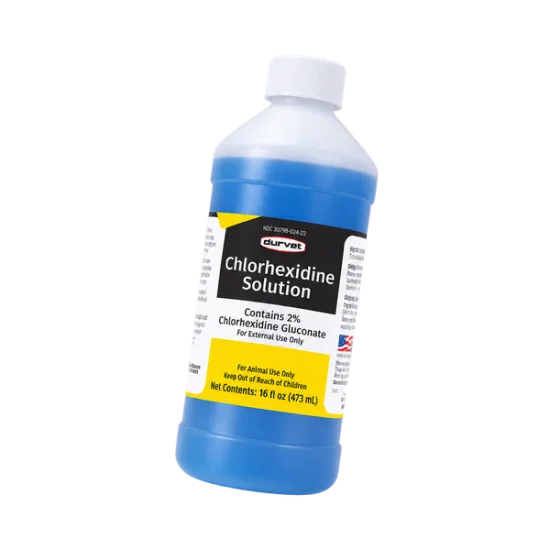
Chlorhexidine is a cationic bisbiguanide antiseptic. The product contains chlorhexidine gluconate at a concentration of 2% in a liquid bottle for external use. Its positively charged molecules bind to negatively charged microbial surfaces, altering membrane integrity and reducing viable bacteria.
Chlorhexidine gluconate is the salt used in this solution. Other pharmaceutical salts include chlorhexidine acetate and chlorhexidine diphosphanilate. The salt affects water solubility, formulation stability, and the type of preparation that can be made. A gluconate salt is suitable for aqueous solutions, while other salts may appear in different pharmaceutical formulations.
Pharmacological salts and solubilities
- Chlorhexidine gluconate: water-compatible salt used in topical solutions, oral rinses, skin preparations, and some healthcare antiseptic products.
- Chlorhexidine acetate: a chlorhexidine salt with different formulation properties; its use depends on the preparation and intended route.
- Chlorhexidine diphosphanilate: a less commonly encountered salt used in specific pharmaceutical formulations.
- Chlorhexidine solution: the form supplied here, intended for external application rather than swallowing.
The regulatory assessment of chlorhexidine products depends on concentration, excipients, route, contact time, and intended clinical use. The US Food and Drug Administration has reviewed chlorhexidine gluconate preparations for topical antiseptic use, while Medsafe provides New Zealand safety information for medicines and medical devices containing antiseptic substances [1].
Keep external chlorhexidine away from the eyes, ears, mouth, and deep wounds. A brief accidental splash requires prompt rinsing with plenty of clean water.
Therapeutic indications
Chlorhexidine mouthwash is a separate formulation from this external-use bottle. Oral rinses are designed for the mouth, while a 2% external solution must not be used as a mouthwash or swallowed.
In dentistry, lower-concentration chlorhexidine mouthwash can reduce dental plaque and gingival inflammation for a limited treatment period. Dentists may use it when brushing is temporarily difficult after oral surgery, during acute gingivitis, or when mechanical plaque removal is restricted. The benefit comes from chlorhexidine binding to oral tissues and releasing gradually over time.
Chlorhexidine can reduce surface contamination on intact skin and in selected external cleansing protocols. Its use on open wounds requires more caution because the same membrane-disrupting activity that harms microbes can injure human cells involved in tissue repair.
Evidence from Cochrane reviews supports chlorhexidine’s plaque-control role while also describing staining and taste disturbance as common practical limitations [2].
Common mistakes
Several errors reduce benefit or increase harm:
- Using an external 2% solution in the mouth because chlorhexidine mouthwash is familiar.
- Applying the liquid to the eyes, ears, face near the eyes, or genital mucosa.
- Pouring it into a deep wound or soaking a large wound without clinical direction.
- Wiping the solution off immediately when the intended protocol requires contact time.
- Covering freshly treated skin with an occlusive dressing before the area has dried.
- Continuing frequent application after redness, burning, or itching begins.
- Combining chlorhexidine with another antiseptic in the same container.
- Assuming that stronger concentration always means better wound care.
- Reusing a cotton pad or applicator across different skin areas, which can spread contamination.
- Forgetting to rinse promptly after accidental eye exposure.
One easy-to-miss detail is residue under rings, watches, adhesive edges, and skin folds. Trapped liquid can produce prolonged exposure and local irritation even when the first application felt comfortable.
Another is the difference between a small amount applied to intact skin and repeated application over broken skin. Absorption and tissue exposure can change substantially when the skin barrier is damaged.
When this is not for you
Chlorhexidine is not suitable for you if any of the following applies:
- You have previously experienced an allergic reaction to chlorhexidine.
- The product would be applied to a large area of damaged skin without a defined clinical plan.
- A child could easily reach the bottle and ingest the solution.
Avoid contact with dressings, fabrics, or equipment that may retain the liquid against the skin for long periods. Chlorhexidine can cause sensitisation after repeated exposure, including through healthcare products such as impregnated dressings and gels.
Pregnancy and breastfeeding require attention to the application site and exposure area. External use on a small intact-skin area generally creates less exposure than use on damaged skin or mucous membranes, but the solution should not be used internally or over extensive areas without a specific clinical reason.
Unwanted effects
The most important risks involve local tissue injury, accidental exposure, and hypersensitivity. Stop application and seek urgent medical help if swelling of the face or throat, wheezing, faintness, widespread hives, or difficulty breathing develops.
Possible reactions include:
- Redness, burning, itching, dryness, or irritation at the application site.
- Allergic contact dermatitis after repeated or delayed exposure.
- Eye pain, redness, blurred vision, or corneal injury after ocular contact.
- Ear injury when used in the ear, especially if the eardrum is perforated.
- Severe immediate hypersensitivity, including anaphylactic reactions.
- Chemical injury when used in unsuitable body sites or under prolonged occlusion.
Chlorhexidine-associated anaphylaxis is uncommon, yet it can be serious. Previous reactions to chlorhexidine in dressings, skin preparations, lubricating gels, mouthwashes, or surgical products should be treated as clinically relevant.
Chondrolysis has been reported in connection with certain intra-articular irrigation exposures, especially when antiseptic solutions were introduced into a joint. This is not a routine consequence of external skin use, but it explains why chlorhexidine must not be injected into joints or used inside surgical spaces unless a specialist protocol explicitly permits it.
Accidental ingestion can cause gastrointestinal irritation and exposes the person to a product intended for external use. Rinse the mouth, do not induce vomiting, and contact the New Zealand National Poisons Centre for immediate advice if swallowing occurs.
Comparison
Chlorhexidine is selected for its persistent surface binding and broad antibacterial activity. Povidone iodine has a broader general antiseptic profile in some settings, while polyhexamethylene biguanide is used in selected wound and cleansing products. None is universally preferable.
| Antiseptic category |
Main practical feature |
Main limitation |
| Chlorhexidine gluconate |
Persistent antibacterial activity on skin |
Eye, ear, neural tissue, and deep-wound toxicity concerns |
| Povidone iodine |
Broad activity and rapid action |
Reduced activity with organic material; iodine-related precautions |
| Polyhexamethylene biguanide |
Used in selected wound-cleansing formulations |
Product-specific evidence and indications vary |
Trials of surgical skin preparation have produced context-dependent findings. Some show advantages for chlorhexidine-alcohol preparations, while other comparisons depend on the operation, formulation, preparation technique, and outcome measured. Povidone iodine may be selected when chlorhexidine sensitivity is known or when a broader antiseptic approach is required. Polyhexamethylene biguanide may be considered for specific wound-care products rather than substituted automatically.
The correct choice depends on the anatomical site and intended use. External chlorhexidine solution is not a mouthwash, injectable antiseptic, eye preparation, or universal wound irrigant.
What doctors say
In clinical practice, doctors and nurses treat chlorhexidine as a site-specific antiseptic, not as a general cleaning liquid. The concentration and route matter as much as the active substance.
A clinician will usually distinguish between intact skin preparation, superficial cleansing, oral rinsing, wound irrigation, and surgical exposure. Each situation has different evidence and different risks. A product suitable for pre-procedure skin preparation may be inappropriate for an ulcer, eye, ear, or deep wound.
The strongest practical advantage is persistent antibacterial activity on suitable skin surfaces. The main limitation is tissue toxicity when chlorhexidine reaches sensitive structures or remains in contact too long. This balance is reflected in Medsafe safety communications and international regulatory information [3].
Doctors also ask about past reactions to surgical prep, mouthwash, adhesive dressings, and antiseptic gels. Patients sometimes remember the brand but not the ingredient, so describing the previous reaction and body site is more useful than describing the product by colour or packaging.