Sleep improved first, and the burning in my feet became less intrusive later. My mouth was very dry for the first fortnight, so I kept water nearby.
Hastings About five weeks 26 Oct 2026Amitriptyline
It changes serotonin and norepinephrine signalling, while its sedating action may help some patients sleep. Careful prescribing is needed because the medicine can affect heart rhythm, blood pressure…
It changes serotonin and norepinephrine signalling, while its sedating action may help some patients sleep. Careful prescribing is needed because the medicine can affect heart rhythm, blood pressure, alertness, and other medicines.
Product information
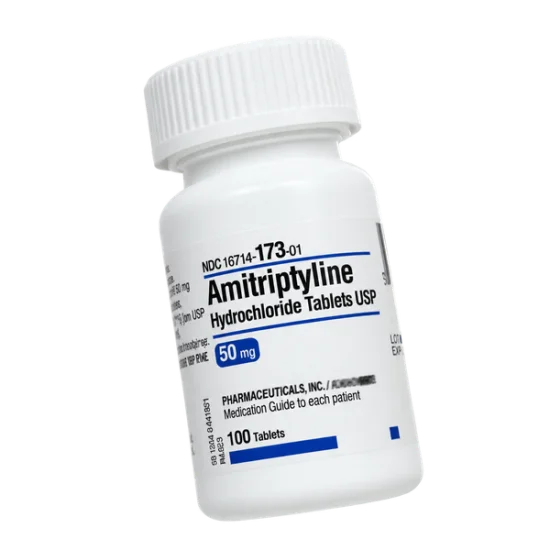
Amitriptyline hydrochloride, the active ingredient of Amitriptyline, is a tricyclic antidepressant used for major depressive disorder and selected nerve-pain conditions.
Directions for use
Dosing differs between strengths and between users, so there is no single amount that suits everyone. The tablet is taken by mouth, and the prescribed schedule depends on whether treatment targets depression, neuropathic pain, migraine prevention, or another clinical use.
Common prescribing principles include:
- Take the tablet at the time specified by the prescriber, often in the evening when drowsiness is expected.
- Swallow it with water.
- Do not take extra tablets to compensate for a missed dose.
- If a missed dose is remembered close to the next scheduled dose, skip it rather than doubling.
- Avoid driving, cycling in traffic, or operating machinery until the individual effect is known.
- Do not stop long-term treatment suddenly without a tapering plan.
Alcohol can increase sedation and impair coordination. Opioids, sleeping medicines, sedating antihistamines, and some antipsychotics can add to drowsiness or breathing impairment.
Tablets should not be crushed or divided unless the prescriber or dispensing instructions specifically allow it. A split tablet may not provide the intended amount if the product is not designed for splitting.
Ingredients
Amitriptyline hydrochloride is the active substance in this tablet. It is a tricyclic antidepressant used for major depressive disorder and selected nerve-pain conditions.
How it affects the body
Amitriptyline blocks the presynaptic reuptake of Serotonin and Norepinephrine. More of these neurotransmitters remain available in the synaptic cleft, the small space between nerve cells. Over time, altered signalling can reduce depressive symptoms and dampen pain transmission.
The medicine also affects several other receptors. Histamine H1 blockade contributes to drowsiness and increased appetite. Muscarinic receptor blockade causes anticholinergic symptoms such as dry mouth, constipation, blurred vision, and difficulty passing urine. Alpha-1 receptor blockade can contribute to dizziness when standing.
A selective serotonin reuptake inhibitor acts mainly on serotonin transporters. Amitriptyline has a broader pharmacological profile because it affects both serotonin and norepinephrine reuptake along with histamine, muscarinic, and alpha-adrenergic receptors. That wider action may help some pain and sleep patterns, but it also creates more opportunities for adverse effects.
- Sedation can begin before the antidepressant effect.
- Dry mouth does not mean the medicine is improving depression.
- Blurred vision or constipation can reflect anticholinergic activity.
The World Health Organization describes tricyclic antidepressants as medicines that require attention to toxicity, interactions, and overdose risk, especially when safer alternatives may be suitable for a particular patient [2].
Therapeutic indications
Amitriptyline belongs to the tricyclic antidepressant class. Its established psychiatric indication is Major Depressive Disorder, although clinicians also use it for several conditions involving abnormal pain signalling. The 50 mg tablet contains amitriptyline hydrochloride as the active substance.
Clinical use depends on the diagnosis, age, heart health, other medicines, and the response to treatment. Pain treatment often begins with a lower amount than depression treatment, then increases gradually when needed.
| Clinical role | Typical use | Main symptom target |
|---|---|---|
| Approved psychiatric use | Major Depressive Disorder | Low mood, loss of interest, sleep and appetite changes |
| Neurological and pain use | Chronic Pain Syndromes, Diabetic Neuropathy, Fibromyalgia | Burning, shooting, or persistent nerve pain |
| Preventive use | Migraine Prophylaxis | Fewer or less severe migraine attacks |
Approved psychiatric indication
Amitriptyline has a long history in psychiatric care for Major Depressive Disorder. Its antidepressant effect develops gradually rather than immediately, and treatment usually requires regular daily dosing over several weeks. Sleep or pain symptoms may change before mood symptoms do. Early changes can differ between patients. Prescribers assess benefit and tolerability over time.
The United States Food and Drug Administration prescribing information describes amitriptyline hydrochloride tablets as a treatment for depressive symptoms, with warnings about suicidality in younger patients and serious toxicity after overdose [1].
Off-label applications in pain and neurology
Amitriptyline is widely used outside its main psychiatric indication for neuropathic pain, including Diabetic Neuropathy. It can reduce the intensity of abnormal nerve signals, even when depression is absent. Chronic Pain Syndromes may also include Fibromyalgia, where sleep disturbance and widespread pain occur together.
Migraine Prophylaxis means prevention rather than treatment of an attack that has already started. Amitriptyline may be selected when migraine occurs with poor sleep, tension-type headache, or persistent pain. Insomnia is another off-label use, although sedation must be balanced against next-day impairment and anticholinergic effects.
Common mistakes
Several errors can make Amitriptyline appear ineffective or unnecessarily difficult to tolerate:
- Stopping after a few days because the antidepressant effect has not appeared.
- Taking a forgotten dose together with the next dose.
- Drinking alcohol while testing the medicine’s sedating effect.
- Driving early in treatment before next-day alertness is clear.
- Combining it with an over-the-counter sleep aid without checking for additive sedation.
- Ignoring constipation, urinary difficulty, fainting, or palpitations.
- Stopping suddenly after regular use.
- Using the medicine for an acute migraine attack rather than its preventive purpose.
- Measuring success only by mood when the prescription targets neuropathic pain.
- Forgetting to mention recreational substances, supplements, or recent antibiotics.
Reasons not to use it
Extra caution or an alternative may be needed with:
- Known long-QT syndrome or significant conduction disease.
- Recent heart attack, serious arrhythmia, or unexplained fainting.
- Untreated narrow-angle glaucoma.
- Urinary retention or severe prostate-related obstruction.
- Seizure disorders.
- Severe liver disease.
- Bipolar disorder with a history of mania.
- Pregnancy or breastfeeding, where individual risk and benefit require review.
- Older age with falls, confusion, constipation, or multiple medicines.
Monoamine Oxidase Inhibitors must not be combined with Amitriptyline. Examples include tranylcypromine and phenelzine. Linezolid also has monoamine oxidase activity and can create a serious interaction. Combining these medicines may cause serotonin syndrome, severe agitation, high blood pressure, fever, muscle rigidity, or cardiovascular instability.
A washout period is required when changing between a monoamine oxidase inhibitor and a tricyclic antidepressant. The exact interval depends on the previous medicine and the clinical plan. Do not begin Amitriptyline during or immediately after MAOI treatment unless the prescriber has established the transition schedule.
Other important interaction groups include:
- Serotonergic antidepressants and tramadol.
- Opioids and sedatives.
- Medicines that prolong the QT interval.
- Strong CYP2D6 or CYP2C19 inhibitors.
- Anticholinergic medicines.
- Medicines that lower sodium.
- Thyroid medicines and some cardiac treatments.
When this is not for you
This medicine is not for you if you have had a serious allergic reaction to amitriptyline or related tricyclic antidepressants, or if you are recovering from a recent myocardial infarction unless a specialist has specifically assessed the situation.
Unwanted effects
Common anticholinergic effects include dry mouth, constipation, blurred vision, sweating changes, and difficulty urinating. Drowsiness, increased appetite, weight gain, nausea, headache, and reduced concentration may also occur. These effects are often more troublesome after starting treatment or increasing the dose.
Orthostatic Hypotension means a blood-pressure drop after standing. It may cause light-headedness, blurred vision, or a fall. Rising slowly from bed and sitting at the bedside before standing can reduce this problem, though persistent symptoms require a dose review.
QTc Prolongation refers to delayed electrical recovery between heartbeats on an ECG. The risk increases with heart disease, electrolyte abnormalities, overdose, high blood concentrations, and other QT-prolonging medicines. Palpitations, fainting, or a seizure require urgent medical assessment.
Older adults are more vulnerable to confusion, falls, urinary retention, constipation, and anticholinergic burden. The American Geriatrics Society Beers Criteria lists amitriptyline among medicines generally avoided in many older adults because of strong anticholinergic activity and orthostatic effects [3].
Rare but serious problems include:
- Serotonin Syndrome, especially with other serotonergic medicines.
- Severe cardiac conduction disturbance.
- Seizures.
- Acute confusion or hallucinations.
- Severe allergic reaction.
- Syndrome of Inappropriate Antidiuretic Hormone Secretion, which can lower blood sodium.
- Worsening suicidal thoughts, especially early in treatment or after a dose change.
Comparison
Amitriptyline is selected when its combined effects on mood, pain signalling, and sleep fit the treatment goal. An alternative may be preferred when anticholinergic effects, cardiac risk, daytime sedation, or overdose risk are significant.
| Treatment approach | Main pharmacology | Practical limitation |
|---|---|---|
| Amitriptyline | Serotonin and norepinephrine reuptake inhibition with additional receptor effects | Sedation, dry mouth, constipation, postural dizziness, cardiac toxicity |
| SSRI approach | Predominantly serotonin reuptake inhibition | May cause nausea, sexual dysfunction, sleep changes, or emotional blunting |
| Non-antidepressant pain approach | Acts through a different pain pathway | May offer less benefit when pain, insomnia, and low mood overlap |
For neuropathic pain, lower doses are often used than for Major Depressive Disorder. The choice depends on the pain pattern and coexisting conditions, rather than on the pain label alone. Fibromyalgia, Diabetic Neuropathy, and migraine prevention require different outcome measures, so improvement should be judged by pain days, sleep quality, function, or attack frequency.
What doctors say
In clinical practice, prescribers usually assess three outcomes separately: mood or pain intensity, sleep, and daytime function. A patient may report better sleep while still having depression or nerve pain. That difference helps determine whether the treatment is helping the intended condition.
Doctors also review the complete medicine list rather than focusing only on antidepressants. A sedating antihistamine, opioid, or bladder medicine can change tolerability. Heart history, fainting, electrolyte problems, glaucoma, urinary symptoms, and seizure history influence the decision before treatment begins.
A practical prescribing observation is that dose increases can create a temporary gap between benefit and tolerability. Drowsiness may appear the next morning, while pain reduction or mood improvement takes longer. Slow adjustment gives the prescriber more information and reduces abrupt adverse effects.
What customers often ask
Which condition rules out Amitriptyline?
Amitriptyline is unsuitable after a serious allergy to the active substance or related tricyclic antidepressants, and it requires special caution after a recent myocardial infarction or with significant cardiac conduction disease. The 2018 FDA prescribing information also highlights overdose toxicity and antidepressant-associated suicidality monitoring . Severe urinary retention, narrow-angle glaucoma, uncontrolled seizures, or a current MAOI treatment plan can also rule it out or require a different approach. The prescriber must assess the specific condition rather than relying on the diagnosis name alone.
What happens when Amitriptyline is stopped, and does it need tapering?
Stopping suddenly after regular use can cause sleep disturbance, nausea, headache, irritability, sweating, and a return of the treated symptoms. These effects are not the same as addiction, but they can be uncomfortable and may complicate assessment of the underlying condition. Medsafe safety information from 2023 supports gradual withdrawal when clinically appropriate, with the taper adjusted to duration of use and the individual response. A planned taper is more suitable than skipping random doses.
Can people under 18 use Amitriptyline?
Use under 18 requires a specific clinical reason and careful supervision. The 2018 FDA antidepressant warning covers increased suicidal thoughts and behaviour in children, adolescents, and young adults, especially during treatment changes . Amitriptyline may also cause sedation, anticholinergic effects, and cardiovascular toxicity in younger patients. A paediatric prescriber should decide the indication, dose, monitoring, and follow-up schedule.
Can Amitriptyline be used before driving or machinery work?
Amitriptyline can impair alertness, reaction time, vision, coordination, and concentration. The risk is highest after starting treatment, after a dose increase, or when alcohol, opioids, sedatives, or sedating antihistamines are also used. Medsafe guidance from 2024 requires patients to understand their individual response before driving or operating machinery. Do not perform safety-critical work while drowsy, dizzy, confused, or visually impaired.
What should happen if the expected result does not come?
The next step is a clinical review rather than an unsupervised dose increase. The prescriber may check adherence, treatment duration, the target symptom, interacting medicines, sleep quality, mood changes, pain diagnosis, and adverse effects. For migraine prevention, attack frequency should be recorded; for neuropathic pain, function and sleep can be more informative than a single pain score. NICE guidance from 2021 supports reviewing antidepressant response and tolerability as part of an individual treatment plan [4].
Can diet, exercise, or habits help or hinder the result?
Regular sleep times, moderate physical activity, hydration, and limiting alcohol can support treatment goals. Alcohol can add to drowsiness, impaired coordination, and poor judgement. Exercise may improve mood, sleep, and some chronic pain patterns, although activity should be increased gradually when pain or sedation limits function. The WHO recognised in 2023 that behavioural and lifestyle measures are useful additions to treatment plans for depression and chronic health conditions .
Do you offer anonymous delivery?
Your order will be securely packed and shipped within 24 hours. This is exactly what your package will look like (images of an actual item sent). It has the size and look of a regular private letter (24x11x0.7 cm) and its contents cannot be seen.
Comparison
Amitriptyline Current
Anafranil
Bupropion
How Buyers Rate Amitriptyline
Based on 5 reviews
The headaches became less frequent, but I felt groggy before breakfast during the first weeks. Moving the tablet later helped, although I still needed to be careful with early driving.
Lower Hutt Two months 1 Nov 2026The pain was easier to ignore at night after several weeks. Constipation became annoying, especially when I was also taking a strong painkiller, and I needed a medication review.
Whangārei 19 Oct 2026I slept more deeply, but standing up quickly made me dizzy. The prescriber changed the plan after I reported one near-fall.
Upper Hutt 6 Oct 2026Mood and appetite gradually improved, but the first two weeks included dry mouth and morning tiredness. I did not stop suddenly; the dose was reduced in stages.
Porirua Several months 13 Oct 2026Sources
- U.S. Food and Drug Administration (2018). Amitriptyline Hydrochloride Tablets, USP Prescribing Information.
- World Health Organization (2023). mhGAP Intervention Guide for Mental, Neurological and Substance Use Disorders in Non-Specialized Health Settings.
- American Geriatrics Society Beers Criteria Update Expert Panel (2023). American Geriatrics Society 2023 updated AGS Beers Criteria for potentially inappropriate medication use in older adults.
- National Institute for Health and Care Excellence (2021). Neuropathic pain in adults: pharmacological management in non-specialist settings.