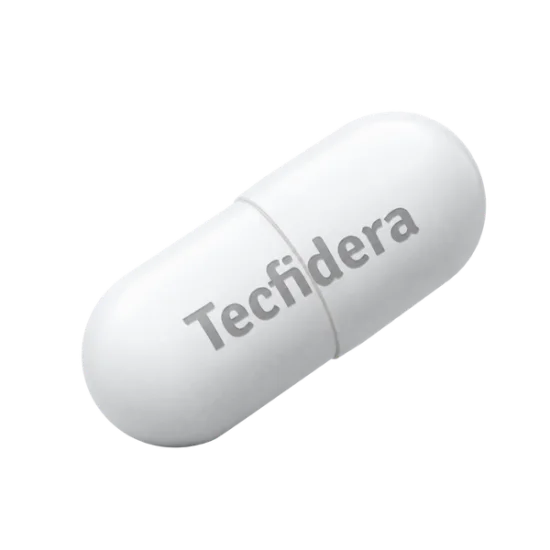
I took Tecfidera at the prescribed dose and had flushing during the first fortnight, mainly around my face and neck. Taking the capsule with breakfast made it easier, and the episodes became shorter by the second month. My blood test appointments were more frequent than I expected.
Greymouth Several months 19 Oct 2026Tecfidera
Multiple sclerosis (MS) can involve relapses, new inflammatory lesions, and gradual disability accumulation. It helps reduce inflammatory disease activity within the central nervous system.
Product information
Tecfidera contains dimethyl fumarate, an oral disease-modifying treatment used for relapsing forms of MS in adults. Dimethyl fumarate belongs to the fumarate group of disease-modifying therapies used in multiple sclerosis.
Directions for use
- Route: Tecfidera is taken by mouth as capsules.
- Dose: The amount per intake is set individually for each person rather than being one fixed amount.
- Use: Treatment continues for the period determined by the treating neurologist.
Tecfidera is used as an oral disease-modifying treatment for adults with relapsing forms of multiple sclerosis. It helps reduce inflammatory disease activity within the central nervous system and is used while the treating neurologist manages the person's MS.
Ingredients
Tecfidera is supplied as oral capsules containing dimethyl fumarate. Dimethyl fumarate belongs to the fumarate group of disease-modifying therapies used in multiple sclerosis. It activates pathways involved in cellular responses to oxidative stress and may reduce damaging inflammatory activity in the brain and spinal cord [1].
The treatment is intended for relapsing forms of multiple sclerosis, including relapsing-remitting disease and other active relapsing patterns recognised by the treating neurologist. It does not remove established nerve damage, and it does not reverse disability that has already developed.
Indications for relapsing forms of multiple sclerosis
Tecfidera may be prescribed when MS activity is shown by clinical relapses, new lesions on magnetic resonance imaging, or both. Treatment selection depends on relapse history, MRI findings, disability level, previous therapies, infection risk, blood counts, liver function, pregnancy plans, and the person’s ability to follow monitoring appointments.
How it affects the body
Dimethyl fumarate activates pathways involved in cellular responses to oxidative stress and may reduce damaging inflammatory activity in the brain and spinal cord [1].
Therapeutic indications
The treatment is intended for relapsing forms of multiple sclerosis, including relapsing-remitting disease and other active relapsing patterns recognised by the treating neurologist.
Tecfidera may be prescribed when MS activity is shown by clinical relapses, new lesions on magnetic resonance imaging, or both.
Common mistakes
Several avoidable patterns can make Tecfidera harder to tolerate or harder to assess:
- Taking the capsule on an empty stomach despite repeated nausea or flushing.
- Opening, crushing, or chewing the capsule.
- Taking two doses together after a missed dose.
- Stopping treatment because of one flushing episode without reporting the severity.
- Missing blood tests because there are no obvious symptoms.
- Ignoring persistent diarrhoea or unexplained bruising.
- Treating a fever-related worsening as a definite MS relapse.
- Failing to mention previous immune-suppressing treatment.
- Forgetting to report new neurological symptoms that progress gradually.
- Restarting treatment after a long gap without medical review.
The capsule should be swallowed whole with liquid. Do not crush or chew it, because altering the dosage form may change how dimethyl fumarate is released and can worsen local or systemic intolerance.
If a dose is missed, the usual approach is to take it when remembered unless the next scheduled dose is near. Doubling the next intake is inappropriate. The person’s prescriber should provide the specific plan when several doses have been missed.
Reasons not to use it
Tecfidera is not suitable for everyone.
- You have had a serious allergic reaction to dimethyl fumarate or another component of the capsule.
- You have severe, persistent lymphopenia that has not been assessed and managed.
- You have an active serious infection requiring urgent treatment.
- You have unexplained severe liver injury.
- You are experiencing progressive neurological symptoms that could represent PML or another urgent neurological disorder.
- You cannot complete the blood-count and liver monitoring required for treatment.
- You are pregnant or planning pregnancy without an individual risk assessment.
The treatment may require extra caution in people with recurrent infections, previous immune-suppressing therapy, chronic liver disease, kidney disease, or a history of abnormal blood counts.
When this is not for you
Tecfidera may not be right for you if you have had a serious allergic reaction to dimethyl fumarate, severe or persistent lymphopenia, an active serious infection, unexplained severe liver injury, or progressive neurological symptoms. You should also discuss treatment carefully if you are pregnant or planning pregnancy, cannot complete the required blood tests, or have recurrent infections, liver disease, kidney disease, or previous immune-suppressing treatment.
Unwanted effects
Flushing and gastrointestinal symptoms are the adverse effects most often associated with Tecfidera. Flushing may feel like warmth, redness, itching, tingling, or burning across the face, chest, or arms. Stomach-related effects can include abdominal pain, diarrhoea, nausea, indigestion, and vomiting.
These effects are often more troublesome during the first weeks of treatment and may lessen as the body adapts. Taking the capsule with food can help. Alcohol may intensify flushing in some people, and large, hot, spicy meals can make the sensation more noticeable.
Common practical measures include:
- Taking the capsule during a meal rather than before eating.
- Drinking enough fluid when diarrhoea occurs.
- Choosing smaller meals if nausea is persistent.
- Recording the timing of flushing and stomach symptoms.
- Reporting severe, prolonged, or worsening gastrointestinal symptoms.
- Avoiding self-directed changes to the prescribed schedule.
A mild flushing episode can be uncomfortable without being medically dangerous. Facial swelling, breathing difficulty, widespread hives, faintness, or rapid deterioration can indicate a serious allergic reaction and requires urgent medical attention.
Dimethyl fumarate can reduce lymphocyte counts, a type of white blood cell involved in immune defence. The reduction may be mild and temporary, but persistent or severe lymphopenia increases susceptibility to certain infections. Baseline and follow-up full blood counts are used to identify this risk.
Liver injury is uncommon but possible. Symptoms such as yellowing of the skin or eyes, dark urine, unusually pale stools, persistent right-upper-abdominal pain, or severe unexplained fatigue require prompt medical assessment.
Progressive multifocal leukoencephalopathy, or PML, is a rare brain infection associated with serious immune suppression. Warning symptoms may include progressive weakness, visual disturbance, personality change, confusion, speech difficulty, or loss of coordination. The risk is linked to immune status, including prolonged or severe lymphocyte reduction, so blood monitoring is a central part of treatment safety [2].
Other urgent symptoms include:
- Fever or infection that does not improve.
- Unusual bruising or bleeding.
- Severe skin rash or blistering.
- Facial or throat swelling.
- New neurological symptoms that progress over days or weeks.
- Severe weakness, confusion, or altered behaviour.
A full blood count and liver assessment may be required before treatment and at intervals during treatment. The exact monitoring schedule depends on the clinical situation and local prescribing practice.
One detail patients often miss is that a low lymphocyte count may not cause any immediate symptoms. Feeling well does not reliably show whether the immune-cell count remains adequate.

Comparison
Disease-modifying therapies for MS include oral medicines, injectable treatments, and infusion therapies. Tecfidera offers an oral capsule option, which may suit adults who prefer not to use injections. The choice also depends on disease activity, MRI burden, pregnancy considerations, infection risk, monitoring requirements, and previous treatment response.
| Treatment approach | Main practical feature | Main clinical limitation |
|---|---|---|
| Oral fumarate therapy | Capsules taken at home | Flushing, gastrointestinal effects, and blood monitoring |
| Injectable therapy | Established self-administration route | Injection-site reactions and regular injections |
| Infusion therapy | Less frequent administration in a clinic | Infusion reactions and greater monitoring around treatment visits |
A neurologist may use a disease-modifying therapy decision tool to compare expected benefits, safety monitoring, administration demands, and the person’s treatment priorities. A highly active disease pattern may lead to discussion of a treatment with greater potency, while a more moderate pattern may allow a broader choice.
Treatment decisions can change. New MRI lesions, repeated relapses, persistent side effects, lymphocyte reduction, pregnancy planning, or another medical condition may lead to a review of the treatment plan.
What doctors say
In clinical practice, neurologists assess Tecfidera through three connected measures: relapse control, MRI activity, and treatment tolerability. A person may feel stable while an MRI shows new lesions, or may report symptoms that are not caused by new MS inflammation. Treatment decisions therefore rely on the full clinical picture.
Doctors usually explain that Tecfidera is a long-term disease-modifying treatment rather than a medicine for immediate relief during a relapse. Acute relapses may require a separate management plan. Tecfidera should not be started, stopped, or restarted after a prolonged interruption without a review of the treatment history and blood results.
The first weeks often require practical adjustment. Flushing may be unpleasant but temporary, while diarrhoea or abdominal pain can become a reason to review the treatment sooner. A neurologist will weigh symptom severity against relapse control instead of treating every side effect as a reason to stop immediately.
The European Medicines Agency and Medsafe describe blood-count monitoring, infection assessment, liver monitoring, and recognition of PML symptoms as core safety considerations for dimethyl fumarate treatment [3].
What customers often ask
How does Tecfidera differ from the closest alternative by mechanism?
Tecfidera uses dimethyl fumarate to influence cellular stress-response and inflammatory pathways, while many other MS treatments act through different immune targets. A 2015 Cochrane review supports comparing disease-modifying treatments by relapse control, disability outcomes, infection risk, monitoring, and administration demands. A direct substitute cannot be selected from mechanism alone. MRI activity, previous treatment, lymphocyte counts, liver health, pregnancy plans, and personal preference all influence the choice.
Which condition rules Tecfidera out?
A serious allergic reaction to dimethyl fumarate rules out further treatment, according to the 2024 EMA product information. Severe or persistent lymphopenia, an active serious infection, or suspected PML also requires urgent clinical review before treatment continues. Severe liver injury can require stopping or changing therapy. A neurologist determines whether the problem is an absolute contraindication, a temporary reason to pause, or a situation requiring closer monitoring.
Is Tecfidera suitable for older adults?
Older adults may use Tecfidera when the expected MS benefit outweighs the treatment risks, but the assessment is more detailed. The 2023 Cochrane evidence review supports considering comorbidities, kidney and liver function, infection susceptibility, polypharmacy, and disability level when choosing disease-modifying treatment. Age alone does not determine suitability. Blood counts, liver results, previous immune therapies, and the ability to recognise infection or neurological change are central to the decision.
Do you offer anonymous delivery?
Your order will be securely packed and shipped within 24 hours. This is exactly what your package will look like (images of an actual item sent). It has the size and look of a regular private letter (24x11x0.7 cm) and its contents cannot be seen.
Comparison
Aricept
Azilect
Baclofen
Neurontin
Sibelium
How Buyers Rate Tecfidera
Based on 5 reviews
I took Tecfidera at the prescribed dose, but the first week brought loose stools and cramping, so I was worried I would need to stop. Eating properly before the dose helped. After about six weeks, the stomach symptoms were much less disruptive, although I still avoided taking it before work.
Pukekohe About six weeks 25 Oct 2026I used Tecfidera at the prescribed dose for several months and did not notice much flushing. My main difficulty was remembering the monitoring appointments because I felt well. The clinic explained why the blood counts mattered, and I now keep them in the same calendar as my MRI dates.
Dunedin Several months 30 Oct 2026I took Tecfidera at the prescribed dose, and the treatment reduced the worry around frequent relapses, but the early nausea was difficult. I found that a light meal was not enough for me. A proper meal helped, although I still had two days when I contacted the clinic about the symptoms.
Whangārei 9 Nov 2026I took Tecfidera at the prescribed dose, preferred capsules to injections, and found the routine manageable after the first month. I missed one dose during a weekend away and did not double it later. The main adjustment was planning meals around the morning and evening doses.
Taupō After the first month 15 Nov 2026Sources
- U.S. Food and Drug Administration (2023). TECFIDERA (dimethyl fumarate) Delayed-Release Capsules Prescribing Information.
- European Medicines Agency (2024). Tecfidera: EPAR — Product Information.
- Medsafe (2023). Tecfidera Data Sheet.