Skip to content
In stock Strattera
Attention Deficit Hyperactivity Disorder

Strattera

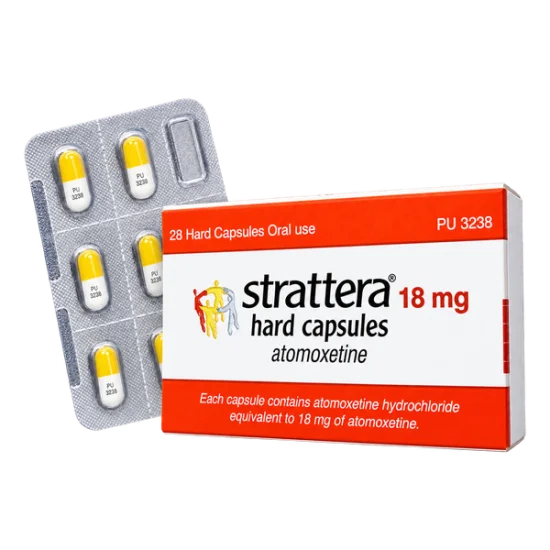
Strattera is an oral ADHD medicine containing atomoxetine, a non-stimulant selective noradrenaline reuptake inhibitor. It is used in adults, adolescents, and children when a clinician considers a…

Guaranteed quality Original product
Delivery: from 4 days Discreet shipping
24/7 Support Always available
Active ingredient: Atomoxetine
Select dosage:
Select pack Package Per unit Price
$ 14.96 $ 149.60
$ 8.42 $ 299.20 $ 168.30 Save 44%
$ 6.17 $ 448.80 $ 185.13 Save 59%
$ 3.40 $ 897.60 $ 203.83 Save 77%
$ 2.47 $ 1,346.40 $ 222.53 Save 83%
$ 2.17 $ 1,795.20 $ 259.93 Save 86%
$ 2.06 $ 2,692.80 $ 370.26 Save 86%
Free Regular Delivery $ 1.99 $ 4,039.20 $ 538.56 Save 87%
Best value Free Express Delivery $ 1.85 $ 5,385.60 $ 667.59 Save 88%
$ 15.33 $ 153.34
$ 8.51 $ 306.68 $ 170.17 Save 45%
$ 6.30 $ 460.02 $ 188.87 Save 59%
$ 3.99 $ 920.04 $ 239.36 Save 74%
$ 3.78 $ 1,380.06 $ 340.34 Save 75%
Free Regular Delivery $ 3.69 $ 1,840.08 $ 443.19 Save 76%
Free Express Delivery $ 3.41 $ 2,760.12 $ 613.36 Save 78%
Free Express Delivery $ 3.15 $ 4,140.18 $ 850.85 Save 79%
Best value Free Express Delivery $ 2.98 $ 5,520.24 $ 1,073.38 Save 81%
$ 15.90 $ 158.95
$ 8.79 $ 317.90 $ 175.78 Save 45%
$ 6.36 $ 476.85 $ 190.74 Save 60%
$ 4.77 $ 953.70 $ 286.11 Save 70%
Free Regular Delivery $ 4.59 $ 1,430.55 $ 413.27 Save 71%
Free Regular Delivery $ 4.24 $ 1,907.40 $ 508.64 Save 73%
Free Express Delivery $ 3.53 $ 2,861.10 $ 635.80 Save 78%
Free Express Delivery $ 3.18 $ 4,291.65 $ 858.33 Save 80%
Best value Free Express Delivery $ 2.65 $ 5,722.20 $ 953.70 Save 83%
$ 15.71 $ 157.08
$ 9.16 $ 314.16 $ 183.26 Save 42%
$ 9.60 $ 471.24 $ 287.98 Save 39%
Free Regular Delivery $ 8.73 $ 942.48 $ 523.60 Save 44%
Free Express Delivery $ 7.56 $ 1,413.72 $ 680.68 Save 52%
Free Express Delivery $ 6.55 $ 1,884.96 $ 785.40 Save 58%
Free Express Delivery $ 5.67 $ 2,827.44 $ 1,021.02 Save 64%
Free Express Delivery $ 4.36 $ 4,241.16 $ 1,178.10 Save 72%
Best value Free Express Delivery $ 3.64 $ 5,654.88 $ 1,309.00 Save 77%

Free delivery on orders from $ 374.00, free express delivery from $ 561.00

Secure payment methods:
VISA AMEX JCB DISCOVER

Strattera is an oral ADHD medicine containing atomoxetine, a non-stimulant selective noradrenaline reuptake inhibitor. It is used in adults, adolescents, and children when a clinician considers a non-stimulant option appropriate, with dosing varying between strengths and users.

Product information

Strattera is an oral ADHD medicine containing atomoxetine. It belongs to the non-stimulant selective noradrenaline reuptake inhibitor (NRI) class and is used in adults, adolescents, and children when a clinician considers a non-stimulant option appropriate.

Directions for use

Dose and administration of Strattera

The available Strattera hard capsule strength is stated on the product information. The amount used differs between available strengths and between users, so there is no single amount that suits everyone. Dosing differs between strengths and between users, so there is no single amount that suits everyone. The prescriber sets the starting dose, adjustment schedule, and maintenance dose according to age, body weight, treatment response, adverse effects, liver function, and interacting medicines.

  • Take the prescribed daily dose at a consistent time.
  • Swallow the hard capsule whole with water.
  • It may be taken with food or on an empty stomach.
  • Do not crush, chew, or open the capsule.
  • If a dose is missed, take it when remembered unless the next dose is close; do not take two doses together.

A once-daily plan suits many people. Others are prescribed divided dosing to improve tolerability or maintain steadier coverage. Changing the schedule without clinical advice can increase adverse effects or leave symptoms poorly controlled.

Ingredients

Strattera contains atomoxetine in each hard capsule. The amount used differs between available strengths and between users, so there is no single amount that suits everyone. Atomoxetine is a selective noradrenaline reuptake inhibitor, often shortened to NRI.

How it affects the body

Atomoxetine blocks the noradrenaline transporter, reducing the reuptake of noradrenaline into nerve cells. This leaves more noradrenaline available between nerve cells, which can support concentration and behavioural control.

Its effect builds gradually. It does not create the immediate stimulant effect associated with medicines such as methylphenidate.

Therapeutic indications

It is used for ADHD in adults, adolescents, and children when a clinician considers a non-stimulant option appropriate.

Primary indication for attention-deficit/hyperactivity disorder

ADHD can involve persistent inattention, impulsive behaviour, disorganisation, restlessness, or difficulty completing tasks.

The New Zealand Medsafe data sheet identifies atomoxetine as a treatment for ADHD and describes its selective action on the noradrenaline transporter. [1]

Common mistakes

The most frequent mistake is stopping after a few days because the effect does not feel immediate. Atomoxetine needs sustained use before response can be assessed fairly.

Another mistake is opening the capsule to make swallowing easier. This can expose the mouth or eyes to irritating powder and changes how the medicine is taken.

People also sometimes blame every bad day on treatment failure. ADHD symptoms naturally vary with sleep loss, illness, workload, alcohol use, stress, and missed meals. A brief symptom record is more useful than relying on memory during a follow-up appointment.

If insomnia begins after starting treatment, record the time of each dose and the time you try to sleep for seven days. That pattern gives the prescriber practical information for changing the schedule.

Reasons not to use it

Strattera is not for you if you are taking a monoamine oxidase inhibitor, commonly called an MAOI, or have taken one within the previous 14 days. The combination can cause dangerous changes in blood pressure and other serious reactions.

It is also unsuitable for people with narrow-angle glaucoma, pheochromocytoma, or severe cardiovascular or cerebrovascular disorders that could deteriorate with increased blood pressure or heart rate.

Extra assessment is needed in the following situations:

  • Previous seizures or epilepsy, because atomoxetine may lower the seizure threshold in some people.
  • Urinary retention, enlarged prostate, or urinary outflow obstruction, because difficulty passing urine can occur.
  • Tourette syndrome or tic disorders, where symptoms should be followed during treatment.
  • Bipolar disorder, psychosis, severe anxiety, aggression, or a history of suicidal behaviour.
  • Liver disease, as rare severe liver injury has been reported.
  • Use of fluoxetine, paroxetine, quinidine, or other strong CYP2D6 inhibitors, which can increase atomoxetine exposure.

When this is not for you

Do not use Strattera if you take an MAOI or have taken one in the last 14 days. It may also be unsuitable if you have narrow-angle glaucoma, pheochromocytoma, or serious heart or blood-vessel disease. Tell your clinician if you have seizures, urinary problems, tics, bipolar disorder, psychosis, severe anxiety, liver disease, or take fluoxetine, paroxetine, quinidine, or similar medicines.

Unwanted effects

Most adverse effects are most noticeable during the first weeks or after a dose adjustment. Nausea, dry mouth, reduced appetite, constipation, tiredness, dizziness, and sleep disturbance are among the effects reported most often. Some adults also report erectile dysfunction, reduced libido, difficulty urinating, or delayed ejaculation.

A slower onset is a trade-off. Some people prefer the non-stimulant mechanism, while others find that nausea or sleep changes make early treatment frustrating.

Possible effect Practical response When it needs prompt review
Nausea or stomach upset Taking the capsule with food may help Persistent vomiting, severe abdominal pain, or dark urine
Dry mouth or constipation Sip water regularly and maintain dietary fibre Constipation with severe pain or inability to pass urine
Reduced appetite Plan regular meals and monitor weight Marked weight loss or poor intake
Insomnia or tiredness Discuss whether morning or evening dosing suits the person better Severe insomnia, agitation, or major mood change
Dizziness or palpitations Rise slowly from sitting and report recurring symptoms Fainting, chest pain, or a sustained rapid heartbeat

Dry mouth, nausea, decreased appetite, constipation, dizziness, and sexual side effects were reported in adult atomoxetine studies reviewed by the United States Food and Drug Administration. [2]

A dry mouth can feel minor until it affects eating, speaking, or dental comfort. Sugar-free gum, regular water intake, and consistent oral hygiene are more useful than repeatedly skipping doses.

Comparison

Comparative analysis of Strattera and methylphenidate

Strattera and methylphenidate can both be used for ADHD, though they work in different ways. Atomoxetine is non-stimulant and generally has a gradual response profile. Methylphenidate is a stimulant that usually produces a more immediate day-to-day effect after an appropriate dose is reached.

Feature Strattera: atomoxetine Methylphenidate
Main mechanism Selective noradrenaline reuptake inhibition Increases dopamine and noradrenaline signalling
Response profile Gradual, often assessed over several weeks Usually noticeable sooner after dosing
Key limitation Nausea, sleep changes, blood pressure effects, slower onset Appetite loss, insomnia, stimulant-related misuse potential

NICE lists atomoxetine as a non-stimulant treatment option for ADHD when stimulant treatment is unsuitable, not tolerated, or has not worked adequately. [4]

For people with substance-use concerns, marked stimulant intolerance, or a preference for a non-stimulant approach, atomoxetine may be a useful option. It is not automatically the better choice for every person. A person needing a rapid, clearly observable response may find the slower build-up difficult.

What doctors say

In clinical practice, prescribers often explain that atomoxetine works best when expectations are realistic. The medicine is not designed to produce an instant feeling of focus. Benefit may first show as fewer unfinished tasks, less impulsive interruption, better planning, or reduced emotional reactivity.

Doctors also look beyond concentration. Sleep quality, appetite, mood, pulse, blood pressure, school or work functioning, and family observations can all help determine whether treatment is helping. The World Health Organization’s ICD-11 recognises ADHD as a neurodevelopmental disorder with presentations that can persist into adulthood, so treatment goals are usually functional rather than limited to one symptom. [5]

A prescriber may adjust the plan if side effects persist, if benefit remains limited after an adequate trial, or if another condition is driving concentration problems. Depression, anxiety, sleep apnoea, thyroid disease, substance use, and medication effects can all complicate ADHD assessment.

What customers often ask

What is the best time of day to take Strattera?

Strattera can be taken in the morning or at another consistent daily time, depending on how it affects sleep, tiredness, or nausea. Medsafe’s 2023 Strattera data sheet permits administration with or without food and supports individual scheduling within the prescribed regimen. If it causes drowsiness, a clinician may consider a different schedule. If it worsens insomnia, earlier dosing may be preferable. A clinician can help select a dosing time that fits the treatment plan.

How long does one Strattera dose keep working?

Atomoxetine is intended for regular daily treatment rather than occasional use for a single demanding task. The United States Food and Drug Administration prescribing information, updated in 2022, describes atomoxetine blood levels that vary with CYP2D6 metabolism and the prescribed regimen. Its therapeutic benefit comes from consistent exposure over time. Missing doses can make symptom control less steady.

Can older adults use Strattera?

Evidence in adults is stronger than evidence in people aged over 65 years. The 2023 Medsafe data sheet states that atomoxetine has not been evaluated systematically in geriatric patients. Older adults may also be more likely to have cardiovascular disease, urinary symptoms, liver impairment, or interacting medicines. Pulse, blood pressure, and the medicine list deserve close attention in this age group.

Can Strattera be taken with food or on an empty stomach?

Strattera may be taken with food or on an empty stomach. The EMA product information for atomoxetine, published in 2011, states that food does not prevent its use and can be helpful for people who experience nausea. A meal may make early stomach upset easier to tolerate. The key point is maintaining the prescribed schedule.

Can Strattera capsules be split, crushed, or chewed?

Hard capsules should be swallowed whole and should not be split, crushed, chewed, or opened. Atomoxetine capsule contents can irritate the eyes, which is why the FDA’s 2022 prescribing information advises avoiding contact with the powder. A person who cannot swallow capsules should ask the prescriber about a suitable treatment plan rather than altering the capsule. Opening capsules also makes accurate dosing difficult.

How soon does Strattera become noticeable?

Some people notice early changes in attention, impulsivity, or emotional reactivity within the first few weeks. A fuller assessment often takes longer because atomoxetine has a gradual non-stimulant action. NICE guidance from 2018 recommends reviewing ADHD treatment response, adverse effects, and functional goals rather than judging treatment only by an immediate subjective feeling. Consistent dosing matters during this assessment period.

What should happen if the expected result does not come?

A limited response should trigger a structured review rather than self-increasing the dose. The prescriber may assess adherence, dose timing, sleep, mood, blood pressure, CYP2D6-interacting medicines, and whether ADHD symptoms are being confused with anxiety or depression. The World Health Organization’s 2024 ICD-11 framework recognises that ADHD presentations can overlap with other mental-health and neurodevelopmental conditions. A revised treatment plan may involve dose adjustment, behavioural support, or an alternative ADHD medicine.

Do you offer anonymous delivery?

Your order will be securely packed and shipped within 24 hours. This is exactly what your package will look like (images of an actual item sent). It has the size and look of a regular private letter (24x11x0.7 cm) and its contents cannot be seen.

Cardiovascular risks and regulatory monitoring

Atomoxetine can increase pulse rate and blood pressure. For many people the change is small, yet it can be clinically meaningful for someone with hypertension, a fast resting pulse, structural heart disease, fainting episodes, or a family history of sudden cardiac death.

Blood pressure and pulse are usually assessed before treatment and rechecked during dose changes and ongoing use. New chest pain, breathlessness on exertion, fainting, or persistent palpitations need medical assessment rather than waiting for the next routine review.

Mood also needs attention. Atomoxetine carries a warning for suicidal thoughts in children and adolescents, especially early in treatment or after a change in dose. New hostility, agitation, unusual behaviour, or self-harm thoughts require urgent clinical contact.

The European Medicines Agency advises cardiovascular assessment before atomoxetine and monitoring of blood pressure and heart rate throughout treatment. [3]

Pharmacokinetics and hepatic metabolism of atomoxetine

After oral administration, atomoxetine is absorbed into the bloodstream and processed mainly in the liver by the CYP2D6 enzyme. This pathway creates metabolites including 4-hydroxyatomoxetine and N-desmethylatomoxetine.

CYP2D6 activity varies greatly between people. Some people metabolise atomoxetine slowly because of inherited enzyme differences or because another medicine inhibits CYP2D6. In these situations, atomoxetine levels can be higher and side effects may be more pronounced.

Liver metabolism also explains why yellowing of the skin or eyes, unexplained itching, dark urine, or pain under the right ribs needs prompt assessment. These symptoms are uncommon, yet they can indicate liver injury.

Do not judge Strattera by a single busy day or one distracted afternoon. Tracking sleep, appetite, task completion, and impulsive decisions over several weeks gives a clearer picture of response.

Atomoxetine administration during pregnancy and lactation

Pregnancy planning, pregnancy, and breastfeeding require an individual risk-benefit review. Human pregnancy data are limited, and treatment decisions need to consider the severity of ADHD symptoms, previous response to atomoxetine, and the risks of stopping treatment abruptly.

Atomoxetine may pass into breast milk, although the extent in humans is not well established. Breastfeeding plans should therefore be discussed with the prescriber managing ADHD treatment. This is a medication-specific decision, not a routine instruction to stop all ADHD treatment.

How Buyers Rate Strattera

Based on 5 reviews

Christopher, 54 Verified
Rating: 5 out of 5

I took Strattera each morning. The first fortnight brought nausea, then it settled when I had breakfast first. By week five I was losing fewer notes at work and finishing emails instead of opening ten at once.

Oamaru Six weeks 2 Nov 2026
Robert, 55 Verified
Rating: 4 out of 5

The change was gradual rather than obvious. My wife noticed I interrupted less during conversations before I did. Dry mouth was annoying in the evenings, but it was manageable with water.

Nelson Two months 11 Nov 2026
John, 69 Verified
Rating: 2.5 out of 5

I stopped after speaking with my prescriber because my pulse felt faster and I was waking too early. It was not the right fit for me, even though my concentration had improved a little.

Te Awamutu Four weeks 25 Oct 2026
Darren, 50 Verified
Rating: 4 out of 5

I had expected a stimulant-type boost and that was not what happened. The useful part was being less reactive during meetings. I needed several weeks before I could tell there was a difference.

Pukekohe Eight weeks 17 Nov 2026
Graham, 37 Verified
Rating: 5 out of 5

I took it consistently and kept a note on my phone of sleep and work tasks. Appetite was lower at first, then normalised. Planning my day became easier, although I still used reminders.

Gisborne Seven weeks 19 Oct 2026

Sources

  1. Medsafe (2023). Strattera Capsules: New Zealand Data Sheet.
  2. United States Food and Drug Administration (2022). STRATTERA (atomoxetine) capsules, for oral use: Prescribing Information.
  3. European Medicines Agency (2011). Strattera: EPAR – Product Information.
  4. National Institute for Health and Care Excellence (2018). Attention deficit hyperactivity disorder: diagnosis and management (NG87).
  5. World Health Organization (2024). ICD-11 for Mortality and Morbidity Statistics.
Get our free app Shop faster and track your orders 3.9 · 414 reviews Install