Skip to content
In stock Spiriva
Chronic Obstructive Pulmonary Disease

Spiriva

Spiriva contains tiotropium, a long-acting muscarinic antagonist, also called an anticholinergic bronchodilator. This widens the bronchi and helps reduce daily breathlessness, wheezing, and activity…

Guaranteed quality Original product
Delivery: from 4 days Discreet shipping
24/7 Support Always available
Active ingredient: Tiotropium
Select pack Package Per unit Price
$ 5.61 $ 168.30
$ 4.49 $ 336.60 $ 269.28 Save 20%
Free Regular Delivery $ 4.07 $ 673.20 $ 488.07 Save 28%
Free Express Delivery $ 3.96 $ 1,009.80 $ 712.47 Save 29%
Best value Free Express Delivery $ 3.26 $ 1,514.70 $ 878.90 Save 42%

Free delivery on orders from $ 374.00, free express delivery from $ 561.00

Secure payment methods:
VISA AMEX JCB DISCOVER

Spiriva contains tiotropium, a long-acting muscarinic antagonist, also called an anticholinergic bronchodilator. This widens the bronchi and helps reduce daily breathlessness, wheezing, and activity limitation in adults with COPD.

Product information

Spiriva delivers tiotropium, a long-acting bronchodilator that relaxes airway muscles and supports easier breathing throughout the day. It is prescribed for long-term maintenance treatment of chronic obstructive pulmonary disease (COPD), not for sudden breathing attacks. The Respimat inhaler delivers the medicine as a soft mist.

Directions for use

The standard COPD regimen is two inhalations once daily, providing a total daily dose of 5 micrograms, unless the prescriber selects a different regimen for the diagnosed condition.

The usual administration sequence is:

  1. Prepare the inhaler. Ensure the cartridge is correctly inserted and the inhaler is ready for use.
  2. Turn the base. Rotate the transparent base until it clicks, following the device’s operating direction.
  3. Open the cap. Keep the inhaler upright.
  4. Breathe out slowly. Do not breathe into the mouthpiece.
  5. Seal your lips around the mouthpiece. Keep the air vents uncovered.
  6. Breathe in slowly and deeply. Press the dose-release button while continuing the inhalation.
  7. Hold your breath briefly. A short breath-hold allows the mist to settle in the airways.
  8. Repeat for the second inhalation. Spiriva Respimat COPD dosing commonly requires two inhalations once daily.
  9. Close the cap. Keep the device ready for the next scheduled use.

For the Respimat COPD presentation, the standard adult dose is two inhalations once daily. Each inhalation delivers 2.5 micrograms of tiotropium, giving 5 micrograms per day. The inhaler is used by oral inhalation, not swallowed.

The amount and frequency can depend on the purpose of treatment and are agreed with a doctor or pharmacist. Older adults may use the usual regimen, but kidney function, glaucoma risk, urinary symptoms, and the complete medication list can affect prescribing decisions.

If a dose is missed, take it when remembered unless the next scheduled dose is near. Do not take two doses together. Resume the regular once-daily schedule.

Do not use Spiriva more often than prescribed. Extra inhalations are unlikely to provide emergency relief and may increase dry mouth, blurred vision, palpitations, constipation, or urinary difficulty.

Ingredients

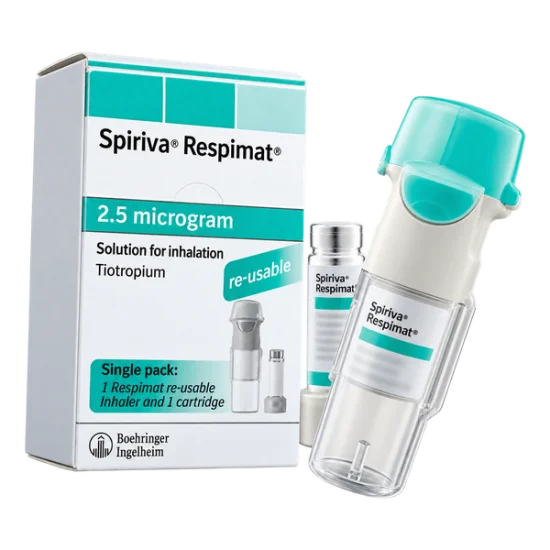
The Respimat presentation uses a reusable inhaler with a cartridge. Each actuation delivers 2.5 micrograms of tiotropium solution for inhalation.

How it affects the body

Tiotropium blocks nerve signals that tighten the smooth muscle surrounding the airways. This reduces the effect of acetylcholine, a chemical messenger that can cause bronchial smooth-muscle contraction and mucus-related airway narrowing.

M1 and M3 receptors have different locations and functions:

  • M1 receptors participate in nerve signalling within airway tissues.
  • M3 receptors are found on airway smooth muscle and glands; blocking M3 activity reduces bronchoconstriction.
  • M2 receptors help regulate acetylcholine release, so tiotropium’s prolonged receptor profile is clinically relevant to its airway action.

The result is sustained relaxation of airway smooth muscle. Breathing may feel easier because the airways offer less resistance, especially during walking, climbing stairs, or other exertion.

Tiotropium is a quaternary ammonium compound with limited passage across the blood–brain barrier. It undergoes chemical breakdown to metabolites including N-methylscopine and dithienylglycolic acid. The clinical effect comes from receptor blockade in the airways, not from a stimulant action on breathing.

The long duration results from slow dissociation from airway muscarinic receptors. That feature distinguishes tiotropium from short-acting ipratropium, which wears off sooner and usually requires more frequent administration. The mechanism and dosing principles are described in regulatory tiotropium prescribing information [2].

Therapeutic indications

Spiriva is prescribed for long-term maintenance treatment of chronic obstructive pulmonary disease (COPD), not for sudden breathing attacks.

The Food and Drug Administration has approved tiotropium inhalation products for long-term bronchodilator treatment in COPD. Medsafe regulates medicines used in New Zealand, while the European Medicines Agency evaluates medicinal products and safety information within the European Union. Global Initiative for Chronic Obstructive Lung Disease guidance places long-acting bronchodilators, including LAMA therapy, among the main pharmacological options for persistent COPD symptoms [1].

Tiotropium is prescribed when sustained airway opening is needed rather than occasional symptom relief. A clinician may select it alone or alongside other inhaled therapies according to symptom burden, exacerbation history, lung-function results, and previous treatment response.

COPD includes chronic bronchitis and emphysema patterns. The disease causes persistent airflow limitation, so treatment aims to improve breathing and reduce symptoms over time. Spiriva does not reverse established lung damage, but regular use can help maintain bronchodilation between doses.

Common mistakes

Several preventable errors can reduce the benefit of Spiriva:

  • Using the inhaler only on days when symptoms are severe
  • Taking extra doses during an acute attack
  • Spraying the mist toward the eyes
  • Breathing in too quickly
  • Pressing the dose button before starting a slow inhalation
  • Forgetting the second inhalation in the daily regimen
  • Sharing the inhaler
  • Using a HandiHaler technique with a Respimat device
  • Stopping treatment after a few comfortable days
  • Ignoring urinary retention, eye pain, or severe palpitations
  • Assuming that a rescue inhaler and Spiriva have the same purpose
If symptoms remain troublesome, ask for an inhaler-technique assessment rather than immediately increasing the dose. A two-minute demonstration often identifies a missed breath, poor seal, or mist directed away from the lungs.

Reasons not to use it

Spiriva is not suitable for everyone. It should not be used by a person with a known allergy to tiotropium, atropine-derived medicines, or any component of the inhalation product.

  • Acute angle-closure glaucoma unless an eye specialist has specifically addressed the risk.
  • Urinary retention or significant difficulty passing urine that has not been medically assessed.
  • Kidney impairment may increase exposure to tiotropium because the medicine is substantially eliminated through the kidneys.
  • Other anticholinergic medicines may increase side effects when combined with tiotropium.

When this is not for you

This treatment is not for you if

  • You have previously had a serious allergic reaction to tiotropium or a related anticholinergic medicine.
  • You have acute angle-closure glaucoma unless an eye specialist has specifically addressed the risk.
  • You have urinary retention or significant difficulty passing urine that has not been medically assessed.
  • You are experiencing sudden severe breathlessness that requires rescue treatment.
  • You intend to swallow the cartridge contents instead of using the Respimat inhaler.

Tell the prescriber about glaucoma, prostate enlargement, urinary obstruction, irregular heartbeat, kidney disease, and previous reactions to inhaled medicines.

Unwanted effects

Tiotropium is designed to act mainly in the airways, but anticholinergic effects can occur elsewhere in the body. Dry mouth is among the most frequent adverse effects. It may be mild and may lessen as the body adapts.

Possible reactions include:

  • Dry mouth or throat irritation
  • Cough after inhalation
  • Headache
  • Constipation
  • Dizziness
  • Blurred vision
  • Palpitations
  • Difficulty passing urine
  • Worsening wheeze immediately after inhalation
  • Allergic reactions such as swelling, rash, or breathing difficulty

Dry mouth can increase the risk of dental discomfort when it persists. Regular water intake, sugar-free chewing gum, and sugar-free lozenges may help stimulate saliva. Good oral hygiene is useful because reduced saliva can contribute to tooth decay.

Seek urgent medical attention for swelling of the face, lips, tongue, or throat; severe rash; faintness; or rapidly worsening breathing after an inhalation. Paradoxical bronchospasm means that the airways tighten immediately after a dose instead of relaxing. This is uncommon but requires prompt treatment.

Blurred vision with eye pain, coloured halos around lights, redness, or nausea can indicate acute angle-closure glaucoma. Tiotropium reaching the eyes can worsen this risk, especially if the mist is sprayed toward the face.

The New Zealand tiotropium product information describes these anticholinergic reactions and specific precautions [3].

Comparison

Long-acting and short-acting anticholinergic bronchodilators both reduce acetylcholine-driven airway constriction. Their practical difference is the duration of bronchodilation and the number of daily administrations.

Treatment category Active ingredient and action Usual role
Spiriva Respimat Tiotropium; long-acting muscarinic antagonist Once-daily COPD maintenance
Short-acting anticholinergic inhaler Ipratropium, also known as Atrovent; shorter-acting muscarinic antagonist Shorter-duration symptom relief or combination treatment

Tiotropium remains attached to airway muscarinic receptors for longer than ipratropium. This allows once-daily maintenance in the standard COPD regimen. Ipratropium may be used more frequently because its bronchodilator effect does not last as long.

The choice depends on the treatment plan, symptom pattern, lung function, and other inhalers already prescribed. Using two anticholinergic inhalers together can increase anticholinergic adverse effects unless the regimen has been deliberately selected by a prescriber.

Atrovent and Spiriva are not interchangeable dose-for-dose. The devices, strengths, timing, and clinical roles differ.

What doctors say

In clinical practice, doctors often judge Spiriva by functional changes rather than by a sensation immediately after inhalation. Walking farther, waking less often due to breathing symptoms, using a rescue inhaler less frequently, and completing routine activities more comfortably are useful treatment markers.

The GOLD 2025 strategy report supports long-acting bronchodilators as a central part of COPD symptom management, with treatment adjusted according to response and exacerbation risk [4]. A physician will also check whether the inhaler is being used correctly before deciding that the medicine has failed.

One common clinical problem is confusing persistent disease progression with poor adherence. A patient may use the inhaler most days but miss the second inhalation repeatedly, or may press the button before breathing in. These small technique problems can reduce the amount reaching the lungs.

Spiriva does not repair damaged alveoli or remove the cause of smoking-related lung disease. Its role is to reduce reversible airway narrowing and support day-to-day breathing capacity.

What customers often ask

What should be discussed with a doctor before starting Spiriva?

A prescriber should review glaucoma, urinary difficulty, prostate symptoms, kidney disease, previous inhaler reactions, and all medicines with anticholinergic activity. Inhaler technique, smoking status, exacerbation history, and current rescue-inhaler use also help determine whether tiotropium fits the treatment plan. Medsafe product information supports checking these risks before treatment begins. This review remains relevant in 2026 because COPD regimens are adjusted according to symptoms and adverse effects. A clinician can reassess the plan if symptoms or side effects change.

Which condition rules Spiriva out?

A serious allergy to tiotropium or a related anticholinergic medicine rules Spiriva out. Acute angle-closure glaucoma and untreated urinary retention also require specific medical assessment before use. The EMA describes these risks in tiotropium product information, and the contraindication applies regardless of whether symptoms from COPD are severe. Medsafe's 2023 tiotropium product information provides a dated reference for these precautions. Sudden severe breathlessness is another situation requiring rescue management rather than reliance on Spiriva.

Can alcohol be used while taking Spiriva?

There is no universal instruction that prohibits alcohol with tiotropium. Alcohol may add to dizziness, dry mouth, dehydration, or poor coordination, which can make inhaler use less reliable. The WHO’s COPD materials emphasise symptom control and avoidance of factors that worsen respiratory function; individual tolerance still matters. WHO respiratory guidance published in 2024 also supports reviewing symptoms that alcohol may aggravate. Avoid alcohol if it makes breathing symptoms, dizziness, or inhaler technique worse.

How should Spiriva be stored at home and during travel?

Keep the Respimat inhaler and cartridge away from excessive heat, freezing conditions, and high humidity. During travel, carry the device in a controlled environment rather than leaving it in a parked vehicle or checked luggage exposed to temperature extremes. The FDA prescribing information describes storage and handling requirements for the Respimat system. The FDA prescribing information cited here is dated 2024. Keep the inhaler accessible enough to maintain the daily schedule, while preventing children from handling it.

What should be done after a missed Spiriva dose?

Take the missed dose when remembered unless the next regular dose is close. Never take two doses together to compensate. Resume the usual once-daily schedule, and use the prescribed rescue inhaler for sudden symptoms rather than taking extra Spiriva. Medsafe guidance for tiotropium supports avoiding dose doubling because additional inhalations may increase anticholinergic adverse effects without providing rapid relief. Medsafe's 2023 product information provides the dated dosing reference for this advice.

Do you offer anonymous delivery?

Your order will be securely packed and shipped within 24 hours. This is exactly what your package will look like (images of an actual item sent). It has the size and look of a regular private letter (24x11x0.7 cm) and its contents cannot be seen.

Storage and daily routine

Store the inhaler at room temperature, protected from excessive heat and moisture. During travel, keep it in hand luggage or another place where extreme temperatures are avoided. Do not leave it in a hot vehicle, and keep the cartridge and device together so the daily treatment routine is not interrupted.

How Buyers Rate Spiriva

Based on 4 reviews

Liam K., 46 Verified
Rating: 5 out of 5

I noticed that hills were easier after a few weeks, and I was reaching for my quick-relief inhaler less often. The dry mouth was annoying at first, so I kept sugar-free gum nearby.

Napier Several months 18 Oct 2026
Natalie L., 28 Verified
Rating: 4 out of 5

The soft mist felt easier than the powder inhaler I had tried before. I still needed help with the timing because I was pressing the button too early.

Invercargill Several months 27 Oct 2026
Matthew, 34 Verified
Rating: 4 out of 5

It helped my morning chest tightness, but I expected it to work like a rescue inhaler during a sudden flare. My clinician explained that I needed the separate quick-relief inhaler for that situation.

Blenheim Several months 3 Nov 2026
Elaine, 53 Verified
Rating: 4 out of 5

Remembering the dose was manageable, and walking became less tiring. Constipation appeared during the first couple of weeks, so the treatment plan had to be reviewed.

Queenstown Several months 13 Nov 2026

Sources

  1. Global Initiative for Chronic Obstructive Lung Disease (2025). Global Strategy for the Prevention, Diagnosis and Management of Chronic Obstructive Pulmonary Disease: 2025 Report.
  2. U.S. Food and Drug Administration (2024). SPIRIVA RESPIMAT (tiotropium bromide) Inhalation Spray: Prescribing Information.
  3. Medsafe (2023). Spiriva Respimat: New Zealand Data Sheet.
  4. World Health Organization (2024). Chronic obstructive pulmonary disease: fact sheet.
Get our free app Shop faster and track your orders 3.9 · 388 reviews Install
