Skip to content
In stock Micogel
Antifungals

Micogel

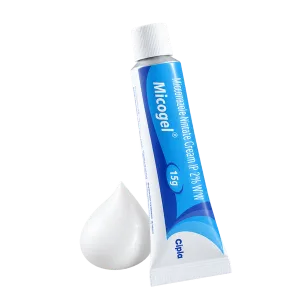
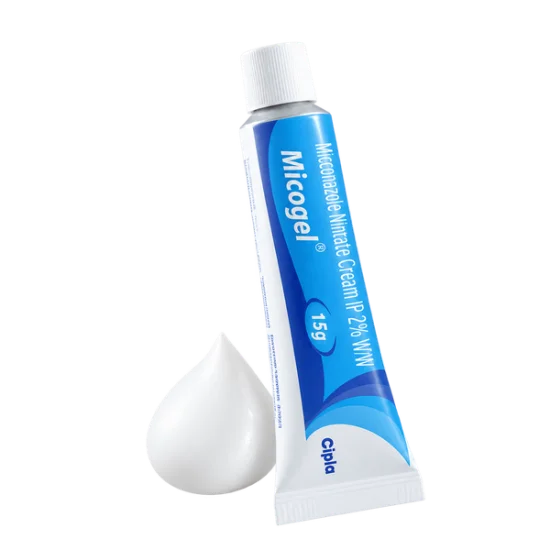
Micogel is supplied as a topical gel for superficial fungal and yeast infections of the skin. It is intended for people who need local treatment, and miconazole helps reduce fungal growth by…

Guaranteed quality Original product
Delivery: from 4 days Discreet shipping
24/7 Support Always available
Active ingredient: Miconazole
Select pack Package Per unit Price
$ 147.73 $ 147.73
$ 75.74 $ 295.46 $ 151.47 Save 49%
$ 52.36 $ 443.19 $ 157.08 Save 65%
$ 45.82 $ 590.92 $ 183.26 Save 69%
Best value $ 44.13 $ 738.65 $ 220.66 Save 70%

Free delivery on orders from $ 374.00, free express delivery from $ 561.00

Secure payment methods:
VISA AMEX JCB DISCOVER

Micogel is supplied as a topical gel for superficial fungal and yeast infections of the skin. It is intended for people who need local treatment, and miconazole helps reduce fungal growth by interfering with fungal cell membranes.

Product information

Miconazole nitrate, the active antifungal ingredient in Micogel, is supplied as a 2% w/w topical gel for superficial fungal and yeast infections of the skin. Miconazole belongs to the imidazole class of antifungal medicines.

Directions for use

How much Micogel to use and how often depends on the purpose of treatment and is agreed with a doctor or pharmacist. A typical topical method involves applying a thin film to clean, dry affected skin and a small margin of surrounding skin.

  • Wash hands before application.
  • Clean the area gently and dry it without vigorous rubbing.
  • Apply a thin layer of gel to the affected skin.
  • Wash hands after application unless the hands are the treatment site.
  • Use the agreed schedule consistently.
  • Keep the area dry and change damp clothing or socks promptly.
  • Continue for the duration specified for the infection, even if itching settles earlier.
  • Do not apply it into the eyes, mouth, or other mucous membranes unless specifically directed.

The skin should not be covered with airtight dressings unless a clinician has instructed this. Occlusion can increase moisture, alter absorption, and intensify irritation.

If an application is missed, apply it when remembered unless the next scheduled application is close. Do not apply a thick layer to compensate. More gel does not clear fungal infection faster and may increase local irritation.

Use a separate towel for the affected area during treatment and wash clothing that touches the rash regularly. This reduces repeated skin exposure to shed fungal material.

A practical detail is easy to miss: treat the spaces between the toes or folds carefully, but do not leave them wet afterwards. Persistent dampness can work against the hygiene measures that support topical treatment.

Ingredients

Micogel contains miconazole nitrate BP 2% w/w as its active antifungal ingredient. It is supplied as a topical gel for external skin use and belongs to the imidazole class of antifungal medicines.

How it affects the body

Miconazole interferes with fungal cell membranes, helping reduce itching, scaling, redness, and irritation as the infection clears [1].

It inhibits fungal enzymes involved in producing ergosterol, a vital component of the fungal cell membrane. The weakened membrane becomes unable to maintain normal cell function, which suppresses fungal growth and supports clearance of the infection [2].

The medicine acts against several superficial fungal organisms and yeasts. It acts locally. Its activity includes organisms responsible for dermatophyte infections and many Candida-related skin infections. It does not treat every cause of an itchy or inflamed rash.

The gel base spreads across the skin surface and is intended for application to the affected area. Avoiding unnecessary occlusion helps prevent excessive moisture, which can worsen some fungal rashes and increase irritation.

Antifungal action in plain language

Fungal cells depend on ergosterol to maintain their outer membrane. Miconazole disrupts the production of this substance. Human skin cells do not use ergosterol in the same way, which provides the basis for selective antifungal action.

Miconazole also has activity against some Gram-positive bacteria. That property does not make Micogel a general treatment for bacterial skin infections, and it should not be used for an undiagnosed wound or pus-forming lesion.

Dry the affected skin gently before application, especially between the toes and inside skin folds. Rubbing can worsen small cracks and increase stinging.

Therapeutic indications

It is used on affected skin when a local imidazole antifungal is appropriate, including some dermatophyte and Candida infections. The gel is intended for local application. It is not an oral treatment.

Micogel is intended for external skin use. Use it only on skin. Common clinical targets for topical miconazole include:

  • Tinea corporis, or ringworm of the body
  • Tinea cruris, commonly called jock itch
  • Tinea pedis, or athlete’s foot
  • Cutaneous candidiasis
  • Yeast-related rashes in moist skin folds
  • Pityriasis versicolor, when diagnosed as a superficial fungal infection

The appearance of a rash does not identify its cause by itself. A diagnosis guides treatment. Eczema, psoriasis, bacterial infection, contact dermatitis, and viral lesions can produce similar redness or itching but require different treatment.

Treatment of yeast and Candida infections

Candida can multiply in warm, moist areas such as skin folds, the groin, under the breasts, or around areas exposed to prolonged sweating. Affected skin may feel sore, itchy, or burning, with patches of redness and small spots around the main rash.

Miconazole acts locally against susceptible yeast and dermatophytes. Improvement in discomfort may come before the infection has fully cleared, so stopping at the first sign of relief can allow symptoms to return. The treatment period depends on the site, extent, and response of the infection.

Micogel is a gel rather than an oral antifungal. That distinction matters because topical treatment limits exposure to the treated skin area, while widespread, recurrent, or treatment-resistant infection may require a different clinical approach.

Common mistakes

Several practical errors can make topical antifungal treatment appear unsuccessful:

  • Applying the gel only when itching becomes severe
  • Using a thick layer in the belief that more medicine works faster
  • Leaving skin folds damp after washing
  • Reusing unwashed towels, socks, or tight clothing
  • Applying a steroid cream to suppress redness without treating the fungal cause
  • Stopping as soon as the skin looks better
  • Treating a viral, bacterial, or inflammatory rash as if it were fungal
  • Covering the area with an airtight dressing
  • Using the product in the eyes or on mucosal tissue
  • Sharing towels during an active infection

One useful distinction is symptom control versus fungal clearance. Itching may decrease before the organism has been fully suppressed, while persistent scaling can remain after the active infection has improved.

Another common problem is friction. Tight footwear, sweaty gym clothing, and repeated rubbing can keep the skin inflamed even when the antifungal is being used correctly. Reducing moisture and friction supports the medicine without adding another topical product.

Mark the application times around an existing routine, such as after washing and drying in the morning and evening. This is more reliable than waiting for symptoms to remind you.

Reasons not to use it

Micogel should not be used on skin with a known allergy to miconazole, other imidazole antifungals, or any ingredient in the formulation.

Do not apply the gel to the eyes. Avoid applying it to deep wounds or severely broken skin unless a clinician has given specific instructions.

People taking warfarin should mention this to a doctor or pharmacist. Miconazole has been associated with increased anticoagulant effects, especially with oral or extensive topical exposure, so extra caution is appropriate in people receiving anticoagulation [3].

When this is not for you

Micogel is NOT for you if the rash is undiagnosed, shows pus, or affects the eyes.

Micogel is not the right treatment for:

  • Herpes simplex lesions or shingles
  • Chickenpox lesions
  • An unexplained ulcer or rapidly spreading wound
  • A suspected bacterial infection with pus or increasing warmth
  • An eye infection
  • A rash that repeatedly returns without a confirmed diagnosis

If accidental eye contact occurs, rinse with clean water.

Pregnancy and breastfeeding require a focused decision about the treatment area and duration. Topical exposure is usually lower than exposure from oral antifungal treatment, but the gel should not be applied to the breast immediately before breastfeeding because an infant could ingest residue. Wash the area thoroughly before a feed if treatment near the breast has been prescribed.

Children, older adults, and people with extensive dermatitis may have more sensitive skin. Avoid covering the treated area with plastic or airtight material unless this has been prescribed.

Unwanted effects

Topical miconazole is generally used for local treatment, so adverse effects are often confined to the application site. Possible reactions include:

  • Burning or stinging
  • Itching
  • Redness
  • Irritation
  • Dryness or peeling
  • Contact dermatitis or an allergic skin reaction

Mild stinging can occur when gel contacts cracked or inflamed skin. It should not steadily worsen with each application. A spreading rash, marked swelling, blistering, facial swelling, or breathing difficulty requires prompt medical attention because these may indicate a significant hypersensitivity reaction.

Headache is not a typical local response to a small area of topical treatment, but it has been reported with some topical antifungal products and should be assessed if it is persistent or accompanied by other symptoms. Extensive application, damaged skin, occlusive dressings, or prolonged use can increase exposure.

Stop applying Micogel to a severely irritated area and obtain medical advice if the reaction is intense, rapidly spreading, or associated with swelling. A rash that becomes painful, develops pus, or produces fever may need assessment for another type of infection.

Do not test a new topical product over a large area. Applying a small amount to the intended treatment area first makes it easier to notice early irritation before the reaction becomes widespread.

Comparison

Miconazole and clotrimazole are both imidazole antifungals used for several superficial fungal and yeast infections. They share a broadly similar mechanism: interference with ergosterol production in fungal cell membranes.

Active ingredient Pharmacological class Clinical positioning
Miconazole Imidazole antifungal Dermatophyte and yeast infections, including some Candida skin infections
Clotrimazole Imidazole antifungal Superficial dermatophyte, yeast, and Candida infections
Terbinafine Allylamine antifungal Many dermatophyte infections, with a different mechanism from imidazoles

For tinea cruris, either miconazole or clotrimazole may be selected according to the suspected organism, affected area, previous response, formulation, and patient tolerance. Terbinafine acts through squalene epoxidase inhibition rather than the imidazole pathway, so its clinical role differs from miconazole.

The choice of topical antifungal should match the diagnosis. If a rash has failed to respond after an appropriate course, repeating the same application indefinitely is less useful than reassessing the diagnosis, adherence, moisture exposure, and possible reinfection.

What doctors say

In clinical practice, doctors usually focus first on whether the rash is genuinely fungal. A sharply defined, scaly border may support a dermatophyte diagnosis, while a moist fold rash with small peripheral spots can suggest Candida, but visual clues are not definitive.

Doctors also look at treatment habits that reduce success. Applying the gel only to the most visible patch can leave fungal material at the edge of the rash. Stopping when the redness fades can produce a short-lived improvement followed by recurrence.

Miconazole is a reasonable topical option when the diagnosis is compatible with a susceptible superficial fungal infection. It is less suitable as an indefinite treatment for an undiagnosed rash, a recurrent rash without investigation, or a lesion with signs of bacterial or viral disease.

A clinician will also consider the size of the affected area, the location, previous antifungal use, diabetes, immune suppression, and whether household or clothing-related reinfection is likely. The World Health Organization describes superficial fungal infections as common conditions that can persist when moisture, friction, and incomplete treatment remain present [4]. The U.S. Food and Drug Administration (FDA) and the National Institute for Health and Care Excellence (NICE) also publish relevant medicines and dermatology guidance.

What customers often ask

What should I do if Micogel does not produce the expected result?

If the rash is not improving after the agreed treatment period, reassess the diagnosis rather than applying increasingly thick layers. The condition may be bacterial, viral, inflammatory, resistant to the selected treatment, or repeatedly exposed to moisture and friction. Medsafe guidance for topical medicines supports reviewing persistent or worsening reactions, especially when treatment causes increasing irritation.

Which concrete condition rules out Micogel?

A suspected herpes simplex infection, shingles, or chickenpox rules out self-treatment with Micogel because these are viral conditions, not superficial fungal infections. Pus, rapidly increasing warmth, severe pain, or fever can indicate a bacterial process that also needs a different assessment. Medsafe’s 2022 miconazole nitrate data sheet distinguishes antifungal treatment from therapies for viral and bacterial skin disease.

How long does one Micogel application keep working?

Micogel is used as a repeated topical treatment rather than a single application that provides a fixed number of hours of protection. The interval between applications is set according to the purpose of use and agreed with a doctor or pharmacist. The World Health Organization’s 2024 materials on superficial fungal disease support regular application and completion of the planned course rather than symptom-led, occasional use.

How long does a Micogel course last, and is long-term use acceptable?

The course depends on the infection site, extent, organism, and response; superficial skin infections commonly require treatment over several weeks rather than a few applications. Long-term continuous use should not continue without reassessing the diagnosis and skin response. Medsafe’s 2025 medicine-safety information emphasises limiting topical treatment to the intended clinical purpose and reviewing persistent symptoms.

Can Micogel be used during pregnancy or breastfeeding?

Pregnancy and breastfeeding should be discussed with a doctor or pharmacist before treatment, especially when a large area or damaged skin is involved. During breastfeeding, do not leave gel residue on the nipple or areola before a feed; clean the area thoroughly first. Medsafe’s 2022 miconazole nitrate data sheet supports weighing local treatment exposure against the size and location of the affected area.

Do you offer anonymous delivery?

Your order will be securely packed and shipped within 24 hours. This is exactly what your package will look like (images of an actual item sent). It has the size and look of a regular private letter (24x11x0.7 cm) and its contents cannot be seen.

Comparison

How the medicines for Antifungals compare

How Buyers Rate Micogel

Based on 5 reviews

Gareth K., 28 Verified
Rating: 3.5 out of 5

The itching settled within several days, but the skin between my toes stayed flaky longer. Drying my feet properly made more difference than I expected.

Queenstown About two weeks 11 Oct 2026
Ian T., 47 Verified
Rating: 5 out of 5

The first applications stung for a few minutes because the skin was cracked. That eased after a couple of days, and the redness gradually reduced.

Rotorua About one week 21 Oct 2026
Jonathan, 37 Verified
Rating: 3.5 out of 5

I applied it irregularly at first and thought it was not working. Once I followed the agreed schedule, the patch became less scaly. It took longer than I wanted.

Taupō About two weeks 24 Oct 2026
Ryan P., 37 Verified
Rating: 4 out of 5

The area improved, but sweating at work kept bringing irritation back. Changing clothing during the day helped, and I needed a clinical review before continuing treatment.

Blenheim Several days 3 Nov 2026
Graham, 44 Verified
Rating: 3.5 out of 5

The itching improved, although the redness did not disappear quickly. A pharmacist advised me to stop treating it as a simple fungal rash and arrange an assessment.

Auckland Several weeks 8 Nov 2026

Sources

  1. WHO (2023). Clinical guidance on superficial fungal infections.
  2. EMA (2024). Summary of Product Characteristics (SmPC) — miconazole.
  3. Medsafe (2022). Miconazole nitrate data sheet.
  4. WHO (2024). Fungal disease fact sheet.
Get our free app Shop faster and track your orders 3.9 · 285 reviews Install