Skip to content
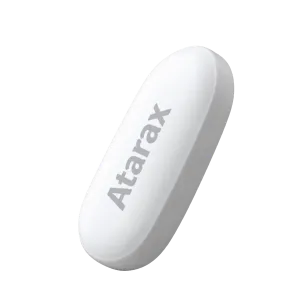
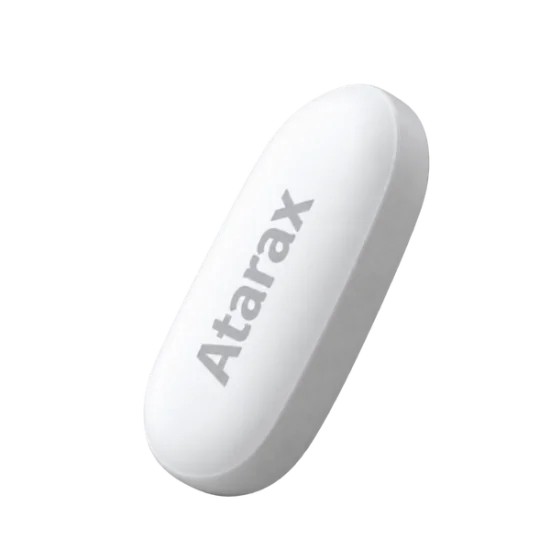
In stock Atarax
Allergies

Atarax

Atarax tablets are prescribed for allergic itching, short-term anxiety symptoms, and selected situations requiring sedation. It blocks histamine H1 receptors and reduces central nervous system…

Guaranteed quality Original product
Delivery: from 4 days Discreet shipping
24/7 Support Always available
Active ingredient: Hydroxyzine hydrochloride
Select dosage:
Select pack Package Per unit Price
$ 2.18 $ 196.35
$ 1.98 $ 261.80 $ 237.49 Save 9%
$ 1.87 $ 392.70 $ 336.60 Save 14%
Free Regular Delivery $ 1.71 $ 589.05 $ 461.89 Save 22%
Best value Free Express Delivery $ 1.67 $ 785.40 $ 602.14 Save 23%
$ 2.02 $ 181.39
$ 1.87 $ 241.85 $ 224.40 Save 7%
$ 1.71 $ 362.78 $ 308.55 Save 15%
Free Regular Delivery $ 1.61 $ 544.17 $ 433.84 Save 20%
Best value Free Regular Delivery $ 1.53 $ 725.56 $ 549.78 Save 24%

Free delivery on orders from $ 374.00, free express delivery from $ 561.00

Secure payment methods:
VISA AMEX JCB DISCOVER

Atarax tablets are prescribed for allergic itching, short-term anxiety symptoms, and selected situations requiring sedation. It blocks histamine H1 receptors and reduces central nervous system arousal. [1]

Product information

Hydroxyzine, the active ingredient in Atarax, is a first-generation antihistamine with sedative and anxiolytic properties.

Atarax contains hydroxyzine, a sedating antihistamine used in clinical practice for pruritus, anxiety symptoms, and procedural sedation.

Directions for use

The amount and frequency depend on the reason for treatment. A regimen for itching may differ from a regimen for anxiety or sedation. Treatment for an older adult, a person with kidney impairment, or someone taking several sedating medicines may require a lower prescribed amount.

Do not split or combine tablets to create a new dose unless the tablet is designed for that purpose and the prescriber or pharmacist has confirmed the plan.

Dosage and Administration

The amount of Atarax and how often it is taken depend on the purpose of use and are agreed with a doctor or pharmacist. The route is oral because the product is supplied as tablets.

  • Swallow the prescribed tablet with water.
  • Use it at the time selected for the indication, such as a clinician-directed evening schedule when sedation is expected.
  • Do not take extra tablets because itching or anxiety has not improved quickly.
  • Do not combine it with alcohol.
  • Avoid driving or hazardous work after a dose until alertness is predictable.
  • If a dose is missed, take the next dose according to the agreed schedule rather than doubling the amount.
  • Do not stop a prolonged regimen abruptly without discussing the change with the prescriber.
Keep a simple record of the time taken and the level of drowsiness the next morning. This gives the prescriber useful information when adjusting a sedating medicine.

Taking Atarax with food is not a substitute for dose adjustment. A meal may make swallowing easier, but it does not remove the sedative effect or prevent interactions with alcohol and other sedatives.

Ingredients

Atarax contains hydroxyzine, a sedating antihistamine used in clinical practice for pruritus, anxiety symptoms, and procedural sedation. Hydroxyzine belongs to the first-generation antihistamine group, which means it can enter the central nervous system and cause drowsiness. Its anticholinergic activity also contributes to drying effects and reduced smooth-muscle activity.

How it affects the body

Hydroxyzine blocks histamine H1 receptors. Histamine contributes to itching, flushing, swelling, and other allergic responses. By reducing H1 receptor activation, hydroxyzine can lessen the urge to scratch in conditions such as hives, eczema, and dermatitis.

The medicine also affects activity in the brain. This produces a sedative effect and may reduce physical symptoms linked with anxiety, such as restlessness and difficulty settling. The response varies between people, so the same prescribed dose may cause mild calmness in one person and marked sleepiness in another.

Receptor Interaction and Physiological Effects

Anticholinergic activity means that hydroxyzine can reduce the action of acetylcholine at certain receptors. This may contribute to dry mouth, blurred vision, constipation, urinary difficulty, and faster heart rate. These effects are more relevant in older adults and in people who already have glaucoma, prostate enlargement, constipation, or urinary retention.

Hydroxyzine is also converted in the body to cetirizine, an active antihistamine metabolite. The conversion helps explain why antihistamine activity can continue after the initial sedative sensation becomes less noticeable. [2]

Therapeutic indications

Therapeutic Application in Dermatological Conditions

Hydroxyzine can reduce itching caused by histamine-mediated skin reactions. This includes urticaria, commonly called hives, and some cases of eczema or dermatitis where itching is prominent. Reducing the itch signal can help interrupt the itch-scratch cycle, which may otherwise worsen skin irritation and sleep disruption. The response depends on whether histamine is a major driver of the symptoms. Persistent or severe skin disease still requires assessment of the underlying cause.

Night-time itching is a common reason clinicians may choose a sedating antihistamine. The drowsiness can make it easier to rest while the antihistamine action reduces histamine-related itching. Atarax does not treat every cause of rash, and it does not replace treatment directed at infection, severe inflammation, or another underlying skin disorder.

Management of Anxiety States and Central Nervous System Sedation

Hydroxyzine has anxiolytic properties without being a benzodiazepine. It is not classified as a controlled benzodiazepine and does not produce the same typical pattern of benzodiazepine dependence.

Doctors may use hydroxyzine for short-term anxiety symptoms when a sedating, non-benzodiazepine option is appropriate. It can reduce inner restlessness and physical tension, but it does not provide the long-term psychological treatment used for persistent anxiety disorders. A continuing anxiety condition may need structured therapy or a different maintenance approach.

Hydroxyzine can also be used for pre-operative sedation in appropriate clinical settings.

Common mistakes

Several everyday mistakes reduce the benefit of Atarax or increase avoidable harm:

  • Taking an additional tablet because the first dose has not produced immediate relief.
  • Drinking alcohol after taking the medicine.
  • Driving because the person feels awake, despite slower reaction time.
  • Combining Atarax with another antihistamine without checking the total exposure.
  • Using it for weeks without reassessing persistent anxiety or itching.
  • Assuming that less itching means the underlying rash has been treated.
  • Forgetting to mention glaucoma, prostate symptoms, heart rhythm problems, or fainting history.
  • Restarting treatment after a long gap at the former dose without medical advice.
  • Taking a missed dose together with the next scheduled dose.

One common misunderstanding concerns the absence of benzodiazepine-type dependence. Hydroxyzine has a different dependence profile, but that does not make it risk-free. Sedation, falls, anticholinergic effects, and heart rhythm concerns remain clinically relevant.

Reasons not to use it

Specific cautions include:

  • Pregnancy and breastfeeding, where treatment requires an individual risk assessment.
  • Older age, because confusion, falls, urinary retention, and anticholinergic effects may be more likely.
  • Glaucoma, especially angle-closure glaucoma.
  • Prostate enlargement or previous urinary retention.
  • Severe constipation or reduced bowel movement.
  • Kidney or liver impairment, which may change exposure.
  • Epilepsy or a history of seizures.
  • Existing heart disease, fainting, slow heart rate, or electrolyte imbalance.

Medicines that may require specific review include opioids, sleeping tablets, sedating antidepressants, antipsychotics, other antihistamines, and medicines associated with QT prolongation. Some antiarrhythmics, selected antibiotics, and certain medicines for mental health conditions can affect cardiac rhythm. The combination should be assessed before treatment begins. [1]

When this is not for you

Atarax may not be suitable for you if you are pregnant or breastfeeding, have glaucoma, prostate or urinary problems, severe constipation, epilepsy, kidney or liver impairment, heart disease, fainting, a slow heart rate, or an electrolyte imbalance. Tell your doctor or pharmacist about every medicine you take, especially alcohol, opioids, sleeping tablets, sedating antidepressants, antipsychotics, other antihistamines, and medicines that can affect heart rhythm.

Unwanted effects

The most familiar adverse effect of hydroxyzine is drowsiness. Other possible effects include dizziness, headache, dry mouth, blurred vision, constipation, nausea, fatigue, confusion, and difficulty passing urine. The product information identifies these effects and describes precautions linked with sedation and heart rhythm changes.

Sedation can affect reaction time even when a person does not feel sleepy. This matters when driving early the next morning or when work involves heights, machinery, or rapid decisions.

Hydroxyzine can prolong the QT interval, an electrical measurement on an ECG. In susceptible people, this can increase the risk of a serious abnormal heart rhythm. The risk rises with certain heart conditions, low potassium or magnesium, a history of prolonged QT, and other medicines that also affect cardiac repolarisation.

Seek urgent medical care for fainting, palpitations with dizziness, severe breathing difficulty, facial or throat swelling, or a widespread blistering rash.

Dry mouth may be more troublesome at night. Small sips of water and sugar-free gum can help, but persistent urinary difficulty, severe constipation, or painful blurred vision needs medical review.

Check every medicine that causes drowsiness, including non-prescription sleep products and strong pain medicines. Combining sedatives can impair breathing and coordination more than expected.

Comparison

Comparative Pharmacotherapy and Therapeutic Alternatives

Treatment approach Main role Sedation and dependence profile
Hydroxyzine Itching, short-term anxiety symptoms, selected sedation Sedation is common; dependence pattern differs from benzodiazepines
Cetirizine Allergic rhinitis and urticaria Usually less sedating, though drowsiness can still occur
Buspirone Ongoing anxiety treatment in selected patients Less sedating for many people; gradual onset; no benzodiazepine-type dependence
Benzodiazepines Acute anxiety or severe agitation in selected cases Sedation, tolerance, dependence, and withdrawal risks require careful control

Cetirizine is often preferred when allergy relief is needed without a strong sedative effect. Hydroxyzine may be chosen when itching is severe at night or when a calming effect is clinically useful. The trade-off is greater impairment risk.

Buspirone works through a different central mechanism and is used as a longer-term anxiety treatment in selected patients. It does not provide the same rapid sedative effect. Benzodiazepines may act quickly, but their risks include tolerance, withdrawal, impaired coordination, and dependence.

Sedating antidepressants can be considered for specific psychiatric or sleep-related presentations, though they are not interchangeable with hydroxyzine. The correct option depends on the diagnosis, duration of symptoms, other medicines, heart rhythm risk, and the need to remain alert during the day.

What doctors say

In clinical practice, doctors usually view hydroxyzine as a targeted short-term option rather than a universal treatment for anxiety or sleep problems. Its value is greatest when antihistamine action, temporary calming, or supervised sedation is relevant to the presentation.

A prescriber will usually assess the reason for treatment before selecting the timing. Night-time itching and daytime anxiety create different practical requirements. A dose that is acceptable before sleep may be unsuitable before driving or operating machinery.

Medical review is also needed when symptoms continue despite treatment. Persistent itching may indicate an untreated inflammatory skin condition, infection, liver disease, kidney disease, or another diagnosis. Persistent anxiety may require psychological treatment or a longer-term medicine with a different risk profile.

A useful clinical question is whether the person can function safely the following day. If morning confusion, unsteady walking, or slowed reactions appear, the regimen needs review rather than automatic continuation.

What customers often ask

What happens when Atarax is stopped, and does it need tapering?

Stopping hydroxyzine usually removes its sedative and antihistamine effects as the medicine leaves the body, but the original itching or anxiety may return. A taper is not routinely required for every short course, though a longer regimen should be changed according to the prescriber’s plan. Medsafe information emphasises individual assessment when stopping or changing medicines that affect alertness. The 2023 Medsafe Atarax Data Sheet provides product-specific guidance on stopping and changing treatment. [3]

How long does a course last, and is long-term use acceptable?

The duration depends on the indication, symptom pattern, age, other medicines, and response. Short courses are common when hydroxyzine is used for temporary itching, anxiety symptoms, or sedation, while ongoing use requires periodic review of sedation, anticholinergic effects, and heart rhythm risk. EMA product information supports using the lowest suitable exposure for the clinical purpose. The 2015 European Medicines Agency referral report supports periodic review when hydroxyzine use continues.

What should happen if the expected result does not come?

Do not increase the dose independently when itching, anxiety, or sleep difficulty continues. The diagnosis may need reassessment, or another treatment may be more appropriate for the underlying condition. WHO principles for rational medicine use support reviewing the indication, response, and adverse effects before changing therapy. The 2002 World Health Organization publication describes this review-based approach to medicine use. [4]

What is the best time of day to take Atarax?

The best timing depends on why it was prescribed and how strongly it causes drowsiness. A clinician may select evening use when sleepiness is useful, while daytime treatment requires extra attention to driving and work safety. Medsafe safety information identifies impaired alertness as a practical concern with sedating antihistamines. The 2023 Medsafe Atarax Data Sheet also describes precautions related to drowsiness and driving.

What should be checked before starting Atarax?

Before starting, discuss heart rhythm history, fainting, glaucoma, urinary retention, constipation, epilepsy, pregnancy, breastfeeding, kidney or liver impairment, and every medicine or supplement that causes drowsiness. The prescriber should also review medicines associated with QT prolongation. EMA safety information identifies these factors as relevant to hydroxyzine treatment. The 2015 European Medicines Agency referral report describes cardiac-risk precautions for hydroxyzine.

How does Atarax differ from its closest alternative by mechanism?

Hydroxyzine blocks H1 histamine receptors and also produces central sedation, while cetirizine is a less-sedating antihistamine for many people. A medicine for ongoing anxiety, such as buspirone, works through a different pathway and is not intended to provide the same immediate sedative effect. WHO guidance supports choosing treatment according to the diagnosed condition rather than treating medicines as interchangeable. The 2002 World Health Organization publication places this choice within an indication-based approach to treatment.

Do you offer anonymous delivery?

Your order will be securely packed and shipped within 24 hours. This is exactly what your package will look like (images of an actual item sent). It has the size and look of a regular private letter (24x11x0.7 cm) and its contents cannot be seen.

Comparison

How the medicines for Allergies compare

How Buyers Rate Atarax

Based on 3 reviews

Gareth C., 45 Verified
Rating: 3 out of 5

The scratching eased after the first few evenings and I slept better. I felt groggy before breakfast, so I stopped driving early and discussed the timing with my doctor.

Taupō About ten days 1 Nov 2026
Paul, 35 Verified
Rating: 3.5 out of 5

It settled the physical tension, but the sleepy feeling was stronger than expected. It helped at night, though it was not practical before work.

Tauranga Several days 6 Oct 2026
Matthew, 51 Verified
Rating: 3 out of 5

The itching was less troublesome after a few doses, but my mouth became very dry and I felt light-headed when standing. The skin problem still needed separate treatment.

Dunedin 20 Oct 2026

Sources

  1. European Medicines Agency (2015). Hydroxyzine-containing medicinal products: referral under Article 31 of Directive 2001/83/EC — assessment report and safety recommendations.
  2. National Library of Medicine (2024). Hydroxyzine — LiverTox: Clinical and Research Information on Drug-Induced Liver Injury.
  3. Medsafe (2023). Data Sheet: Atarax Tablets.
  4. World Health Organization (2002). Promoting Rational Use of Medicines: Core Components.
Get our free app Shop faster and track your orders Install