Skip to content
In stock Zomig
Migraine

Zomig

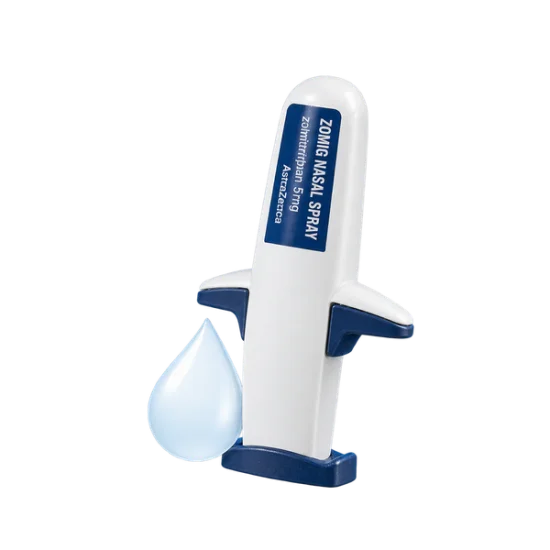
Zolmitriptan, the active ingredient in Zomig, is a triptan used for acute migraine attacks with or without aura. Zomig nasal spray delivers 2.5 mg through the nose when migraine symptoms begin. It…

Guaranteed quality Original product
Delivery: from 4 days Discreet shipping
24/7 Support Always available
Active ingredient: Zolmitriptan
Select pack Package Per unit Price
$ 263.67 $ 263.67
Free Regular Delivery $ 192.61 $ 527.34 $ 385.22 Save 27%
Free Regular Delivery $ 170.17 $ 791.01 $ 510.51 Save 35%
Free Express Delivery $ 158.95 $ 1,054.68 $ 635.80 Save 40%
Best value Free Express Delivery $ 151.84 $ 1,318.35 $ 759.22 Save 42%

Free delivery on orders from $ 374.00, free express delivery from $ 561.00

Secure payment methods:
VISA AMEX JCB DISCOVER

Zolmitriptan, the active ingredient in Zomig, is a triptan used for acute migraine attacks with or without aura. Zomig nasal spray delivers 2.5 mg through the nose when migraine symptoms begin. It targets serotonin pathways involved in head pain, nausea, and vomiting.

Product information

Zomig contains zolmitriptan, a selective serotonin 5-HT1B/1D receptor agonist in the triptan class. It is intended for the acute treatment of migraine headaches in adults, including attacks accompanied by nausea, vomiting, or sensitivity to light and sound. Zomig nasal spray provides 2.5 mg of zolmitriptan per spray.

Zolmitriptan is not a daily preventive treatment. It is used when a migraine attack starts or when the familiar early symptoms of an attack appear.

Directions for use

The amount per intake is set individually for each person rather than being one fixed number for everyone. Zomig nasal spray provides 2.5 mg of zolmitriptan per spray, and the usual clinical approach is to use one spray in one nostril when the migraine begins.

  • Use the spray during the headache phase or at the start of the person’s usual migraine symptoms.
  • Administer the spray into one nostril only.
  • A second dose may be used if the migraine returns or has not resolved, provided the interval and maximum daily amount prescribed for the individual are followed.
  • Do not use more doses than the prescriber has authorised within 24 hours.
  • Do not use Zomig to prevent a migraine before symptoms begin unless a clinician has given specific instructions.

Clinical product information commonly sets a minimum two-hour interval between doses for adults, but the individual prescription takes priority [2]. The nasal device should not be shared.

If the first dose does not help at all, repeating doses during the same attack may not provide additional benefit. Repeated use should follow the prescribed plan rather than frustration with persistent pain.

A missed dose is not usually relevant because Zomig is taken when required. If the migraine has ended, do not take a delayed dose simply to replace one that was not used.

Frequent use can contribute to medication-overuse headache. Needing acute migraine treatment on many days each month is a reason to review the treatment strategy, especially when headaches become more frequent, last longer, or respond less reliably.

Ingredients

Zomig contains zolmitriptan, a selective serotonin 5-HT1B/1D receptor agonist in the triptan class. It is intended for the acute treatment of migraine headaches in adults, including attacks accompanied by nausea, vomiting, or sensitivity to light and sound. Zomig nasal spray provides 2.5 mg of zolmitriptan per spray.

Zolmitriptan is not a daily preventive treatment. It is used when a migraine attack starts or when the familiar early symptoms of an attack appear.

Active ingredient and formulation

The active ingredient is zolmitriptan. The product form is a nasal spray, allowing the dose to be administered through one nostril rather than swallowed.

This route can be useful during migraine attacks when nausea or vomiting makes oral treatment difficult. It also avoids the need to keep a tablet down during an episode.

Keep the nasal spray available before the headache becomes severe. Early treatment is often easier than trying to manage a fully established attack.

Zomig belongs to the same broad therapeutic class as other triptans, but each triptan has its own absorption profile, duration, and formulation. The selected dose is individualised rather than being one fixed amount for every person.

How it affects the body

Migraine involves abnormal activity in the trigeminal nerve system, release of inflammatory signalling molecules, and changes in pain-sensitive blood vessels around the brain. The older explanation that migraine is caused only by swollen blood vessels is incomplete. Vascular narrowing is one part of the response, while reduced trigeminal pain signalling is also central.

Zolmitriptan activates 5-HT1B and 5-HT1D serotonin receptors. This produces three clinically relevant effects:

  • It constricts dilated cranial blood vessels.
  • It reduces the release of pain-signalling neuropeptides.
  • It dampens activity in trigeminal pathways linked with headache pain, nausea, and vomiting.

The nasal route delivers zolmitriptan to the nasal mucosa, where it can be absorbed without relying entirely on gastrointestinal absorption. The product information for zolmitriptan nasal spray describes its role in acute migraine treatment rather than prevention [1].

Therapeutic indications

Zomig is used for the attack itself. It does not remove the underlying tendency to develop migraine, so people with frequent attacks may need a separate prevention plan.

The product is designed for migraine, not for undifferentiated headaches. A new headache pattern, a sudden maximal headache, or neurological symptoms that differ from a person’s usual aura require urgent assessment rather than repeated self-treatment.

Common mistakes

Several avoidable habits reduce the chance of a good result:

  • Waiting until the headache is severe before using the spray.
  • Using both nostrils for one dose.
  • Repeating a dose too soon.
  • Using Zomig on frequent headache days without reviewing possible medication overuse.
  • Treating every new headache as a familiar migraine.
  • Ignoring chest pressure because triptans are known to cause temporary tightness.
  • Combining Zomig with another triptan or an ergot medicine.
  • Driving while dizziness, drowsiness, visual symptoms, or migraine-related poor concentration persists.
  • Sharing the nasal device with another person.
  • Assuming that a nasal spray will treat all causes of nausea or headache.
A useful routine is to record the first symptom, the administration time, and the response two hours later. This can show whether late treatment, repeated dosing, or a different diagnosis is contributing to poor control.

Another common mistake is treating the nasal spray as a preventive medicine. Regular preventive treatment is considered when migraine attacks are frequent, prolonged, or disabling despite appropriate acute therapy.

Reasons not to use it

The following situations require avoidance or specific medical review:

  • Previous heart attack, ischaemic heart disease, coronary artery spasm, or significant peripheral vascular disease.
  • Previous stroke or transient ischaemic attack.
  • Uncontrolled high blood pressure.
  • Certain rare migraine subtypes, including hemiplegic or basilar migraine, unless a specialist has confirmed the diagnosis and treatment plan.
  • Severe liver impairment, where dose restrictions may apply.
  • Allergy to zolmitriptan or another component of the formulation.
  • Use of another triptan or an ergot-type medicine within the restricted interval.
  • Previous serious reaction to a triptan.

Zomig should not be combined with another triptan or an ergotamine-containing medicine because additive blood-vessel constriction can increase cardiovascular risk. Monoamine oxidase-A inhibitors can raise zolmitriptan exposure, so concurrent use or recent use requires specific prescribing guidance.

Selective serotonin reuptake inhibitors, serotonin-noradrenaline reuptake inhibitors, and other serotonergic medicines can rarely contribute to serotonin syndrome when combined with a triptan. Warning symptoms include agitation, confusion, sweating, diarrhoea, fever, tremor, rapid heartbeat, and muscle rigidity.

Medsafe safety information for zolmitriptan includes cardiovascular screening, blood-pressure considerations, and interaction precautions [4].

When this is not for you

Zomig is NOT for you if you have a listed cardiovascular contraindication, uncontrolled hypertension, or an unreviewed interaction with another migraine medicine. A history of migraine does not by itself rule out Zomig, but symptoms must fit the person’s established migraine pattern.

Alcohol does not create a recognised direct chemical incompatibility with zolmitriptan, yet it can worsen headache, dizziness, nausea, and impaired judgement. Avoid alcohol when the migraine already causes vomiting, dehydration, or marked drowsiness.

Unwanted effects

Zomig is tolerated by many adults, but triptans can produce short-lived sensations related to changes in vascular tone and nervous-system activity. The most commonly described effects include abnormal taste with the nasal spray, dizziness, tingling, sleepiness, weakness, nausea, and sensations of warmth, pressure, heaviness, or tightness.

These effects often appear soon after dosing and may settle without treatment. Nasal irritation or an unpleasant taste can occur because the spray passes through the nasal cavity.

Common and clinically important reactions

  • Altered or bitter taste.
  • Tingling or pins-and-needles sensations.
  • Dizziness or drowsiness.
  • Warmth, flushing, pressure, heaviness, or tightness in the chest, neck, jaw, or throat.
  • Temporary weakness or fatigue.
  • Nausea or digestive discomfort.
  • Nasal irritation.

Zolmitriptan can cause sensations that feel alarming without representing heart disease. Chest pressure must still be taken seriously when it is severe, prolonged, associated with breathlessness, fainting, sweating, or pain spreading to the arm or jaw.

Rare but serious reactions include coronary artery spasm, heart attack, stroke, transient ischaemic attack, severe allergic reaction, seizures, and serotonin syndrome. The FDA prescribing information identifies cardiovascular and cerebrovascular events as important risks requiring patient selection and appropriate assessment [3].

Do not drive, cycle on public roads, or operate machinery until dizziness, drowsiness, altered sensation, or visual disturbance has cleared. Migraine itself can impair concentration even before treatment.

Seek urgent medical care for severe chest pain, collapse, one-sided weakness, facial drooping, trouble speaking, marked breathing difficulty, swelling of the lips or tongue, or agitation with fever, sweating, tremor, and muscle stiffness.

One practical detail is easy to miss: the nasal spray can leave an unpleasant taste even when the migraine improves. A small drink of water afterwards may help, provided swallowing is comfortable.

Comparison

Treatment category Main action Main limitation
Zomig and other triptans Act on serotonin receptors involved in migraine pain and cranial vessel changes Not suitable for some cardiovascular conditions
Simple analgesics Reduce pain through general analgesic and anti-inflammatory effects May be inadequate for moderate or severe migraine
Preventive migraine treatment Reduces attack frequency when taken regularly Does not provide immediate relief during an established attack

What doctors say

In clinical practice, physicians usually judge a triptan by three outcomes: whether it stops the headache, whether it restores function, and whether adverse effects remain tolerable. A partial response may lead to a review of timing, formulation, dose, or diagnosis rather than an automatic increase in frequency.

The nasal form has a practical advantage during attacks with prominent nausea or vomiting. It also suits people who struggle to swallow during a migraine. Its limitation is that taste disturbance and nasal discomfort can be more noticeable than with a swallowed formulation.

Doctors also look for patterns across several attacks. One successful dose does not prove that every future attack will respond in the same way, while one unsuccessful attack may reflect late administration, unusually severe migraine, or a different headache disorder.

A treatment diary can record the time symptoms began, when the spray was used, how quickly pain changed, whether vomiting occurred, and any chest or neurological symptoms. That information is more useful than a simple note saying “worked” or “did not work.”

The WHO recognises migraine as a major neurological cause of disability, and migraine treatment guidance continues to distinguish acute treatment from prevention [5]. The main clinical advantage of Zomig is targeted acute therapy. The main limitation is that cardiovascular contraindications and medication-overuse headache restrict how it can be used.

What customers often ask

Can people under 18 use Zomig?

Zomig use in people under 18 should be decided by a clinician with experience in paediatric migraine. The FDA product information and Medsafe regulatory approach distinguish adult use from treatment in younger patients, where evidence and dosing requirements may differ. The American Academy of Neurology continued in 2025 to support age-appropriate, diagnosis-led migraine care rather than unsupervised use of adult triptan regimens. A child or teenager with a new, changing, or unusually severe headache needs assessment before a triptan is used.

Can Zomig affect driving, concentration, or machinery work?

Zomig may cause dizziness, drowsiness, weakness, tingling, or visual symptoms, and migraine itself can reduce attention. The New Zealand Transport Agency’s safety principles and Medsafe medicine information support avoiding driving or hazardous machinery until these effects have cleared. Data reviewed by the EMA in 2024 also recognise that patients should assess their individual response before performing tasks requiring full alertness. A person who feels fully alert after treatment may still need to consider whether the migraine itself has impaired safe performance.

Can alcohol be used while taking Zomig?

Alcohol may worsen migraine, nausea, dizziness, drowsiness, and dehydration even though it is not listed as a direct chemical interaction with zolmitriptan. Guidance from the NHS reviewed in 2025 advises caution because alcohol can trigger or intensify migraine in some people. The WHO also identifies alcohol as a possible contributor to headache burden for susceptible individuals. Avoiding alcohol during the attack is the safer practical choice, especially when vomiting, light-headedness, or impaired concentration is present. If alcohol repeatedly triggers attacks, discuss that pattern with a clinician.

Which symptoms mean stopping Zomig and seeking urgent medical care?

Stop using further doses and seek urgent care for severe or persistent chest pain, fainting, breathing difficulty, facial swelling, or signs of stroke such as one-sided weakness or trouble speaking. The FDA safety information identifies serotonin syndrome as a rare risk when triptans are combined with serotonergic medicines; fever, confusion, sweating, tremor, and muscle rigidity require urgent assessment. Medsafe guidance reviewed in 2025 also supports urgent evaluation of severe allergic or cardiovascular symptoms. Do not assume that prolonged chest or neurological symptoms are a routine triptan sensation.

Can older adults use Zomig?

Older adults may use zolmitriptan only after individual assessment of cardiovascular risk, blood pressure, liver function, and other medicines. The EMA product information reviewed in 2024 highlights the importance of considering age-related cardiovascular disease and polypharmacy. Older patients can also be more sensitive to dizziness and falls, especially when several medicines lower blood pressure or cause sedation. A new headache pattern in later life requires medical assessment rather than automatic treatment as familiar migraine.

Do you offer anonymous delivery?

Your order will be securely packed and shipped within 24 hours. This is exactly what your package will look like (images of an actual item sent). It has the size and look of a regular private letter (24x11x0.7 cm) and its contents cannot be seen.

How Buyers Rate Zomig

Based on 3 reviews

Kevin N., 49 Verified
Rating: 4.5 out of 5

The attack eased within the first hour and I avoided vomiting. The taste was unpleasant for about ten minutes, but that was easier than losing the whole afternoon.

Oamaru One attack 22 Nov 2026
Andrew, 65 Verified
Rating: 3.5 out of 5

It reduced the pain, although I felt heavy in the chest and quite tired afterwards. The sensation passed, but I arranged a medication review rather than taking another dose on my own.

Queenstown Two attacks over several weeks 24 Oct 2026
Stuart, 30 Verified
Rating: 3.5 out of 5

It helped only partly and the bitter taste lingered. Starting earlier made a clear difference during the next attack.

Ashburton A single attack 8 Nov 2026

Sources

  1. U.S. Food and Drug Administration (2023). ZOMIG (zolmitriptan) nasal spray prescribing information.
  2. Medsafe (2024). Zomig Nasal Spray Data Sheet.
  3. U.S. Food and Drug Administration (2023). Triptan medicines: cardiovascular and cerebrovascular safety information.
  4. Medsafe (2025). Zolmitriptan: New Zealand medicine safety information.
  5. World Health Organization (2023). Migraine and other headache disorders.
Get our free app Shop faster and track your orders 3.9 · 488 reviews Install