Skip to content
In stock Wynzora
Psoriasis

Wynzora

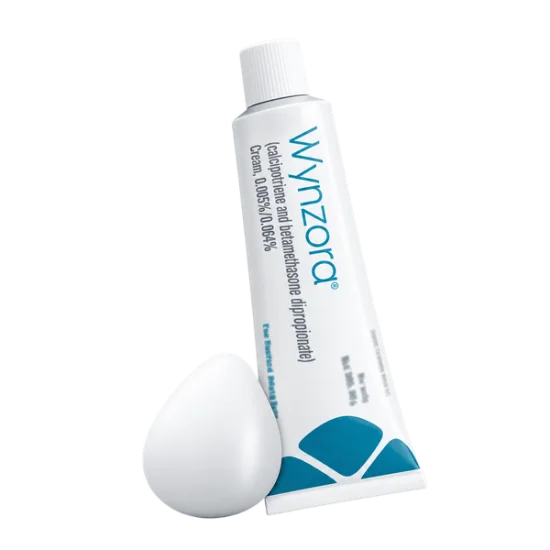
Wynzora combines calcipotriol with betamethasone dipropionate to reduce excess skin-cell growth and calm inflammation in plaque psoriasis. It is intended for adults with raised, scaly psoriasis…

Guaranteed quality Original product
Delivery: from 4 days Discreet shipping
24/7 Support Always available
Active ingredient: Calcipotriol, Betamethasone dipropionate
Select pack Package Per unit Price
$ 241.23 $ 241.23
$ 171.11 $ 482.46 $ 342.21 Save 29%
Free Regular Delivery $ 147.11 $ 723.69 $ 441.32 Save 39%
Free Regular Delivery $ 135.58 $ 964.92 $ 542.30 Save 44%
Best value Free Express Delivery $ 129.03 $ 1,206.15 $ 645.15 Save 47%

Free delivery on orders from $ 374.00, free express delivery from $ 561.00

Secure payment methods:
VISA AMEX JCB DISCOVER

Wynzora combines calcipotriol with betamethasone dipropionate to reduce excess skin-cell growth and calm inflammation in plaque psoriasis. It is intended for adults with raised, scaly psoriasis plaques and is applied as a thin layer once daily. Its cream formulation is designed for practical use on affected skin.

Product information

Wynzora is a prescription topical cream for plaque psoriasis, a chronic inflammatory skin condition that causes sharply defined, thickened plaques covered by silvery scale. Its dual-action formulation addresses two central features of psoriasis: excessive production of skin cells and local inflammation.

Directions for use

The regimen for the chosen strength should be confirmed with a healthcare professional before starting. Wynzora is applied to affected skin once daily for a maximum treatment period of eight weeks in adults, with a weekly maximum of 100 grams according to the US prescribing information [2].

Use the cream as follows:

  • Apply a thin layer to the affected plaques once daily.
  • Rub it in gently until the treated areas are covered.
  • Wash hands after application unless the hands themselves are being treated.
  • Keep the cream away from the eyes, mouth and mucous membranes.
  • Do not apply it to the face, groin or armpits unless a prescriber has given specific instructions.
  • Do not cover treated areas with airtight dressings.
  • Do not exceed 100 grams in one week.
  • Do not continue beyond eight weeks without a new clinical review.

The product is for external use.

It should not be applied to untreated skin simply because that skin feels dry. Psoriasis treatment should remain limited to the areas diagnosed and selected for treatment.

If a daily application is missed, apply the next dose when it is remembered unless it is nearly time for the next scheduled application. Do not use a double layer to compensate.

Wash hands after applying Wynzora, then wait until the cream has settled before applying a separate moisturiser to nearby untreated skin. This reduces accidental transfer to the eyes and face.

Use extra care around the hairline and eyelids. A small amount transferred repeatedly to facial skin can cause problems even when the original treatment area is on the elbow or knee. Patients who treat large plaques may find it useful to apply the cream in sections rather than repeatedly touching the same area.

Do not use Wynzora under plastic wrap, tight bandages or other occlusive coverings unless this has been specifically prescribed. Occlusion can increase corticosteroid absorption and may increase the chance of local skin reactions.

Ingredients

Wynzora is a prescription topical cream for plaque psoriasis, a chronic inflammatory skin condition that causes sharply defined, thickened plaques covered by silvery scale. Its dual-action formulation addresses two central features of psoriasis: excessive production of skin cells and local inflammation.

The cream contains two active substances:

  • Calcipotriol, a vitamin D analogue, helps regulate abnormal keratinocyte growth and maturation.
  • Betamethasone dipropionate, a potent topical corticosteroid, reduces inflammatory signalling, redness, swelling and itching.

This combination allows one topical treatment to target both the visible scale and the inflammatory process beneath it. The approved product information describes Wynzora for plaque psoriasis in adults and sets a limited treatment course because prolonged corticosteroid exposure can affect the skin and, in some circumstances, the body’s adrenal system [1].

Active ingredients and formulation technology

Wynzora uses a cream vehicle designed to spread across plaques without the heavier feel associated with some ointment-based products. The formulation uses PAD technology, which refers to a cream delivery system developed to support application and absorption on psoriatic skin.

A cream that spreads easily may be more practical for larger areas than a greasy preparation, although individual preference still matters. Patients with thick scale may need advice on softening scale and applying the prescribed cream consistently rather than adding extra product.

Calcipotriol and betamethasone dipropionate should not be treated as interchangeable ingredients. Calcipotriol affects epidermal cell regulation, while betamethasone dipropionate suppresses inflammatory activity. The combination is designed for plaque control, not for every form of rash or unexplained irritation.

Apply only to the psoriasis plaques for which Wynzora has been prescribed. More cream does not produce faster clearance and can increase corticosteroid exposure.

A practical detail is easy to miss: the cream should not be used casually on the face, skin folds or genital area. These sites absorb topical corticosteroids more readily and are more vulnerable to irritation and thinning.

How it affects the body

Calcipotriol is a vitamin D analogue that helps regulate abnormal keratinocyte growth and maturation. Betamethasone dipropionate is a potent topical corticosteroid that reduces inflammatory signalling, redness, swelling and itching. Together, the active substances target excessive epidermal cell production and local inflammatory activity.

Therapeutic indications

Wynzora is a prescription topical cream for plaque psoriasis in adults with raised, scaly psoriasis plaques.

Common mistakes

Several habits can reduce benefit or increase risk:

  • Applying a thick layer because the plaque feels severe.
  • Treating normal skin around every plaque.
  • Continuing daily use beyond the prescribed course.
  • Covering the area with cling film or a tight dressing.
  • Using the cream on the face, groin or armpits without direction.
  • Applying it immediately before swimming and washing it off soon afterwards.
  • Forgetting to wash hands, then touching the eyes.
  • Combining it with another steroid cream on the same area.
  • Stopping all moisturising because the active cream is being used.
  • Treating an infected or rapidly changing rash as a routine flare.

One detail patients often miss is transfer from the fingertips to the eyelids. Even small repeated exposures can irritate delicate facial skin. Wash hands after application unless the hands are part of the prescribed treatment area.

Another common error is judging the result after only a few applications. Psoriasis plaques may soften before they look clear, and inconsistent use makes it difficult to judge the treatment response. If there is no meaningful improvement during the prescribed course, the next step is clinical reassessment rather than self-escalation.

Reasons not to use it

  • Calcium metabolism disorders or a history of high calcium levels.
  • Severe kidney disease or severe liver disease.
  • Viral, fungal or bacterial skin infections in the proposed treatment area.
  • Rosacea, acne, perioral dermatitis or skin ulcers at the treatment site.
  • Facial, genital, groin or armpit skin unless specifically directed.
  • Extensive psoriasis requiring treatment over a large body surface.
  • Use under occlusive dressings.
  • Pregnancy or breastfeeding, when the prescriber must assess the treatment area, duration and alternatives.
  • Children and adolescents unless the product has been specifically prescribed for the relevant age group.

Tell the prescriber about all topical products, medicines and supplements being used. Avoid applying other products containing vitamin D analogues or corticosteroids to the same area unless the treatment plan expressly combines them. Calcium or vitamin D supplements may also need review in people receiving extensive vitamin D analogue treatment.

The product information advises avoiding exposure to excessive natural or artificial sunlight during treatment. A clinician may need to adjust the plan for people receiving phototherapy or using other medicines that increase photosensitivity.

When this is not for you

Wynzora is NOT for you if you have a known allergy to calcipotriol, betamethasone dipropionate or any ingredient in the cream.

Do not use it on an infection, ulcer, facial rash, rosacea or acne, or on the face, genitals, groin or armpits unless a clinician specifically tells you to. You should also seek specialist advice if you have extensive psoriasis, are pregnant or breastfeeding, or are considering use in a child or teenager.

Unwanted effects

The most likely problems are local skin reactions. These may include irritation, burning, itching, redness, folliculitis or worsening of psoriasis at the application site. Such reactions may be mild and temporary, but persistent or severe irritation needs clinical assessment.

Because Wynzora contains a potent topical corticosteroid, extended use, excessive quantities or application over large areas can contribute to skin thinning, stretch marks, visible small blood vessels, changes in pigmentation and easier bruising. Folliculitis and rebound worsening after abrupt repeated use are also possible.

Calcipotriol can cause irritation and, if excessive amounts are absorbed, may affect calcium balance. Symptoms such as marked nausea, vomiting, constipation, unusual thirst, increased urination, muscle weakness or confusion require prompt medical attention.

Rare systemic corticosteroid effects include suppression of the hypothalamic-pituitary-adrenal axis, elevated blood glucose and effects on vision. The risk rises when treatment covers extensive areas, continues longer than recommended, or is used beneath occlusion.

Stop applying the cream and seek urgent medical advice if there is facial swelling, widespread blistering, severe pain, pus, rapidly spreading redness, breathing difficulty or a severe allergic reaction. Eye pain or changes in vision also require prompt assessment.

If a treated plaque becomes more painful, hot, swollen or produces discharge, do not simply apply more cream. Infection can resemble a psoriasis flare and may require a different treatment.

A common practical mistake is applying corticosteroid cream to every itchy patch. Wynzora is intended for diagnosed plaque psoriasis, and steroid treatment can mask fungal or bacterial infections, allergic dermatitis and other skin disorders.

Sun exposure deserves care. Psoriasis plaques may be affected by sunlight, yet deliberate intense exposure can burn the skin and worsen inflammation. Wynzora does not replace sunscreen on exposed untreated skin, and sunscreen should not be used as a reason to apply the cream to areas that were not prescribed for treatment.

Comparison

Topical psoriasis treatment is selected according to plaque thickness, body site, extent of disease, previous response and the patient’s ability to use the preparation consistently. Wynzora combines an anti-inflammatory corticosteroid with a vitamin D analogue, while other approaches may use one active mechanism or a different vehicle.

Treatment approach Main role and practical difference
Wynzora cream Combines calcipotriol with betamethasone dipropionate; once-daily topical treatment for plaque psoriasis
Vitamin D analogue alone Helps regulate skin-cell growth without the corticosteroid component; irritation can occur
Topical corticosteroid alone Reduces inflammation and itch; prolonged or unsuitable use increases steroid-related skin risks

Foams, ointments, gels and creams can contain different active substances and may suit different body sites. Ointments can soften thick scale but may feel greasy. Foams may spread quickly through hair-bearing areas. Wynzora’s cream format may be easier for people who prefer a less oily preparation.

The closest pharmacological comparison is a separate combination product containing the same two active substances in a different vehicle. The active ingredients, strength, approved age range and treatment instructions must be confirmed for that product rather than assumed from Wynzora.

Clinical trials of the calcipotriol–betamethasone combination have shown greater plaque improvement than either component used alone in many adults, though response varies and complete clearance is not guaranteed. The European Medicines Agency has also evaluated combination topical therapy as part of the evidence base for plaque psoriasis treatment [3].

What doctors say

In dermatology practice, the most useful expectation is gradual plaque control rather than instant removal of every scale. A combination cream can reduce inflammation and abnormal skin-cell turnover at the same time, yet thick plaques, scalp disease and nail changes may respond more slowly.

Prescribers usually pay close attention to body site. Elbows and knees often tolerate topical corticosteroids better than the face or skin folds. The same cream can be appropriate for one plaque and unsuitable for another location.

A clinician will also assess whether the diagnosis remains clear. A rash that changes character, spreads rapidly or fails to respond may need examination rather than repeated treatment. Psoriasis can coexist with infection, eczema or contact dermatitis.

Long-term management often involves intermittent treatment plans, moisturising and early treatment of new plaques. The aim is to reduce inflammatory burden while limiting unnecessary corticosteroid exposure. Wynzora’s once-daily schedule may support adherence, but the prescribed duration still matters.

What customers often ask

Can I go in the sun while using Wynzora?

Moderate everyday exposure is different from deliberate tanning or sunburn, but excessive natural or artificial ultraviolet exposure should be avoided during treatment. The FDA prescribing information (2022) and dermatology guidance describe caution with sunlight and phototherapy because treated skin may become irritated or burned. Use suitable sun protection on exposed skin and avoid applying Wynzora to sunburned skin. Discuss planned UVB treatment with the dermatology team before combining it with topical treatment.

Can Wynzora be combined with methotrexate or vitamin D supplements?

Wynzora may form part of a broader psoriasis plan that includes methotrexate, but the combination needs clinical supervision because methotrexate is a systemic medicine with liver, blood and lung monitoring requirements. The calcipotriol component also means that extensive use alongside calcium or vitamin D supplements may require review. Medsafe information (2024) for topical psoriasis treatments emphasises checking concurrent medicines and relevant health conditions. Do not apply another corticosteroid or vitamin D analogue to the same area unless it has been included in the treatment plan.

Do diet, exercise or alcohol affect the result?

A balanced diet, regular movement, healthy weight and good sleep can support general health in people with psoriasis, but they do not replace Wynzora. Alcohol can trigger or worsen psoriasis in some people and becomes a greater concern when methotrexate is prescribed because of liver toxicity. WHO health guidance (2023) supports reducing harmful alcohol intake, while individual psoriasis triggers vary. Avoiding scratching, skin injury and untreated infections may also help reduce flare-related setbacks.

Which condition rules out Wynzora?

A known allergy to calcipotriol, betamethasone dipropionate or another ingredient rules out treatment. It should also not be applied to untreated fungal, bacterial or viral skin infections, facial dermatitis, rosacea, acne or ulcerated skin. EMA product information (2016) for calcipotriol–corticosteroid combinations identifies these situations as reasons for caution or avoidance. A rapidly spreading, painful or oozing rash needs assessment because it may require treatment other than a psoriasis cream.

Is Wynzora suitable for older adults?

Older adults may use topical psoriasis treatment when the prescriber considers the skin condition, treatment area and other health factors. Thinner skin, kidney or liver impairment, diabetes, glaucoma and multiple medicines can increase the need for careful monitoring. Medsafe clinical safety principles (2024) support using the smallest treated area and shortest appropriate course for potent topical corticosteroids. Older patients should report easy bruising, marked skin thinning, visual symptoms or unusual weakness during treatment.

Can Wynzora be used with cosmetics, sunscreen or another topical product?

Use Wynzora on clean, dry affected skin and allow it to settle before applying a separate product nearby. Do not layer another medicated cream, steroid or vitamin D product over the same plaque unless prescribed. The American Academy of Dermatology advises in 2024 that people with psoriasis moisturise regularly, but the timing and products should be practical enough to maintain adherence. Sunscreen belongs on exposed skin and should not be used to extend Wynzora to areas that were not selected for treatment.

Do you offer anonymous delivery?

Your order will be securely packed and shipped within 24 hours. This is exactly what your package will look like (images of an actual item sent). It has the size and look of a regular private letter (24x11x0.7 cm) and its contents cannot be seen.

How Buyers Rate Wynzora

Based on 5 reviews

Julie, 40 Verified
Rating: 4.5 out of 5

The cream spread more easily than the ointment I had used before. The itching settled first, then the plaques became thinner. I still needed moisturiser on the surrounding dry skin.

Dunedin Three weeks 22 Oct 2026
Nicola, 57 Verified
Rating: 5 out of 5

My knees improved steadily and the scale was much less noticeable. I found it easy to apply at night, although I initially used too much and ran through the tube faster than expected.

Taupō Six weeks 2 Nov 2026
Jane, 33 Verified
Rating: 4 out of 5

The redness eased, but I had stinging around one patch after application. I stopped putting it near that area and arranged a review rather than continuing over irritated skin.

Whangārei Two weeks 7 Nov 2026
Fiona, 54 Verified
Rating: 3.5 out of 5

By the fourth week my elbows were smoother, and I was less aware of them at work. The result was not complete clearance, so the dermatologist adjusted my longer-term plan.

Rotorua During a flare 13 Nov 2026
Amy, 39 Verified
Rating: 5 out of 5

The cream helped the thick patches, but I struggled to remember the evening application during a busy week. A reminder made the routine easier, and I avoided using it on my face.

Gisborne 19 Nov 2026

Sources

  1. U.S. Food and Drug Administration (2022). Wynzora (calcipotriene and betamethasone dipropionate) cream prescribing information.
  2. U.S. Food and Drug Administration (2022). Wynzora cream: dosage and administration information.
  3. European Medicines Agency (2016). Assessment report for calcipotriol/betamethasone dipropionate topical combination treatment.
Get our free app Shop faster and track your orders 3.9 · 444 reviews Install