The small red bumps on my cheeks became less frequent by about week four. The first few applications tingled, so I used less cream and stopped using my exfoliating cleanser. The flushing itself was still present.
Upper Hutt Six weeks 5 Nov 2026Soolantra
Soolantra is a topical ivermectin cream for adults with inflammatory rosacea. It is intended for facial papules and pustules, where inflammation and Demodex mites may contribute to flare-ups. Applied…
Soolantra is a topical ivermectin cream for adults with inflammatory rosacea. It is intended for facial papules and pustules, where inflammation and Demodex mites may contribute to flare-ups. Applied once daily as directed, it helps reduce inflammatory lesions over time.
Product information
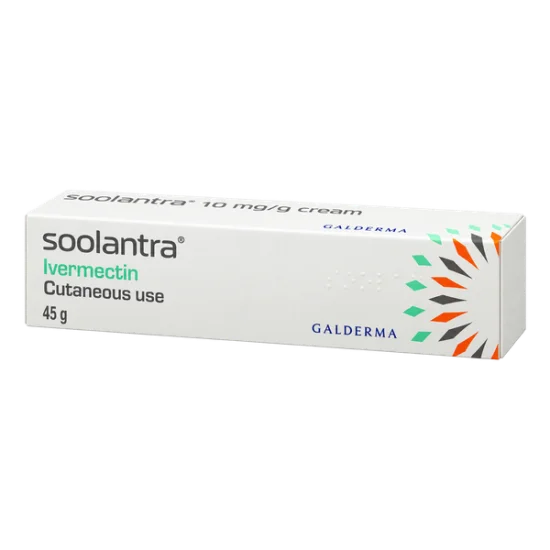
Soolantra is a prescription topical treatment containing ivermectin for inflammatory rosacea. The cream is supplied in tubes, including a 45 g presentation, and is intended for cutaneous use on affected facial skin.
Directions for use
The usual application pattern for adult inflammatory rosacea is once daily. The amount is adjusted individually according to the affected facial area rather than being one fixed amount for every person.
Use a thin layer on the affected areas of the face.
- Cleanse the skin with lukewarm water and a mild, non-abrasive cleanser.
- Pat the face dry without rubbing.
- Apply a small amount of Soolantra to the affected areas once daily.
- Spread it gently over the forehead, chin, nose, and cheeks when those areas are affected.
- Wash hands after application unless the hands are being treated.
- Keep the cream away from the eyes, eyelids, lips, and inside of the nose.
- Allow the cream to settle before applying other facial products.
Do not apply extra cream to compensate for a slow response. More cream does not produce faster improvement and may increase irritation.
A missed application should be skipped if it is close to the next planned application. Apply the next dose at the usual time. Do not use a double application.
Treatment duration depends on the response of the inflammatory lesions. Rosacea often needs sustained management because it is a relapsing condition. Stopping soon after the first improvement may allow lesions to return.
Keep the cream away from heat and direct sunlight. Do not share the tube with another person, even when both people have facial redness.
Ingredients
Soolantra contains ivermectin and is supplied as a topical cream for cutaneous use on affected facial skin. It is intended for adults with inflammatory rosacea, including facial papules and pustules. The cream is available in tubes, including a 45 g presentation.
How it affects the body
Ivermectin has two relevant pharmacological actions in rosacea. It has anti-inflammatory activity and antiparasitic activity against Demodex mites, microscopic organisms associated with some rosacea presentations.
Ivermectin acts locally in the skin after topical application. Its anti-inflammatory effect may reduce signalling involved in rosacea inflammation, while its antiparasitic action may reduce the contribution of Demodex mites in susceptible patients.
Demodex mites naturally live in human hair follicles. A higher density or altered immune response to these mites may be associated with inflammatory rosacea. Reducing mite-related stimulation does not mean that rosacea is caused by poor hygiene. Excessive washing and scrubbing can worsen irritation. The degree of benefit varies between patients.
Therapeutic indications
Rosacea is a chronic inflammatory skin condition that may cause persistent redness, papules, pustules, burning, stinging, and increased sensitivity. Soolantra is aimed mainly at the inflammatory lesions rather than every feature of rosacea. Facial flushing caused by heat, alcohol, spicy food, emotional stress, or temperature changes may need separate management.
The product information describes Soolantra for the topical treatment of inflammatory lesions of rosacea in adults [1].
Indications for inflammatory rosacea
Soolantra may be prescribed when rosacea includes:
- Red, raised papules on the cheeks, nose, chin, or forehead
- Pustules containing small amounts of inflammatory fluid
- Persistent inflammatory activity between visible flare-ups
- Skin sensitivity linked with rosacea lesions
- Recurrent facial inflammation that has not settled with gentle skincare alone
The cream is not designed to treat every facial rash. Acne, eczema, perioral dermatitis, contact dermatitis, and bacterial skin infections can look similar to rosacea but may need different treatment.
Apply it only to the areas prescribed for treatment. Avoid the eyes, lips, inside of the nose, and other mucous membranes.
Common mistakes
Several routine errors can reduce tolerability or make the response difficult to judge:
- Applying the cream more than once daily
- Covering the whole face with a thick layer when only selected areas are affected
- Putting the cream on eyelids or too close to the lash line
- Scrubbing the face before application
- Starting several new skincare products at the same time
- Stopping after a few days because the redness has not changed
- Applying a missed dose twice
- Using expired or heavily contaminated cream
- Treating a new rash without confirming that it is rosacea
A common mistake is measuring success only by background redness. Soolantra is directed mainly at inflammatory papules and pustules. The number of raised lesions, new pustules, discomfort, and flare frequency may be more useful measures.
Another practical issue involves cosmetics. Heavy foundation, fragranced primers, and waterproof products may irritate rosacea-prone skin or make cleansing more aggressive. Choose non-irritating products and remove them gently.
Reasons not to use it
Soolantra is not suitable for everyone.
- You have had an allergic reaction to ivermectin or an ingredient in the cream.
- The intended treatment area has an untreated eye infection or significant open skin damage.
- Your facial eruption has not been assessed and could be eczema, contact dermatitis, bacterial infection, or another condition.
- You plan to apply it inside the eyes, mouth, nostrils, or on genital mucosa.
- You are using it on a child without a clinician’s specific direction.
Tell the prescriber about pregnancy, planned pregnancy, and breastfeeding. Topical exposure is lower than exposure from oral ivermectin, but reproductive safety still needs an individual assessment.
Drug interactions are less likely with a topical preparation than with oral treatment. Still, mention all medicines and supplements, especially oral ivermectin, medicines affecting liver enzymes, anticoagulants, sedating medicines, and products applied to the same facial areas.
When this is not for you
This treatment is not for you if:
- You have had an allergic reaction to ivermectin or an ingredient in the cream.
- The intended treatment area has an untreated eye infection or significant open skin damage.
- Your facial eruption has not been assessed and could be eczema, contact dermatitis, bacterial infection, or another condition.
- You plan to apply it inside the eyes, mouth, nostrils, or on genital mucosa.
- You are using it on a child without a clinician’s specific direction.
Unwanted effects
Most topical reactions are local. Reported reactions can include burning, stinging, irritation, dryness, itching, redness, or worsening discomfort at the application site. These symptoms may be mild and temporary, although persistent or increasing irritation needs medical review.
Soolantra can also cause:
- Contact dermatitis
- Skin inflammation
- Facial swelling
- Peeling or scaling
- Eye irritation after accidental transfer
- A flare-like increase in redness
The New Zealand Medicines and Medical Devices Safety Authority, Medsafe, identifies local skin reactions and allergic reactions as clinically relevant risks with topical medicines containing ivermectin [3].
Stop applying the cream and seek urgent medical care for facial swelling involving the lips, tongue, or throat, breathing difficulty, widespread hives, blistering, or rapidly spreading skin inflammation. Eye pain, marked eye redness, or visual disturbance after accidental contact also requires prompt assessment.
Do not try to counteract irritation with an exfoliant, retinoid, or strong acne treatment. Combining several irritating products can make the reaction harder to interpret.

Comparison
Ivermectin compared with other topical approaches
Topical treatments for rosacea work through different pathways. Ivermectin addresses inflammation and Demodex-related activity. Metronidazole has anti-inflammatory properties, while azelaic acid can reduce inflammatory lesions and abnormal keratinisation.
| Treatment approach | Main pharmacological focus | Common limitation |
|---|---|---|
| Topical ivermectin | Inflammation and Demodex-related activity | Improvement may take several weeks |
| Topical metronidazole | Anti-inflammatory treatment | May not control every rosacea feature |
| Topical azelaic acid | Inflammation and keratinisation | Stinging or burning can occur |
Choice depends on the lesion pattern, previous treatment response, skin sensitivity, and other medicines being used. Some patients respond better to one topical approach than another. A clinician may also use a separate strategy for flushing or visible facial blood vessels because inflammatory creams do not remove established vascular changes.
The European Medicines Agency and regulatory product information describe ivermectin cream as a treatment for inflammatory rosacea lesions in adults [2].
What doctors say
In clinical practice, dermatologists usually assess the lesion pattern before choosing a rosacea treatment. Papules and pustules respond to anti-inflammatory treatment more directly than fixed redness or visible thread veins.
A doctor would usually set expectations around gradual change. Early improvement may appear before the skin is clear, and some patients need continued treatment to maintain control. A flare during the first weeks does not automatically prove that ivermectin is unsuitable, but severe irritation or rapid swelling is a reason to stop and seek assessment.
Soolantra may be used as part of a wider rosacea plan. Trigger reduction, gentle skincare, sun protection, and treatment for flushing may remain necessary because inflammatory lesions are only one part of rosacea.
What customers often ask
Can Soolantra be used with other medicines or supplements?
Medsafe information available in 2024 describes topical ivermectin as having limited systemic exposure compared with oral ivermectin. This makes major interactions less likely, but medicines applied to the same facial area can increase irritation. Tell the prescriber about oral ivermectin, anticoagulants, liver-affecting medicines, and supplements before combining treatments. Apply separate topical products at different times when directed.
Which symptoms mean that Soolantra should be stopped urgently?
The EMA product information identifies severe allergic reactions as a reason for urgent medical attention. Stop applying the cream and seek urgent help for swelling of the lips, tongue, or throat, breathing difficulty, widespread hives, blistering, or rapidly spreading inflammation. Eye pain or visual changes after contact also need prompt assessment. Mild short-lived stinging is different from a rapidly worsening allergic reaction.
How long does a Soolantra course last, and is long-term use acceptable?
Clinical trial information reviewed by the EMA in 2024 supports daily treatment over a sustained course for inflammatory rosacea. The exact duration depends on lesion response, relapse pattern, and the prescriber’s plan. Long-term use may be appropriate for some adults when the cream remains tolerated and clinically useful. Persistent irritation, a new rash, or lack of improvement should prompt a treatment review rather than indefinite self-treatment.
What should be done after a missed Soolantra application?
Medsafe guidance from 2024 supports returning to the normal schedule after a missed topical dose. Apply the next planned amount at the usual time and do not double the quantity. Extra cream does not replace the missed application and may increase dryness or burning. If missed applications are frequent, linking treatment with an established evening skincare routine can help.
Can the face be exposed to sunlight while using Soolantra?
WHO skin-health guidance published in 2023 supports sun protection for people with photosensitive or inflammatory facial conditions. Soolantra is not a substitute for a broad-spectrum sunscreen, shade, hats, or sensible avoidance of intense midday exposure. Choose a sunscreen that does not sting and apply it after the treatment has settled. Heat and strong sunlight can trigger rosacea flushing even when the cream is controlling papules and pustules.
Do you offer anonymous delivery?
Your order will be securely packed and shipped within 24 hours. This is exactly what your package will look like (images of an actual item sent). It has the size and look of a regular private letter (24x11x0.7 cm) and its contents cannot be seen.
Supportive Skincare for Rosacea-Prone Skin
Supportive skincare can reduce irritation while Soolantra addresses inflammatory lesions. The most useful routine is usually simple: gentle cleansing, a non-irritating moisturiser, and daytime sun protection suitable for sensitive skin.
Avoid products that commonly provoke burning or dryness, such as:
- Abrasive scrubs and cleansing brushes
- Strong alcohol-based toners
- Fragranced exfoliating products
- Frequent acid peels
- Very hot water
- Repeated rubbing with towels
- New products introduced several at once
Rosacea-prone skin may react to products marketed for acne, eczema, or perioral dermatitis. A product tested on one inflammatory condition is not automatically suitable for another. Prescription treatment and dermo-cosmetic skincare have different roles: Soolantra treats inflammatory rosacea lesions, while skincare supports comfort and barrier function.
Skin-barrier care
The outer skin barrier contains ceramides, cholesterol, and fatty acids arranged in a lipid matrix. This structure helps reduce water loss and limits penetration of irritants.
A weakened barrier can make ordinary products sting. It may also make it harder to distinguish treatment irritation from a rosacea flare. Choose bland, fragrance-free products and introduce only one new item at a time.
Coconut oil contains fatty acids such as lauric acid and myristic acid. It may feel occlusive on some skin types, yet heavy oils can aggravate facial congestion or discomfort in others. There is no need to add coconut oil to Soolantra or mix it with the cream.
How Buyers Rate Soolantra
Based on 3 reviews
My skin looked calmer after the first month, especially around my nose and chin. I found the cream easy to use at night, but a moisturiser I had been using suddenly stung, so I stopped that product. I still had occasional flare-ups after hot drinks.
Lower Hutt Three months 13 Nov 2026The pustules improved, but I developed more dryness around my mouth during the second week. I reduced the amount and discussed the irritation with my prescriber. The treatment was useful for the bumps, although it did not remove the long-standing redness.
Masterton Several weeks 18 Oct 2026Sources
- Medsafe (2024). Soolantra cream: New Zealand product information for topical ivermectin.
- European Medicines Agency (2015). Soolantra: EPAR summary and product information.
- U.S. Food and Drug Administration (2014). Soolantra (ivermectin) cream prescribing information.