Skip to content
In stock Mysoline
Epilepsy

Mysoline

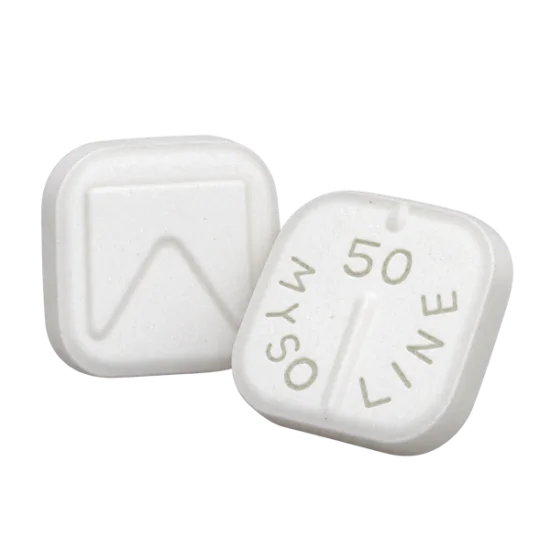
Mysoline tablets are taken by mouth for seizure control, with the schedule tailored to the individual. They contain primidone and are prescribed for generalised tonic-clonic, focal, and psychomotor…

Guaranteed quality Original product
Delivery: from 4 days Discreet shipping
24/7 Support Always available
Active ingredient: Primidone
Select pack Package Per unit Price
$ 6.55 $ 196.35
$ 5.08 $ 392.70 $ 304.81 Save 22%
Free Regular Delivery $ 4.82 $ 589.05 $ 433.84 Save 26%
Free Regular Delivery $ 4.35 $ 785.40 $ 521.73 Save 34%
Free Express Delivery $ 4.09 $ 1,178.10 $ 736.78 Save 37%
Best value Free Express Delivery $ 3.63 $ 2,356.20 $ 1,305.26 Save 45%

Free delivery on orders from $ 374.00, free express delivery from $ 561.00

Secure payment methods:
VISA AMEX JCB DISCOVER

Mysoline tablets are taken by mouth for seizure control, with the schedule tailored to the individual. They contain primidone and are prescribed for generalised tonic-clonic, focal, and psychomotor seizures.

Product information

Mysoline is an oral anticonvulsant medicine containing primidone. It belongs to the barbiturate-related anticonvulsant group and is used for seizure control.

Directions for use

The dose of Mysoline is decided individually, taking age, other medicines, and health conditions into account. Treatment is commonly introduced gradually because rapid exposure can produce marked sedation, dizziness, poor coordination, nausea, or confusion.

Mysoline tablets are taken orally according to the prescribed schedule. The regimen may be divided across the day. The exact timing should remain consistent, since uneven dosing can produce fluctuating drug exposure and increase the chance of breakthrough seizures.

Key administration principles include:

  • Take each dose at the prescribed time.
  • Swallow the tablet with water.
  • Do not change the dose because a seizure has occurred without contacting the prescribing service.
  • Do not stop treatment suddenly.
  • If a dose is missed, follow the individual missed-dose instruction provided with the prescription rather than doubling the next dose.
  • If vomiting occurs soon after a dose, obtain specific advice before repeating it.
  • Keep a current list of all prescription medicines, over-the-counter products, and supplements.

Mysoline is not a medicine for occasional use during a seizure. A person who is actively convulsing must not be given a tablet by mouth because of choking and aspiration risk. Emergency seizure plans may include a separate rescue medicine, but that is not the same as routine Mysoline treatment.

Ingredients

Mysoline tablets contain primidone as the active ingredient. Primidone is an oral anticonvulsant from the barbiturate-related anticonvulsant group, used to help control recurrent epileptic seizures.

How it affects the body

Primidone is a barbiturate-related anticonvulsant. After oral absorption, the body metabolises part of the dose into phenobarbital and phenylethylmalonamide, also called PEMA. Primidone itself and these metabolites contribute to anticonvulsant activity.

Phenobarbital enhances inhibitory signalling in the central nervous system, with effects involving the gamma-aminobutyric acid type A, or GABA-A, receptor system. In plain language, this makes some nerve cells less likely to fire repeatedly. PEMA has anticonvulsant activity, although its contribution varies between individuals.

The FDA prescribing information describes primidone metabolism and the clinical relevance of its active metabolites [1].

Therapeutic indications

Mysoline contains primidone, an anticonvulsant used to reduce recurrent epileptic seizures. Its clinical use includes grand mal epileptic seizures, now commonly called generalised tonic-clonic seizures, as well as focal seizures and psychomotor seizures, a term often used for focal impaired-awareness seizures.

The medicine is selected according to seizure pattern, age, kidney and liver function, previous treatment, and other medicines. Seizure control usually depends on taking the prescribed schedule consistently rather than adjusting tablets in response to individual symptoms.

Management of generalised and focal seizures

Seizure type Typical clinical description Role of primidone
Generalised tonic-clonic Loss of consciousness, stiffening, rhythmic jerking, and post-seizure confusion Reduces excessive neuronal firing
Focal Electrical activity begins in one area of the brain; awareness may remain intact or become impaired Used when the seizure pattern is suitable for primidone
Psychomotor or focal impaired-awareness Altered awareness, staring, automatisms, or unusual movements May be included in an individualised anticonvulsant regimen

“Grand mal” is an older clinical term. A generalised tonic-clonic seizure involves both sides of the brain from the beginning, while a focal seizure starts in a specific region and may spread. The distinction comes from the history, witness description, neurological assessment, and sometimes electroencephalography.

Mysoline does not treat every seizure syndrome equally. Some seizure patterns can worsen with unsuitable anticonvulsants, so the seizure diagnosis must guide treatment selection. The International League Against Epilepsy classification is used by neurologists alongside clinical findings and test results.

Keep a written record of seizure dates, duration, warning symptoms, injuries, missed doses, and recovery time. This gives the prescriber more useful information than a general statement that seizures are “better” or “worse”.

Common mistakes

Several practical errors can reduce seizure control or increase adverse effects:

  • Stopping Mysoline after a seizure-free period.
  • Taking two doses together after forgetting one.
  • Changing the time of dosing from day to day.
  • Using alcohol to “test” whether the medicine still causes drowsiness.
  • Failing to mention hormonal contraception or anticoagulant treatment.
  • Crushing or splitting tablets without confirmation.
  • Assuming dizziness is harmless when there have been near-falls.
  • Treating a new rash with an over-the-counter cream instead of reporting it.
  • Driving after a dose increase before alertness and coordination are known.
  • Starting an herbal product without checking for enzyme or sedative interactions.

One common misunderstanding is that a seizure-free interval proves the epilepsy has resolved. Seizure control may reflect the treatment working, so withdrawal remains a specialist decision. Another is assuming that a low dose is automatically harmless; sensitivity, age, organ function, and interacting medicines can matter as much as the tablet amount.

Reasons not to use it

A clear contraindication is acute intermittent porphyria or another porphyria in which enzyme-inducing anticonvulsants are unsafe. Primidone and phenobarbital can stimulate hepatic pathways involved in porphyrin production and may precipitate a serious attack.

Kidney impairment can slow elimination and increase adverse effects. Liver disease can alter metabolism. Older age, respiratory disease, sleep apnoea, depression, and use of other sedatives also require careful assessment.

Important interactions include alcohol, opioids, benzodiazepines, sedating antihistamines, sleep medicines, and other anticonvulsants. Primidone and phenobarbital can lower concentrations of several medicines by increasing hepatic enzyme activity. Hormonal contraception may become less reliable, and additional contraceptive planning may be needed.

Medsafe safety information for antiseizure medicines supports careful review of neurological, psychiatric, hepatic, and interaction risks [2].

When this is not for you

This medication is not for you if:

  • You have a known porphyria that is affected by barbiturate-related medicines.
  • You have had a serious allergic reaction to primidone, phenobarbital, or a related anticonvulsant.
  • You have severe respiratory depression or another condition in which central nervous system suppression creates immediate danger.
  • You have unexplained severe liver disease requiring specialist medication review.
  • You are experiencing suicidal thoughts or a sudden severe psychiatric change that requires urgent assessment.
  • You have a seizure diagnosis for which the prescriber has determined primidone is unsuitable.

Do not conceal recreational drug use or non-prescription sedatives from the prescriber. The combination can cause excessive sedation, impaired breathing, falls, and loss of consciousness.

Unwanted effects

The most frequent problems with primidone-related treatment involve the nervous system. Early effects can include drowsiness, dizziness, unsteadiness, slowed thinking, nausea, double vision, and impaired coordination. These effects may be stronger after starting treatment or after a dose increase.

Sedation can affect driving, cycling, operating machinery, work at height, and childcare. Alcohol can intensify central nervous system depression. Older adults may be more vulnerable to falls, confusion, and loss of balance.

Other possible reactions include:

  • Fatigue or reduced alertness
  • Headache
  • Blurred or double vision
  • Nausea or reduced appetite
  • Irritability or mood change
  • Slurred speech or poor coordination
  • Skin rash or other hypersensitivity reaction
  • Changes in blood counts or liver tests

Urgent medical assessment is needed for a widespread rash, blistering, facial swelling, breathing difficulty, severe jaundice, unexplained bruising, severe confusion, suicidal thoughts, or a major change in seizure frequency. A prolonged seizure or repeated seizures without recovery between them is an emergency.

One practical detail is easy to miss: a person may describe “weakness” when the real problem is drug-related ataxia, meaning impaired coordination. Watch for veering while walking, dropping objects, or difficulty standing from a chair. These observations help distinguish a tolerability problem from ordinary tiredness.

Another issue is driving. Feeling accustomed to the tablets does not prove that reaction time and coordination are unaffected. New Zealand driving restrictions for people with epilepsy depend on seizure control and medical assessment, while sedating medicines can add a separate impairment concern.

Avoid alcohol during dose changes and whenever drowsiness or poor balance occurs. Combining alcohol with primidone or phenobarbital can make impairment more pronounced than either substance alone.

Comparison

The choice between anticonvulsants depends on seizure type, reproductive plans, age, organ function, interactions, and previous response. A prescriber may prefer a different active substance when sedation, enzyme induction, pregnancy risk, or a specific seizure syndrome makes primidone unsuitable.

Treatment approach Main pharmacological feature Practical limitation
Primidone Produces anticonvulsant activity from primidone plus phenobarbital and PEMA Sedation, interactions, and gradual dose adjustment can limit use
Valproate Broad antiseizure activity through several central nervous system effects Important reproductive, hepatic, metabolic, and interaction considerations
Lamotrigine Modulates voltage-gated sodium channels and reduces excitatory neurotransmitter release Slow titration is needed because serious skin reactions can occur

Primidone may be useful when its established anticonvulsant profile fits the seizure pattern. Its drawbacks include central nervous system depression and enzyme induction. A newer option may have fewer interactions for some people, while another option may carry greater reproductive or organ-specific concerns.

The comparison is not a substitute for seizure classification. A medicine suitable for focal seizures may not be suitable for every generalised epilepsy syndrome. The EMA and national prescribing information emphasise matching the active substance to the diagnosed seizure type and the patient’s clinical circumstances.

What doctors say

In clinical practice, neurologists usually focus first on seizure classification, previous medicine response, and the person’s daily functioning. A reduction in seizure frequency matters, but excessive sedation, falls, impaired concentration, or mood changes can make a regimen unacceptable.

Doctors often increase primidone gradually because early intolerance does not always predict long-term tolerance. The reverse is also true: a person who feels stable after several weeks can still develop problems after an interaction, illness, pregnancy, kidney impairment, or an unplanned dose change.

The prescriber may request blood tests or drug levels when the response changes without an obvious explanation. Phenobarbital concentrations can be useful, but a number outside a reference range does not automatically mean that treatment must change. The clinical picture remains central.

A neurologist will also review rescue planning, seizure first aid, driving status, contraception, pregnancy intentions, alcohol intake, and medicines obtained without prescription. These details are part of safe epilepsy care rather than administrative questions.

What customers often ask

Can older adults take Mysoline?

Older adults can receive primidone when the prescriber judges that its seizure-control benefits outweigh its risks. Age-related changes in kidney function, balance, cognition, and sensitivity to sedatives can increase dizziness, confusion, and falls. The FDA's 2008 geriatric principles for anticonvulsant prescribing support cautious dose selection and monitoring, while Medsafe guidance emphasises review of interactions and adverse effects [3]. A new fall, daytime sleepiness, or change in memory should prompt a medication review rather than an unsupervised dose reduction. The review should also include other sedating medicines.

Can a Mysoline tablet be split, crushed, or chewed?

The tablet should be swallowed as prescribed unless the dispensing pharmacist or prescriber has confirmed that splitting is suitable for the specific tablet. Crushing or chewing can make the dose inaccurate and may cause swallowing problems, especially in a person already affected by sedation or poor coordination. FDA product information from 2023 describes oral administration but does not make tablet alteration a routine self-care step. If swallowing is difficult, a clinician can assess whether another formulation or administration plan is appropriate.

Can Mysoline be taken with food or on an empty stomach?

Primidone may be taken with food when this helps reduce stomach upset, provided the same approach is used consistently. Food does not remove the risks of sedation, impaired coordination, or drug interactions. The New Zealand Medsafe 2021 data sheet advises taking the medicine according to the prescribed schedule and reporting troublesome adverse effects. A person who changes from taking tablets with food to taking them fasting should mention the change if seizure control or tolerability shifts.

Is alcohol safe while using Mysoline?

Alcohol can add to the sedative effects of primidone and phenobarbital, increasing drowsiness, poor balance, slowed reactions, and impaired judgement. It can also disrupt sleep and make seizure control less predictable. The WHO’s 2024 epilepsy safety information supports avoiding factors that increase injury risk or interfere with regular treatment. Avoid alcohol during treatment changes and whenever the medicine causes sleepiness, dizziness, or unsteadiness.

What should happen if the expected seizure control does not occur?

Do not increase Mysoline or stop it suddenly because seizures continue. Record the seizure type, duration, missed doses, sleep loss, illness, alcohol exposure, and any new medicine, then contact the prescribing clinician promptly. The 2022 NICE guideline on epilepsy supports reassessing diagnosis, adherence, interactions, dose tolerance, and the need for an alternative or additional active substance [4]. A seizure lasting longer than usual, repeated seizures without recovery, breathing difficulty, or serious injury requires emergency care.

Do you offer anonymous delivery?

Your order will be securely packed and shipped within 24 hours. This is exactly what your package will look like (images of an actual item sent). It has the size and look of a regular private letter (24x11x0.7 cm) and its contents cannot be seen.

How Buyers Rate Mysoline

Based on 4 reviews

Christopher, 34 Verified
Rating: 4 out of 5

Hastings, used Mysoline at his prescribed dose as part of his seizure regimen for several months. He reported fewer focal episodes after gradual dose adjustment, but the first week brought noticeable morning drowsiness. He stopped cycling to work temporarily and found that the tiredness eased once his routine became consistent.

Hastings Several months 12 Oct 2026
Tom, 29 Verified
Rating: 3.5 out of 5

Auckland, had taken the tablets at his prescribed dose for several weeks for generalised seizures and described improved confidence after several weeks without an episode. He disliked the initial dizziness and once forgot an evening dose after working late. His prescribing team gave him a written missed-dose plan, which made the schedule easier to follow.

Auckland Several weeks 24 Oct 2026
Peter P., 46 Verified
Rating: 3.5 out of 5

Nelson, had used Mysoline at his prescribed dose for several months and reported good seizure control but mixed feelings about the treatment. He had experienced slowed concentration and poor balance after an increase, especially when drinking alcohol socially. The symptoms improved after clinical review, but he still preferred to avoid driving soon after any regimen change.

Nelson Several months 31 Oct 2026
Harry, 65 Verified
Rating: 3.5 out of 5

Dunedin, had used Mysoline at his prescribed dose under specialist supervision for several months and felt that seizures were better controlled. He also noticed more unsteadiness when getting up at night and needed a medication review after a fall. The experience reinforced that seizure control and day-to-day safety must be assessed together.

Dunedin Several months 8 Nov 2026

Sources

  1. U.S. Food and Drug Administration (2023). Mysoline (primidone) Prescribing Information
  2. Medsafe (2021). Mysoline Data Sheet
  3. U.S. Food and Drug Administration (2008). Antiepileptic Drugs and Suicidality: Information for Healthcare Professionals
  4. National Institute for Health and Care Excellence (2022). Epilepsies in children, young people and adults (NG217)
Get our free app Shop faster and track your orders 3.9 · 297 reviews Install