Product information
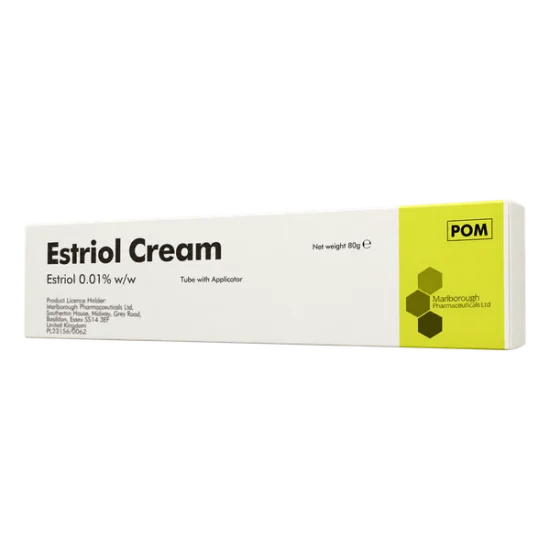
The cream contains estriol 0.01% w/w and is supplied in an 80 g tube with an applicator.
Estriol is one of the three main naturally occurring oestrogens, alongside estradiol and estrone.
Medsafe and the EMA describe local oestrogen therapy as an option for menopausal vulvovaginal symptoms, with treatment choice depending on symptoms, medical history, and the need for systemic hormone therapy [1].
Directions for use
The amount of Estriol is decided individually, taking age, other medicines, and health conditions into account. The prescribed amount may differ between an initial treatment period and maintenance use.
Use involves the following practical steps:
- Apply Estriol intravaginally with the supplied applicator when internal treatment is prescribed.
- Use the prescribed amount and frequency rather than filling the applicator beyond the instructed level.
- Apply it at the time of day recommended for the treatment plan; bedtime is often chosen because it reduces immediate leakage.
- Wash hands before and after application.
- Do not share the applicator.
- Do not cover the treated area with an airtight dressing.
- If external vulval application is prescribed, use only the thin amount directed for that area.
- If a dose is missed, apply it when remembered unless the next scheduled application is close. Do not double the amount.
The applicator should be inserted gently. Pain, resistance, or unexpected bleeding during insertion needs medical review rather than forceful application.
A thin sanitary liner can help with cream residue after bedtime application. Avoid tampons immediately after treatment because they may absorb part of the cream.
Treatment duration depends on the severity of symptoms and the response. Once symptoms improve, the prescriber may reduce the frequency to the lowest regimen that maintains relief. Do not increase the amount because symptoms have not improved after one or two applications; local tissue recovery takes time.
Ingredients
Estriol Cream is a topical oestrogen formulation for vaginal use. The cream base helps distribute estriol across vaginal mucosa and may also be used around the vulval tissues when this forms part of the prescribed treatment plan.
The applicator is useful when the treatment is intended for internal vaginal application. A cream may feel different from a pessary or gel: some residue can remain after application, and a small amount may appear later as the base leaves the vagina.
Estriol Cream has these product characteristics:
- Active ingredient: estriol.
- Strength: 0.01% w/w.
- Dosage form: vaginal cream.
- Pack format: tube with applicator.
- Net quantity: 80 g.
- Intended treatment area: vaginal and vulvovaginal tissues, according to the prescribed plan.
Local oestrogen and systemic hormone therapy
Local estriol treatment addresses tissues affected by low oestrogen. Systemic hormone therapy delivers oestrogen through the bloodstream and is selected when symptoms extend beyond the vagina and vulva, such as troublesome vasomotor symptoms.
Low-dose local therapy can still lead to some absorption. The risk profile is lower than with many systemic regimens, but it is not zero. A history of hormone-sensitive cancer, unexplained vaginal bleeding, thrombosis, or liver disease needs specific medical assessment before treatment.
Therapeutic indications
Menopause can reduce oestrogen stimulation in the vagina, vulva, urethra, and bladder outlet. The vaginal lining may become thinner and less elastic. Natural lubrication can fall, and the vaginal environment may become less acidic, allowing changes in the normal bacterial balance.
Treatment may reduce:
- Vaginal dryness.
- Burning or irritation.
- Pain during sexual activity caused by tissue dryness.
- Fragile vaginal tissue.
- Some urinary discomfort linked with genitourinary menopause.
- Vulval discomfort associated with oestrogen deficiency.
Vaginal atrophy is now often described within the broader term genitourinary syndrome of menopause. The term includes changes affecting the vagina, vulva, urethra, and lower urinary tract. Local oestrogen can improve tissue condition, but it is not an antibiotic and should not be used as the sole treatment for an established urinary tract infection.
A person with fever, flank pain, visible blood in the urine, vomiting, or rapidly worsening urinary symptoms needs assessment for infection or another urinary condition. Estriol may help reduce recurrent urogenital symptoms in selected postmenopausal patients, but it does not replace urine testing or antibacterial treatment when those are clinically indicated.
The benefit develops through repeated local exposure rather than through an immediate analgesic effect. Dryness and burning may improve before tissue fragility or recurrent urinary symptoms settle.
Common mistakes
Several practical errors can reduce benefit or create avoidable irritation:
- Using more cream because dryness remains after the first application.
- Applying internal cream with a fingertip when an applicator is supplied for measured dosing.
- Applying the product only when symptoms become severe instead of following the prescribed schedule.
- Stopping after one or two applications because improvement is not immediate.
- Continuing treatment through unexplained bleeding.
- Using soaps, bubble baths, or vaginal cleansing products that aggravate the mucosa.
- Assuming Estriol treats a confirmed urinary infection.
- Combining it with another hormonal vaginal product without telling the prescriber.
- Applying cream to broken or severely inflamed skin without an assessment.
- Doubling the next application after a missed dose.
The applicator should be cleaned according to the product’s intended instructions, kept for the same user, and replaced if damaged. A damaged applicator can cause discomfort and make the delivered amount unreliable.
New pelvic pain, offensive discharge, fever, or bleeding needs investigation rather than an increase in Estriol.
When this is not for you
Estriol is NOT for you if unexplained bleeding, suspected hormone-sensitive cancer, or a history of clotting disease has not been medically assessed:
- You have current, previous, or suspected breast cancer.
- You have unexplained vaginal bleeding.
- You have had blood clots in the veins or certain strokes or heart attacks.
- You have severe liver disease.
- You may be pregnant.
- You are allergic to estriol or any cream component.
A prior blood clot does not automatically produce the same treatment decision for every patient, but it requires a specific risk assessment. The same applies to migraine with neurological symptoms, severe hypertension, gallbladder disease, systemic lupus, and a strong family history of hormone-sensitive cancer.
Unwanted effects
Local Estriol may cause discomfort or irritation after application. Possible effects described for local vaginal treatment include:
- Burning, itching, or irritation.
- Increased vaginal discharge.
- Breast tenderness.
- Pelvic discomfort.
- Headache.
- Nausea.
- Light vaginal spotting.
Persistent burning, worsening discomfort, or unexpected vaginal bleeding requires medical assessment. Treatment should be reviewed periodically, and persistent or recurrent bleeding requires investigation, even when the oestrogen dose is local [2].
Cream leakage can make irritation seem worse. Apply only the prescribed quantity and avoid cleansing products that may further irritate sensitive tissue.
Comparison
The main alternatives are other local oestrogen preparations, vaginal moisturisers, lubricants, and vaginal medicines containing different active substances. Selection depends on the dominant symptom, comfort with the application method, medical history, and whether systemic menopausal symptoms also require treatment. Potential advantages of estriol include targeted local delivery, relief of dryness, and improved tissue comfort. A drawback is that improvement takes time and local reactions or cream residue can occur. Systemic menopausal symptoms may need a separate treatment plan.
| Treatment category |
Active approach and route |
Typical role |
| Estriol Cream |
Estriol applied vaginally with an applicator |
Vaginal dryness, tissue thinning, and related urogenital symptoms |
| Local estradiol |
Estradiol delivered vaginally by a preparation such as a tablet, ring, or cream |
Similar tissue targets with a different oestrogen molecule and dosing pattern |
| Non-hormonal moisturiser or lubricant |
Water-based, silicone-based, or moisturising ingredients applied locally |
Dryness or friction when oestrogen is unsuitable or not wanted |
Vaginal moisturisers can be used regularly to improve hydration, while lubricants are usually used around sexual activity. They do not stimulate oestrogen receptors and therefore do not reverse all tissue changes caused by oestrogen deficiency.
A local estradiol product may be chosen when a patient prefers its formulation or when the clinician has more experience with that dosage form. Estriol may be preferred when a lower-potency local oestrogen approach is appropriate. These treatments should not be swapped by comparing cream volume alone.
What doctors say
In clinical practice, doctors usually assess three things before prescribing local estriol: the symptom pattern, the appearance or history of vaginal bleeding, and the patient’s hormone-related medical risks.
A typical medical conversation also distinguishes vaginal dryness from infection, dermatitis, pelvic-floor pain, and vulval skin disease. These conditions can overlap. Estriol will not correct every cause of burning or painful intercourse.
Physicians often explain that improvement is gradual. Moisture may change first, while tissue elasticity and urinary comfort can take longer. The maintenance plan may be reduced after symptoms settle, but the treatment should not be intensified without review. Treatment response varies between patients. Dryness may improve before urinary symptoms. Some people notice residue after application. Others experience mild irritation that settles with time. Persistent bleeding or pain requires clinical review.
The 2022 North American Menopause Society position statement supports vaginal oestrogen and other local options for genitourinary symptoms when appropriate, with treatment selected according to the individual clinical situation [4].