Skip to content
In stock Cystone
Kidney Stones

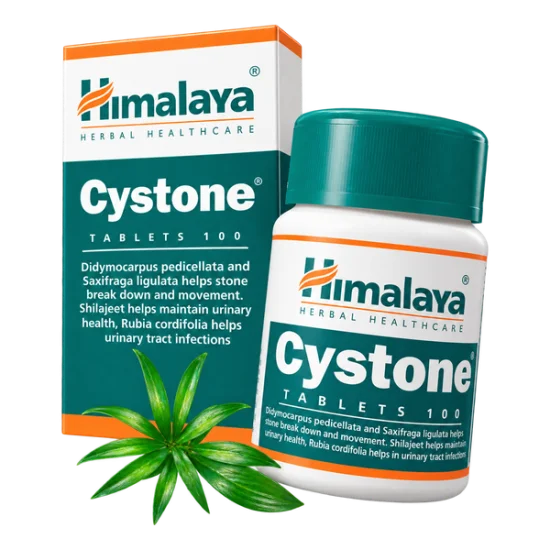
Cystone

Urinary discomfort, changes in urine flow, and kidney-stone concerns require attention to hydration and the underlying cause. Cystone is a herbal tablet formulation intended to support urinary tract…

Guaranteed quality Original product
Delivery: from 4 days Discreet shipping
24/7 Support Always available
Active ingredient: Didymocarpus pedicellata, Saxifraga ligulata, Rubia cordifolia, Cyperus scariosus, Achyranthes aspera, Onosma bracteatum
Select pack Package Per unit Price
$ 1.30 $ 233.75
Best value $ 0.78 $ 467.50 $ 282.37 Save 40%

Free delivery on orders from $ 374.00, free express delivery from $ 561.00

Secure payment methods:
VISA AMEX JCB DISCOVER

Urinary discomfort, changes in urine flow, and kidney-stone concerns require attention to hydration and the underlying cause. Cystone is a herbal tablet formulation intended to support urinary tract function and renal wellness. Its role is supportive, not a replacement for urgent assessment when pain, fever, blood in urine, or reduced urine output occurs.

Product information

Cystone is supplied as tablets in a bottle and is associated with Himalaya Herbal Healthcare. It is intended for adults seeking botanical support for urinary tract comfort, normal urine flow, and general kidney wellness.

Directions for use

There is no single amount that suits everyone because dosing can differ between strengths and between users. Use the adult serving specified for the formulation supplied, and do not increase the amount to try to accelerate relief.

Practical administration principles include:

  • Take the tablets by mouth with water.
  • Keep doses at consistent times if a regular schedule has been selected.
  • Swallow tablets whole unless a qualified prescriber has provided different instructions.
  • Avoid taking extra tablets after a missed dose.
  • Resume the next planned dose rather than doubling.
  • Maintain ordinary fluid intake unless a clinician has prescribed fluid restriction.
  • Stop self-management and seek assessment if symptoms worsen or fail to settle.

Cystone is not a treatment plan for a confirmed obstructing stone. A clinician may need to assess urine, kidney function, imaging findings, stone size, and the presence of infection. New Zealand’s Medsafe provides medicine-safety information for products used in the local market, while individual suitability still depends on medical history and the product’s complete formulation.

Keep a simple record of tablet times and urinary symptoms during the first several days. This makes it easier to identify whether discomfort is improving, unchanged, or becoming more severe.

If vomiting prevents tablets or fluids from staying down, oral self-care may not be sufficient. Severe dehydration can worsen kidney stress, and repeated vomiting with flank pain warrants prompt medical evaluation.

Ingredients

The intended pharmacological concepts associated with urinary-support formulations include urine-flow support, urinary mucosal comfort, and possible effects on crystalloid-colloid balance. These terms describe the relationship between dissolved urinary substances and the fluid matrix in which crystals may form. They do not prove that a tablet will dissolve an established stone or prevent a new stone in every user.

Cystone’s supportive role can be summarised as follows:

  • Botanical support for urinary tract comfort.
  • Support for normal urinary flow.
  • A complementary approach to hydration and dietary stone prevention.
  • Use alongside, rather than instead of, diagnosis when symptoms persist.
  • A product requiring ingredient review when regular medicines or chronic disease are present.

The World Health Organization recognises urinary tract infection and kidney disease as conditions requiring appropriate clinical evaluation, especially when symptoms are persistent or severe [3]. A herbal product can have a useful supportive place, but its use should match the person’s symptoms and medical history.

How it affects the body

Cystone’s intended pharmacological concepts include support for urine flow, urinary mucosal comfort, and possible effects on crystalloid-colloid balance. The formulation is intended to provide botanical support for urinary tract function and renal wellness without establishing that it dissolves stones or prevents their formation.

Therapeutic indications

Cystone’s intended supportive role centres on urinary tract comfort and renal wellness. Herbal urinary products may be used by adults who want help maintaining normal urinary function, but they should not be used to delay assessment of a suspected infection or obstruction.

Kidney-stone symptoms can vary. A small stone may cause intermittent flank pain, while obstruction can produce severe colicky pain, nausea, vomiting, or difficulty passing urine. Fever with urinary pain is more concerning because infection can occur behind an obstruction. Guidance from the European Association of Urology treats suspected obstructed infection as a medical emergency requiring prompt evaluation [1].

Seek urgent medical care for severe side or back pain, fever, chills, vomiting, visible blood in the urine, confusion, or difficulty passing urine. These symptoms need assessment rather than self-treatment with a urinary supplement.

Cystone should be viewed as supportive wellness care. It should not be presented as a guaranteed method for dissolving every type of kidney stone, removing an obstruction, treating a urinary infection, or preventing recurrence in every person.

Urinary comfort and kidney-stone concerns

Fluid intake supports urine production, but the right amount depends on heart, kidney, and liver function. People with fluid restrictions should follow their individual medical plan rather than deliberately drinking large volumes.

Stone prevention also depends on stone type. Calcium oxalate, uric acid, struvite, and cystine stones have different risk factors and dietary approaches. The American Urological Association recommends evaluating recurrent stone formers with medical history, blood tests, urine assessment, and, when appropriate, stone analysis [2].

Common mistakes

Several practical errors can reduce the value of supportive urinary care or delay treatment:

  • Assuming every urinary symptom is caused by a kidney stone.
  • Increasing the tablet amount because pain has not improved quickly.
  • Drinking excessive water despite heart or kidney-related fluid restrictions.
  • Ignoring fever because the pain seems manageable.
  • Taking a missed dose together with the next dose.
  • Continuing self-treatment despite visible blood in urine.
  • Forgetting to mention herbal products before a procedure.
  • Treating temporary pain relief as proof that an obstruction has resolved.
  • Using an incomplete ingredient description to assess interaction safety.
  • Storing tablets in a hot, damp bathroom.

A missed dose generally does not justify taking extra tablets. Returning to the next planned dose is safer than doubling, especially when the formulation and personal dose schedule vary.

Reasons not to use it

Avoid unsupervised use in these situations:

  • Fever, chills, or feeling acutely unwell with urinary symptoms.
  • Severe flank, back, or abdominal pain.
  • Repeated vomiting or inability to keep fluids down.
  • Visible blood in the urine.
  • Very little urine or inability to urinate.
  • Known kidney failure, dialysis, or a prescribed fluid restriction.
  • Previous allergy to any botanical ingredient in the formulation.
  • Pregnancy or breastfeeding without a clinician’s review.
  • Use of several medicines with a narrow safety margin.
  • Recent urinary surgery or a known urinary tract obstruction.

Specific interaction risk cannot be judged reliably without the complete ingredient list. People taking anticoagulants, medicines for diabetes, blood-pressure treatment, diuretics, lithium, immunosuppressants, or medicines processed by the liver should obtain a formulation-specific interaction review before use.

Cystone should also be stopped before a planned procedure if the treating team advises stopping herbal products. Some botanical constituents can affect bleeding, blood pressure, blood glucose, or medicine metabolism.

When this is not for you

This is not for you if you have warning symptoms, severe kidney problems, unexplained reduced urine, or a known urinary blockage. It is also not appropriate to start on your own during pregnancy or breastfeeding, in childhood, or when you have significant long-term illness. Ask a clinician or pharmacist to check the product first if you take several regular medicines, have a fluid restriction, or have previously reacted to a botanical ingredient.

Unwanted effects

Herbal tablets are often tolerated without major problems, but mild digestive upset, nausea, abdominal discomfort, headache, or an allergic reaction can occur with botanical products. The likelihood depends on the individual formulation and the person’s sensitivity to its ingredients.

Stop using Cystone and seek medical advice if facial swelling, wheezing, widespread rash, fainting, persistent vomiting, or severe abdominal or flank pain occurs. Blood in urine, fever, chills, or markedly reduced urine output also needs medical assessment because these symptoms may indicate infection or obstruction rather than a minor product reaction.

People with chronic kidney disease require extra care. Their fluid intake, electrolyte balance, and medicine clearance may already be altered. A urinary-support product should not be used to increase fluids aggressively without a suitable plan.

Pregnancy and breastfeeding require specific review before use. Botanical products can contain several active plant constituents, and safety cannot be assumed simply because the product is described as herbal.

Do not use improvement in discomfort as proof that a stone has passed. Persistent or recurring symptoms may continue even when pain temporarily eases.

Comparison

Approach Main role Main limitation
Cystone herbal tablets Supportive urinary wellness and comfort Does not replace diagnosis or emergency treatment
Hydration and dietary prevention Helps reduce concentrated urine and address stone-risk habits Must be adapted for kidney, heart, or liver conditions
Clinician-directed stone treatment Evaluates obstruction, infection, stone type, and kidney function Requires medical assessment and may involve imaging or procedures

A herbal tablet may suit a person seeking supportive care for urinary wellness when no red-flag symptoms are present. This option is NOT for you if you have red-flag symptoms, suspected obstruction, or a fluid restriction. Medical treatment becomes more important when pain is severe, symptoms recur, urine flow falls, or infection is suspected.

Dietary prevention is more precise after the stone type is known. For example, advice for uric-acid stones differs from advice for calcium-based stones. Drinking more water alone does not correct every metabolic risk factor.

A clinician-directed approach is needed when a stone may be obstructing urine flow. The European Medicines Agency and national regulators distinguish products by their evidence, composition, and authorised indications; a supplement’s traditional or supportive role should not be treated as equivalent to a prescription treatment with a defined clinical indication.

What doctors say

In clinical practice, urinary symptoms are assessed by pattern rather than by product preference. Burning during urination, urgency, flank pain, fever, and visible blood can point toward different conditions. A clinician will usually consider urine testing and kidney-function assessment when symptoms are persistent, recurrent, or severe.

A doctor would also distinguish supportive prevention from active stone treatment. A supplement may be reasonable for general urinary wellness in a person without red-flag symptoms, while a suspected obstruction or infection needs diagnostic care.

Consistency helps reveal whether a supportive product is tolerated, but it does not guarantee a clinical result. If expected improvement does not occur, continuing for longer without reassessment can allow an untreated infection or obstructing stone to progress.

The National Institute for Health and Care Excellence recommends prompt assessment for symptoms that suggest complicated urinary infection, sepsis, or urinary obstruction [4]. That principle is relevant even when a person prefers botanical support.

Tell the clinician about every herbal product, vitamin, and regular medicine being used. The ingredient list is clinically relevant when assessing kidney symptoms and interactions.

What customers often ask

Can older adults use Cystone?

Older adults may use a urinary-support product only after considering kidney function, fluid restrictions, regular medicines, and the cause of urinary symptoms. Age itself does not determine suitability, but chronic kidney disease, heart failure, diabetes, and polypharmacy are more common later in life. Medsafe’s 2025 medicine-safety principles support careful review when several health conditions or medicines are present [5]. Persistent pain, fever, blood in urine, or reduced urine needs medical assessment rather than continued self-treatment.

How soon may an effect become noticeable?

A noticeable change cannot be guaranteed or assigned to one universal timeframe because urinary symptoms have different causes and the product is intended for supportive use. Mild discomfort may fluctuate naturally, while a stone or infection can continue despite temporary symptom relief. Clinical guidance from the European Association of Urology (2025) focuses on symptom severity, obstruction, infection, and kidney function rather than promising a fixed onset for herbal products . Seek assessment when symptoms worsen, remain persistent, or occur with fever, vomiting, or reduced urine.

What should I do if the expected result does not come?

Do not increase the tablet amount or combine several urinary products to force a faster result. Arrange medical assessment if discomfort continues, returns repeatedly, or is accompanied by urinary burning, blood, fever, vomiting, or difficulty passing urine. The American Urological Association’s 2014 guideline recommends investigating recurrent stone symptoms and relevant risk factors rather than relying only on symptom relief . Bring a list of medicines and supplements so interaction and kidney-related risks can be reviewed.

What happens after stopping Cystone, and is tapering needed?

A gradual taper is not generally expected for a botanical urinary-support tablet, but stopping may mean that any perceived supportive benefit no longer occurs. Stopping does not remove an untreated stone, infection, or obstruction. Symptoms that return after stopping should be assessed according to their severity rather than managed by automatically restarting or increasing tablets. NICE’s 2018 guidance supports prompt evaluation when urinary symptoms suggest complicated infection or obstruction .

Do you offer anonymous delivery?

Your order will be securely packed and shipped within 24 hours. This is exactly what your package will look like (images of an actual item sent). It has the size and look of a regular private letter (24x11x0.7 cm) and its contents cannot be seen.

How Buyers Rate Cystone

Based on 5 reviews

Simon, 62 Verified
Rating: 3 out of 5

I was looking for extra urinary support after a previous stone episode. I tolerated the tablets and felt more comfortable, but I still arranged a urine test when the ache returned. That was the sensible part for me.

Levin Several weeks 5 Nov 2026
Tom G., 42 Verified
Rating: 3 out of 5

I expected a quick change and was disappointed during the first few days. More water helped, although I later realised I had been drinking too much at once. The product was easy to take, but I would not rely on it for severe pain.

Whangārei A period of urinary discomfort 7 Oct 2026
Ben, 27 Verified
Rating: 5 out of 5

I had no stomach problems and found the routine straightforward. My symptoms settled gradually, though I cannot say whether that came from the tablets, fluids, or time. I would have sought care sooner if I had developed a fever.

Whanganui Several days 24 Oct 2026
Paul, 67 Verified
Rating: 2.5 out of 5

The tablets were manageable, but I checked the ingredients because I was already using treatment for blood pressure and kidney problems. I did not notice a clear benefit and stopped after discussing the symptoms with my doctor.

Ashburton A short period 16 Oct 2026
Stuart C., 59 Verified
Rating: 3 out of 5

I kept the bottle in a kitchen cupboard and took the tablets at the same time each day. The main drawback was that my discomfort came back, so I booked an assessment instead of increasing the dose. That decision mattered more than trying to take extra tablets.

New Plymouth A short period 29 Oct 2026

Sources

  1. European Association of Urology (2025). EAU Guidelines on Urolithiasis.
  2. American Urological Association (2014). Medical Management of Kidney Stones: AUA Guideline.
  3. World Health Organization (2009). WHO Guidelines for the Storage of Medicines and Other Health Commodities.
  4. National Institute for Health and Care Excellence (2018). Pyelonephritis (acute): antimicrobial prescribing.
  5. Medsafe (2025). Medicines safety information and adverse reaction reporting guidance.
Get our free app Shop faster and track your orders 3.5 · 179 reviews Install