I had no pain and nearly forgot why I was using the drops. After several weeks, the pressure checks were better. The first few days brought a bitter taste and short blurred vision, but pressing the corner of my eye helped.
Rotorua Several weeks 1 Nov 2026Cosopt
Cosopt eye drops are applied directly into the affected eye and are used to lower raised intraocular pressure. They are prescribed for adults with open-angle glaucoma or ocular hypertension. The…
Cosopt eye drops are applied directly into the affected eye and are used to lower raised intraocular pressure. They are prescribed for adults with open-angle glaucoma or ocular hypertension. The combination reduces aqueous humour production, helping protect the optic nerve from pressure-related damage.
Product information
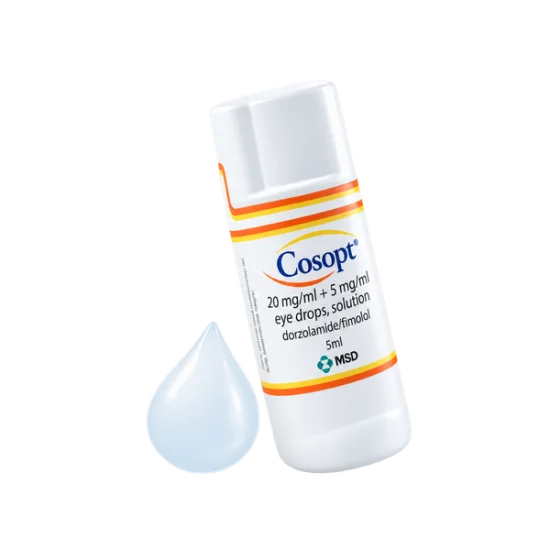
Cosopt is a prescription ophthalmic solution supplied in a bottle containing 5 ml of eye drops. The drops are used when eye pressure remains above the desired range in conditions such as:
- Open-angle glaucoma
- Ocular hypertension
- Raised intraocular pressure requiring more than one pressure-lowering mechanism
Directions for use
The usual labelled regimen for Cosopt is one drop in the affected eye or eyes twice daily, approximately 12 hours apart. The dose is decided individually, taking age, other medicines, and health conditions into account.
Use the following technique:
- Wash and dry the hands.
- Tilt the head back and look upward.
- Pull the lower eyelid down to create a small pocket.
- Instil one drop without allowing the bottle tip to touch the eye, lashes, or skin.
- Close the eye gently rather than blinking repeatedly.
- Apply pressure to the inner corner of the closed eye for about two minutes.
- Replace the bottle closure promptly.
If another eye drop is also prescribed, leave at least 10 minutes between products unless the ophthalmologist has given different instructions. Ointments are generally applied after liquid drops because ointment can interfere with absorption.
Do not place extra drops into the eye to compensate for a missed dose. If a dose is forgotten, use it when remembered unless the next scheduled dose is close; in that situation, skip the missed dose and return to the usual timetable. Do not double the amount.
Cosopt is intended for ocular use. It must not be swallowed or injected. Contact lenses should be removed before instillation and replaced after the interval specified for the formulation or by the prescriber, because preservatives may irritate the lens-bearing surface.
Do not stop treatment simply because the pressure reading improves. Abruptly stopping a pressure-lowering regimen can allow intraocular pressure to rise again.

Ingredients
Cosopt combines two active substances from different pharmacological classes. Dorzolamide reduces aqueous humour formation by inhibiting carbonic anhydrase, while timolol reduces aqueous humour production through beta-adrenergic receptor blockade.
| Active substance | Pharmacological class | Main action |
|---|---|---|
| Dorzolamide hydrochloride | Topical carbonic anhydrase inhibitor | Reduces bicarbonate formation and aqueous humour secretion |
| Timolol maleate | Ophthalmic beta blocker | Reduces beta-adrenergic stimulation and aqueous humour production |
The two mechanisms complement each other. This fixed combination can lower pressure more than either component used alone in some patients, while avoiding the need to instil two separate bottles at the same time.
Role of dorzolamide hydrochloride
Dorzolamide inhibits carbonic anhydrase II in the ciliary processes of the eye. This reduces bicarbonate production and lowers the movement of sodium and fluid into the aqueous humour. Less aqueous humour is produced, so intraocular pressure falls.
Dorzolamide is not a steroid and does not work by reducing eye inflammation. Its role is pressure control through reduced fluid formation.
Role of timolol maleate
Timolol blocks beta-adrenergic receptors in the ciliary body. This reduces aqueous humour production without relying on pupil constriction. Cosopt is therefore different from older pressure-lowering drops that work mainly by changing pupil size or increasing fluid outflow.
These conditions are addressed in the Medsafe Cosopt data sheet [2].
How it affects the body
Dorzolamide reduces aqueous humour formation by inhibiting carbonic anhydrase, while timolol reduces aqueous humour production through beta-adrenergic receptor blockade. Dorzolamide inhibits carbonic anhydrase II in the ciliary processes of the eye, reducing bicarbonate production and the movement of sodium and fluid into the aqueous humour. Timolol blocks beta-adrenergic receptors in the ciliary body, reducing aqueous humour production without relying on pupil constriction.
Therapeutic indications
Cosopt is intended for pressure control rather than short-term relief of eye discomfort. The aim is to maintain intraocular pressure within the range selected by the ophthalmologist for that individual eye.
The target pressure depends on factors such as optic nerve appearance, visual-field results, corneal thickness, previous progression, and the degree of pressure elevation. NICE and the American Academy of Ophthalmology also emphasize individualized assessment when setting a target pressure. A person can have ocular hypertension without glaucoma, while another person can develop optic nerve damage at a pressure that appears less dramatic.
A practical detail is easy to miss: glaucoma drops are usually continued even when the eyes feel normal. Pressure-related optic nerve damage is often silent.
The FDA product information describes these local and systemic considerations in its prescribing information [1].
Common mistakes
Several habits can reduce the benefit of Cosopt:
- Instilling more than one drop to “make sure” enough medicine entered the eye
- Touching the bottle tip against the eye or eyelashes
- Using two different drops immediately one after another
- Missing evening doses because the eyes feel normal
- Stopping treatment after a satisfactory pressure reading
- Blinking forcefully or rubbing the eye immediately after application
- Forgetting to mention asthma, slow pulse, or heart disease
- Continuing to wear contact lenses during instillation
- Sharing the bottle with another person
The bottle tip should remain clean and should not touch any surface. Contamination can introduce organisms into the solution and increase the risk of eye infection.
A forgotten dose should not be replaced with a double dose. Extra solution does not create a proportional reduction in pressure and may increase unwanted exposure.
Reasons not to use it
Cosopt is not suitable for everyone. It should generally be avoided or specifically assessed in people with:
- Bronchial asthma or a history of severe asthma
- Severe chronic obstructive airway disease
- Sinus bradycardia
- Second- or third-degree atrioventricular block without a functioning pacemaker
- Overt cardiac failure or cardiogenic shock
- Severe allergy to dorzolamide, timolol, or related sulfonamide compounds
- Previous serious reaction to a beta-blocker eye drop
Timolol can intensify the effects of oral beta blockers, some calcium-channel blockers, anti-arrhythmic medicines, and medicines that slow the heart. Combining it with systemic carbonic anhydrase inhibitors may increase the risk of adverse effects associated with that drug class.
Monoamine oxidase inhibitors and medicines that affect catecholamine handling can also require review. Diabetes treatment deserves attention because beta blockade may mask some warning symptoms of low blood glucose, such as a rapid heartbeat.
When this is not for you
Cosopt is NOT for you if you have a contraindication to timolol, such as asthma, severe airway disease, marked bradycardia, or certain heart block. A clinician may then select a different pharmacological category, such as a prostaglandin analogue, an alpha-2 adrenergic agonist, or a carbonic anhydrase inhibitor without timolol. The choice depends on the individual pressure response and medical history.
Cosopt is not a routine self-treatment for an unexplained red or painful eye. A sudden painful eye with blurred vision, halos, nausea, or vomiting can indicate an acute ophthalmic emergency and needs urgent assessment.
Unwanted effects
Local eye reactions are among the more frequent problems reported with Cosopt. They may include:
- Burning or stinging after application
- Itching or watering
- Redness
- Blurred vision for a short period
- A foreign-body sensation
- Dryness or irritation
- A bitter taste
The preservative can contribute to ocular-surface irritation, especially in people who use several eye drops each day or who already have dry-eye symptoms. Persistent redness, worsening discomfort, eyelid swelling, or a decline in vision needs clinical assessment.
Because timolol can reach the circulation, possible systemic effects include a slow heartbeat, low blood pressure, dizziness, fatigue, cold hands, wheezing, or shortness of breath. Dorzolamide may cause a bitter taste and, rarely, hypersensitivity reactions.
Urgent medical attention is appropriate for:
- Breathing difficulty or wheezing
- Fainting or near-fainting
- Severe slowing of the heartbeat
- Facial, eyelid, or throat swelling
- Sudden vision loss
- Severe eye pain with halos or marked nausea
- A widespread blistering or peeling skin reaction
One detail patients often notice late is a temporary change in taste after the drop. Pressing the inner eye corner after administration can reduce this effect, although it may not eliminate it.
Another practical point concerns driving. Vision can be blurred briefly after instillation, especially when the eye surface is dry. Wait until vision is clear before driving or operating machinery.
Comparison
Treatment selection depends on the pressure target, the condition of the optic nerve, previous response, adverse effects, and other medical conditions. A fixed combination such as Cosopt may be chosen when one agent has not lowered pressure sufficiently or when two separate bottles would make the regimen difficult to follow.
| Treatment approach | Main pressure-lowering principle | Typical clinical consideration |
|---|---|---|
| Dorzolamide alone | Reduces aqueous humour production through carbonic anhydrase inhibition | May suit people who cannot use beta blockers |
| Timolol alone | Reduces aqueous humour production through beta blockade | Requires attention to respiratory and cardiac history |
| Fixed dorzolamide–timolol combination | Uses both mechanisms in one ophthalmic solution | Reduces the number of separate bottles and administration steps |
Equivalent fixed-combination formulations may contain the same active ingredients, but concentration, preservatives, bottle design, and approved instructions can differ. A substitution should be prescribed or confirmed by the treating eye-care clinician rather than made by changing bottles independently.
What doctors say
In clinical practice, ophthalmologists usually judge Cosopt by pressure readings, optic nerve findings, visual-field testing, and the patient’s ability to use the drops consistently. A lower reading at one appointment does not by itself prove that treatment can be stopped.
Doctors also look at technique. A patient who repeatedly misses the eye, touches the bottle tip, or immediately washes the drop out through excessive blinking may receive much less medicine than intended.
The combination has a clear strength: two pressure-lowering mechanisms are delivered in one bottle. Its limitation is equally clear: the timolol component can restrict its use in people with asthma, significant airway disease, slow pulse, or certain cardiac disorders.
The ophthalmologist may alter treatment when pressure remains above target, when visual-field loss progresses, or when ocular-surface irritation becomes persistent. Treatment can involve a different drug class, another combination, laser treatment, or surgery depending on the clinical findings.
What customers often ask
What should I do if the expected pressure reduction does not occur?
Persistent high pressure after starting Cosopt should prompt a review of technique, adherence, timing, and the target pressure selected for the eye. The FDA prescribing information from 2020 describes Cosopt as a treatment that reduces intraocular pressure, but individual response varies . Do not add extra drops or shorten the interval without clinical direction. The ophthalmologist may repeat measurements, assess the optic nerve, or change the treatment plan. A review should also confirm that the bottle is being used correctly.
Which condition rules Cosopt out?
A history of bronchial asthma or severe chronic obstructive airway disease can rule out the timolol component because beta blockade may worsen bronchospasm. The Medsafe Cosopt data sheet, dated 2024, also identifies severe bradycardia, certain heart blocks, and overt cardiac failure as conditions requiring avoidance or strict assessment . A known serious allergy to dorzolamide, timolol, or related compounds is another reason for an alternative. These risks apply even though the medicine is administered as an eye drop.
Which habits can help or hinder the result?
Using the prescribed morning and evening schedule, applying punctal pressure, and leaving an interval between different eye drops can improve delivery. Guidance from the European Medicines Agency (EMA) in 2012 supports careful administration practices for ophthalmic medicines, especially when several topical treatments are used. Rubbing the eye, missing doses, touching the bottle tip, and driving before temporary blur has cleared can create practical problems. Food does not determine the local eye-pressure effect, but a routine linked to daily activities can make missed doses less likely.
Can Cosopt be used during pregnancy or breastfeeding?
Pregnancy and breastfeeding require an individual risk assessment because timolol can be systemically absorbed from the eye, and dorzolamide exposure also needs consideration. The FDA product information available in 2020 advises weighing maternal benefit against potential fetal or infant risk when these medicines are considered . An ophthalmologist and maternity clinician may consider the severity of the eye condition, alternative treatments, dose timing, and punctal occlusion. Breastfeeding decisions should account for the possibility of beta-blocker effects in the infant, including slow heart rate or breathing symptoms.
Which symptoms mean stopping and seeking urgent medical care?
Breathing difficulty, wheezing, fainting, severe dizziness, marked slowing of the heartbeat, facial swelling, or sudden vision loss require urgent medical assessment. Medsafe’s 2024 safety information identifies respiratory, cardiovascular, and hypersensitivity reactions as clinically significant concerns with the timolol-containing combination . Severe eye pain with halos, nausea, or rapidly worsening vision also needs urgent ophthalmic review. Do not respond to these symptoms by taking an extra dose.
Is alcohol permitted while using Cosopt?
Alcohol does not directly neutralise the pressure-lowering action of dorzolamide or timolol, but it can increase dizziness or light-headedness in some people. WHO medicine-safety principles published in 2023 support assessing combined effects when substances can influence alertness, blood pressure, or cardiovascular function. Avoid driving if alcohol and Cosopt together make you dizzy or blur your vision. People who already have low blood pressure, a slow pulse, or balance problems should be more cautious.
Do you offer anonymous delivery?
Your order will be securely packed and shipped within 24 hours. This is exactly what your package will look like (images of an actual item sent). It has the size and look of a regular private letter (24x11x0.7 cm) and its contents cannot be seen.
How Buyers Rate Cosopt
Based on 4 reviews
The two-times-a-day routine was easier than managing separate bottles. My eyes felt slightly dry in the evenings, so the ophthalmologist reviewed the rest of my drops. I needed patience because the improvement was measured at appointments rather than felt at home.
Hastings Several months 6 Oct 2026The drops stung more than I expected and my eyes looked red after work. The pressure was moving in the right direction, but the irritation became difficult, so my treatment was reviewed instead of simply increasing the number of drops.
Ashburton Six weeks 14 Oct 2026I missed doses when travelling between routines and my pressure was higher at the next visit. A phone reminder fixed most of the problem. I still needed to wait before driving because my vision was briefly hazy after application.
Whanganui 24 Oct 2026Sources
- U.S. Food and Drug Administration (2020). COSOPT (dorzolamide hydrochloride and timolol maleate) ophthalmic solution prescribing information.
- Medsafe, New Zealand Medicines and Medical Devices Safety Authority (2024). Cosopt Data Sheet.