I used Clomid for three cycles after irregular periods linked with PCOS. The first cycle gave me hot flushes and a few headaches, but ultrasound confirmed ovulation. The second cycle felt easier, although I needed reminders because the starting day mattered.
Invercargill Three cycles 2 Nov 2026Clomid
Clomifene citrate, the active ingredient in Clomid, is an oral selective oestrogen receptor modulator used to induce ovulation. Clomid is prescribed for women whose ovaries can respond but do not…
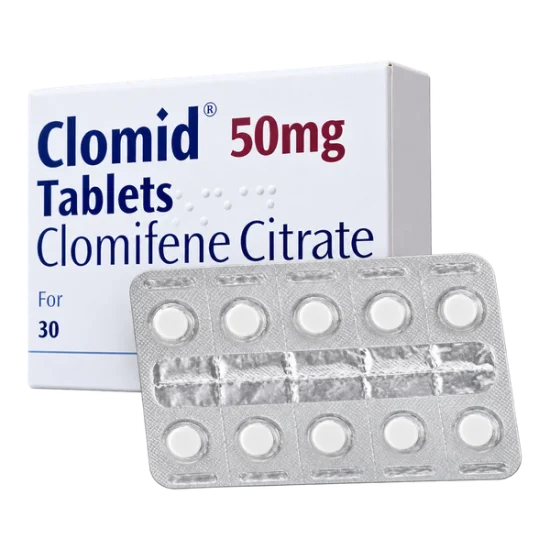
Clomifene citrate, the active ingredient in Clomid, is an oral selective oestrogen receptor modulator used to induce ovulation. Clomid is prescribed for women whose ovaries can respond but do not release eggs regularly. It stimulates pituitary hormones that support follicle development and egg release.
Product information
Clomid contains clomifene citrate, also called clomiphene citrate. It belongs to the selective oestrogen receptor modulator (SERM) class and is used as an oral fertility medicine for ovulatory dysfunction.
Directions for use
- Dose: The exact dose in mg for Clomid 50 mg tablets must be confirmed with a healthcare professional before starting.
- Frequency: Take the tablets at the frequency prescribed by the clinician; the number of times per day is not specified here.
- Timing: Follow the clinician’s instructions about when to take Clomid in relation to meals and time of day.
- Duration: Use Clomid for the duration prescribed by the clinician; the treatment duration is not specified here.
- Route: Take Clomid tablets by mouth.
- Do not change the regimen or correct a missed dose without professional guidance.
Ingredients
Clomid tablets contain clomifene citrate. The product is intended for clinician-directed fertility treatment, not unsupervised menstrual-cycle experimentation.
Active Ingredient Profile
Clomifene citrate contains two stereoisomers, zuclomifene and enclomifene. They do not behave identically in the body, and their differing persistence contributes to the duration of clomifene’s effects. The medicine acts at oestrogen receptors in the hypothalamus, pituitary gland, ovary, cervix, and endometrium.
The main therapeutic aim is stimulation of the body’s own FSH and LH release. Clomid does not directly supply FSH or LH, and it cannot restore ovarian activity when the ovaries are unable to respond. This distinction helps clinicians select appropriate monitoring and treatment plans. It also explains why evaluation of ovarian function is needed before prescribing.
How it affects the body
Clomifene temporarily reduces oestrogen feedback at the hypothalamus. The brain then perceives oestrogen activity as lower than it is and increases hypothalamic gonadotropin-releasing hormone (GnRH) signalling. This encourages the pituitary gland to release follicle-stimulating hormone (FSH) and luteinising hormone (LH). These hormones help an ovarian follicle mature and may trigger ovulation.
Therapeutic indications
Clomid is used mainly for anovulatory infertility, meaning infertility associated with absent or infrequent ovulation. It may be considered in women with polycystic ovary syndrome (PCOS), irregular ovulation, or selected cases of unexplained female infertility after other causes have been assessed.
The medicine is most suitable when:
- the ovaries contain follicles capable of developing;
- the pituitary gland can produce FSH and LH;
- pregnancy is not already present;
- the fallopian tubes and uterus have been assessed where clinically appropriate;
- a semen analysis has been considered when pregnancy has not occurred;
- the treatment plan includes monitoring for ovarian response.
Clomid does not treat every cause of infertility. It cannot correct blocked fallopian tubes, severe male-factor infertility, ovarian failure, or infertility caused by a condition that requires a different treatment pathway.
| Clinical situation | Place of clomifene treatment |
|---|---|
| Irregular or absent ovulation | May stimulate follicular development when ovarian reserve and endocrine function are adequate |
| PCOS-related ovulatory dysfunction | May be used in selected patients after assessment of metabolic and reproductive factors |
| Unexplained infertility | May be considered within a broader fertility plan, often with timed intercourse or intrauterine insemination |
The response differs between patients. Age, ovarian reserve, body weight, PCOS features, thyroid function, prolactin, sperm parameters, and tubal factors all influence the chance of pregnancy.
Role in Polycystic Ovary Syndrome Management
PCOS is a frequent cause of ovulatory dysfunction. Some women with PCOS develop several small follicles but do not consistently select one dominant follicle for ovulation. Clomifene can increase pituitary stimulation and encourage follicular selection.
Metformin works through a different pathway. It improves insulin sensitivity and may support metabolic management in PCOS, especially when insulin resistance is present. It does not replace ovulation monitoring or correct every reproductive problem. The choice between clomifene, metformin, other ovulation-induction approaches, or referral for specialist treatment depends on the clinical picture.
Medsafe information for clomifene-based treatment emphasises appropriate patient selection and monitoring because ovarian stimulation can produce excessive follicular activity [1].
Common mistakes
Several practical errors can reduce the usefulness of treatment or delay recognition of harm:
- starting tablets on the wrong cycle day;
- increasing the dose without a new clinical instruction;
- taking extra tablets after a missed dose;
- relying only on an app when ovulation is irregular;
- ignoring visual symptoms because they disappear after a short time;
- continuing treatment after the planned number of cycles;
- overlooking thyroid, prolactin, tubal, uterine, or sperm-factor investigations;
- assuming that a withdrawal bleed proves ovulation occurred;
- using ovulation-predictor kits without telling the clinician that PCOS may cause confusing LH results.
One frequently missed detail is that clomifene can affect cervical mucus and the endometrium in some patients. Ovulation may be documented, yet the conception environment may still be less favourable, which is one reason repeated cycles require review.
Reasons not to use it
Clomid is not suitable for you if any of the following applies:
- pregnancy is present or suspected;
- unexplained abnormal uterine bleeding has not been assessed;
- significant liver disease or a previous serious liver reaction to clomifene is present;
- an ovarian cyst exists outside the pattern expected with PCOS;
- uncontrolled thyroid or adrenal disease is affecting ovulation;
- primary ovarian failure or a very low ovarian reserve makes stimulation unlikely to work;
- an allergy to clomifene citrate or an excipient is known;
- a previous course caused serious visual symptoms that have not been medically reviewed.
Clomid also requires caution when there is a history of severe migraine with visual symptoms, liver disease, ovarian enlargement, endometriosis, fibroids, or a high risk of multiple pregnancy.
Before treatment begins, the clinician should review current medicines, fertility investigations, menstrual history, previous ovarian response, pregnancy status, liver history, and any visual disorder. The EMA’s clinical guidance for infertility treatment, together with NICE fertility guidance, supports careful evaluation of the cause of infertility before selecting an ovulation-induction medicine [3].
When this is not for you
Clomid is not for you if you are pregnant or may be pregnant, have unexplained bleeding, significant liver problems, an unsuitable ovarian cyst, uncontrolled thyroid or adrenal disease, or ovarian failure that makes stimulation unlikely to work. You should also tell your clinician about allergies, previous serious visual symptoms, severe migraine with visual symptoms, endometriosis, fibroids, or concerns about multiple pregnancy.
Unwanted effects
Common adverse effects include hot flushes, headache, breast discomfort, nausea, mood changes, pelvic discomfort, and ovarian enlargement. These effects relate to altered oestrogen signalling and ovarian stimulation. The FDA prescribing information also describes visual symptoms, ovarian enlargement, ovarian hyperstimulation, and the possibility of multiple pregnancy [2].
Some reactions need rapid medical assessment:
- blurred vision, flashing lights, spots, or persistent visual disturbance;
- severe pelvic or abdominal pain;
- marked abdominal swelling;
- sudden weight gain with shortness of breath;
- heavy vaginal bleeding;
- symptoms suggesting a blood clot, such as chest pain, coughing blood, or one-sided leg swelling;
- yellowing of the skin or eyes.
Visual symptoms deserve special attention because they may persist after treatment and can worsen with continued exposure. Stop taking further tablets and obtain urgent medical advice if new visual disturbance appears.
Prolonged or repeated treatment is restricted because clomifene can cause cumulative concerns involving the endometrium, ovarian enlargement, persistent ovarian cysts, and rare ovarian hyperstimulation. A patient who has completed several cycles without ovulation or pregnancy usually needs reassessment rather than automatic continuation.
The main advantages are oral administration, a familiar ovulation-induction mechanism, and usefulness in selected anovulatory conditions. The limitations include variable response, possible mood and visual effects, multiple-pregnancy risk, and reduced suitability when tubal, ovarian, uterine, or severe sperm-related factors are present.

Comparison
Clomid is an oral selective oestrogen receptor modulator that works by stimulating pituitary hormones involved in follicle development and egg release. This differs from fertility approaches that supply reproductive hormones directly rather than prompting the body’s own hormonal response.
What doctors say
In clinical practice, the first question is not simply whether a patient wants to ovulate. The clinician needs to establish why ovulation is absent and whether clomifene can address that mechanism.
Doctors usually set expectations around three points:
- ovulation may occur without pregnancy;
- pregnancy may not occur if tubal, uterine, sperm, or age-related factors are also present;
- repeated non-response should trigger reassessment rather than indefinite dose escalation.
A reproductive endocrinologist may use ultrasound to identify excessive follicular development and to reduce the risk of proceeding during a high-order multiple-follicle response. A general practitioner may coordinate initial testing and referral, while a fertility specialist manages complex PCOS, diminished ovarian reserve, repeated treatment failure, or ovarian complications.
Clomid does not guarantee conception. It is one part of a fertility plan.
What customers often ask
Is Clomid suitable for older adults?
Clomid is used in women who are still ovulating irregularly or not ovulating and whose ovaries may respond to stimulation. Chronological age alone does not determine suitability, but fertility declines with age because ovarian reserve and egg quality change. A clinician should assess ovarian reserve, pregnancy risks, uterine health, and other infertility factors before prescribing. WHO fertility guidance published in 2023 supports cause-based assessment rather than treating age as the only clinical variable [4].
Can the Clomid tablet be split, crushed, or chewed?
Clomid tablets should be swallowed as prescribed rather than crushed or chewed. Altering a tablet can make administration less reliable and may leave an incomplete dose. If swallowing is difficult, the prescribing clinician should decide whether another formulation or treatment plan is suitable. Medsafe guidance in 2025 continued to place administration instructions within the broader safe-use framework for prescription medicines.
How long does a Clomid course last, and is long-term use acceptable?
A typical course lasts five consecutive days within one menstrual cycle. The number of cycles depends on ovulation, pregnancy outcome, adverse effects, ultrasound findings, and the underlying cause of infertility. Long-term continuous use is not appropriate, and many treatment protocols limit clomifene to no more than six ovulatory cycles. The FDA prescribing information from 2012 identifies prolonged exposure and ovarian complications as reasons for careful treatment limits.
Which condition rules Clomid out completely?
Pregnancy rules Clomid out because the medicine is intended to induce ovulation before conception, not to treat an established pregnancy. Severe liver disease, unexplained uterine bleeding, an unsuitable ovarian cyst, and uncontrolled endocrine disease can also prevent treatment. The prescriber must establish the reason for infertility before selecting clomifene. EMA infertility guidance from 2022 supports excluding contraindicating conditions before ovarian stimulation begins.
Can Clomid be taken with food or on an empty stomach?
Clomid can generally be taken with food or on an empty stomach, provided it is taken consistently according to the prescribed regimen. Taking it after food may be more comfortable for someone who develops nausea, while food is not a substitute for correct cycle-day timing. Avoid changing the timing from one treatment day to another without a reason. Medsafe patient information reviewed in 2024 describes oral administration and reinforces the need to follow the prescribed schedule.
What should be discussed with a doctor before starting Clomid?
Discuss pregnancy status, abnormal bleeding, liver disease, ovarian cysts, visual problems, migraine history, thyroid or adrenal disorders, previous fertility treatments, and all current medicines. The clinician may also arrange semen analysis, tubal assessment, ovarian-reserve testing, thyroid testing, prolactin testing, or ultrasound. Tell the prescriber if multiple pregnancy would create a significant medical concern. WHO guidance from 2023 recommends evaluating both partners and the major causes of infertility rather than focusing only on ovulation.
Which symptoms mean stopping Clomid and seeking urgent medical help?
Stop further tablets and seek urgent medical assessment for flashing lights, blurred vision, spots, or other new visual symptoms. Severe pelvic pain, rapid abdominal swelling, sudden weight gain, breathlessness, chest pain, one-sided leg swelling, jaundice, or heavy bleeding also require prompt attention. These symptoms may indicate ovarian complications, a thromboembolic event, liver injury, or another condition needing immediate review. FDA safety information from 2012 identifies visual disturbances and serious ovarian reactions as warnings requiring clinical action.
Do you offer anonymous delivery?
Your order will be securely packed and shipped within 24 hours. This is exactly what your package will look like (images of an actual item sent). It has the size and look of a regular private letter (24x11x0.7 cm) and its contents cannot be seen.
How Buyers Rate Clomid
Based on 3 reviews
My cycle was monitored with blood tests and an ultrasound. I had pelvic heaviness near the expected ovulation date, which settled without treatment. The difficult part was the waiting, because ovulation happened but pregnancy did not occur in that cycle.
Masterton 6 Oct 2026I noticed flashing spots while reading after several days of tablets. I stopped further doses and contacted the clinic urgently. The symptoms improved, but the experience made me take the visual warning seriously.
Gisborne Several days 28 Oct 2026Sources
- Medsafe (2024). Data Sheet — Clomiphene citrate.
- U.S. Food and Drug Administration (2012). Clomid (clomiphene citrate) tablets prescribing information.
- European Medicines Agency (2022). Guideline on clinical investigation of medicinal products for the treatment of infertility in women.
- World Health Organization (2023). Guideline for the prevention, diagnosis and treatment of infertility in care and treatment settings.