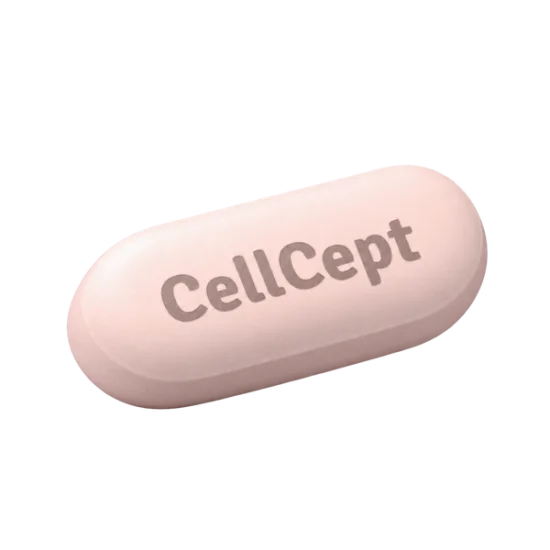
I used CellCept at my prescribed dose for several months as part of my transplant medicines. After the regimen settled, my follow-up results stayed reassuring and I felt able to return to my usual walks. The tablet routine fitted easily beside breakfast and evening medicines.
Blenheim Several months 21 Nov 2026CellCept
Mycophenolate mofetil, the active ingredient of CellCept, is an immunosuppressant used after solid-organ transplantation and in selected immune-mediated diseases. CellCept tablets reduce lymphocyte…
Mycophenolate mofetil, the active ingredient of CellCept, is an immunosuppressant used after solid-organ transplantation and in selected immune-mediated diseases. CellCept tablets reduce lymphocyte activity by limiting the formation of mycophenolic acid, helping protect a transplanted organ from rejection. The regimen must be confirmed with a healthcare professional before treatment begins.
Product information
Mycophenolate mofetil is the active ingredient in CellCept. CellCept belongs to the immunosuppressant class and reduces the activity of immune cells involved in transplant rejection and autoimmune inflammation.
Directions for use
The regimen for the selected strength must be confirmed with a healthcare professional before starting. CellCept tablets are taken by mouth at the prescribed intervals, with the schedule kept as regular as possible.
Practical administration points include:
- Swallow each tablet with water.
- Take it at the same times each day.
- Do not crush, chew, or split tablets unless a prescriber specifically authorises that method.
- Keep CellCept separate from antacids or mineral products when instructed, because absorption can be affected.
- If a dose is missed, follow the missed-dose plan supplied by the transplant or specialist team.
- Do not double the next dose unless the prescriber has explicitly instructed this.
- Do not stop treatment suddenly, since immune activity may increase.
Food instructions can vary according to the prescribed regimen. Taking doses in a consistent relationship to meals helps reduce changes in absorption. A sudden switch from taking CellCept with food to taking it on an empty stomach can alter exposure.
One practical detail is easy to miss: vomiting soon after a dose creates uncertainty about how much medicine was absorbed. Do not automatically repeat the dose. Contact the transplant or prescribing team for specific instructions.
Ingredients
CellCept contains mycophenolate mofetil, a prodrug that is converted in the body to mycophenolic acid. It belongs to the immunosuppressant class and reduces the activity of immune cells involved in transplant rejection and autoimmune inflammation.
Mycophenolic acid inhibits inosine monophosphate dehydrogenase, an enzyme required for purine production. T and B lymphocytes depend heavily on this pathway when they multiply. Limiting it reduces the production and expansion of these immune cells without directly destroying them.
The result is controlled suppression of the immune system. This action helps protect an organ transplant, though it also reduces resistance to infections and can affect blood-cell production.
Active ingredient and metabolic pathway
The pharmacological pathway is:
- Mycophenolate mofetil is absorbed after oral administration.
- The body converts it into mycophenolic acid.
- Mycophenolic acid inhibits inosine monophosphate dehydrogenase.
- T-lymphocyte and B-lymphocyte proliferation decreases.
- Immune activity against transplanted tissue is reduced.
CellCept is taken as tablets. The tablets should be swallowed as prescribed rather than crushed or chewed, because altering the dosage form can change how the medicine is delivered.
How it affects the body
Many immunosuppressants work by affecting several immune pathways. CellCept has a more defined biochemical target: the production of guanine nucleotides needed for lymphocyte multiplication.
This selectivity does not make immune suppression risk-free. T and B lymphocytes are highly dependent on the inhibited pathway, but other tissues can also be affected. This helps explain the combination of transplant protection, gastrointestinal symptoms, low blood-cell counts, and infection susceptibility.
The medicine does not provide immediate symptom relief in the way a pain reliever might. Its value comes from maintaining immune control across a continuing treatment period.
Therapeutic indications
CellCept is used mainly to prevent organ rejection after kidney, heart, or liver transplantation. It is generally part of a combination regimen that may include a calcineurin inhibitor and a corticosteroid. The exact combination depends on the transplanted organ, kidney and liver function, infection history, and other medicines.
The medicine may also be prescribed by specialists for selected immune-mediated conditions. Uses such as lupus nephritis, systemic lupus erythematosus, autoimmune hepatitis, and other inflammatory diseases depend on clinical judgement and local prescribing practice.
| Clinical setting | Therapeutic goal | Main monitoring focus |
|---|---|---|
| Solid-organ transplantation | Reduce the risk of organ rejection | Blood counts, kidney or liver function, infections |
| Lupus nephritis | Reduce immune-driven kidney inflammation | Urine findings, renal function, blood counts |
| Other specialist immune disorders | Control disease activity when immunosuppression is needed | Infection risk, blood counts, organ-specific tests |
In transplant medicine, CellCept helps protect a graft by reducing the immune response directed at donor tissue. It does not repair an already damaged organ and does not remove the need for regular transplant follow-up.
Systemic lupus erythematosus and lupus nephritis require careful disease assessment. A reduction in symptoms or protein in the urine does not mean that monitoring can stop. Autoimmune hepatitis also requires specialist supervision because the balance between immune control and liver safety can change over time.
The EMA product information describes mycophenolate mofetil as part of immunosuppressive treatment after organ transplantation, while Medsafe information supports close monitoring for blood disorders, infections, and pregnancy-related risks [1]. NICE guidance on immunosuppressive treatment also supports specialist review and laboratory monitoring.
Common mistakes
Several practical errors can reduce treatment reliability:
- Taking doses at irregular times because the person feels well.
- Doubling the next dose after a missed dose without instructions.
- Stopping CellCept during a mild illness without contacting the treatment team.
- Treating persistent diarrhoea with over-the-counter products while ignoring possible infection or altered absorption.
- Adding iron, antacids, or mineral supplements without reviewing the timing.
- Assuming that a different mycophenolate formulation can be substituted tablet-for-tablet.
- Forgetting to mention CellCept before receiving a vaccine or starting an antibiotic.
- Failing to report pregnancy promptly.
- Ignoring fever, mouth ulcers, unusual bruising, or new neurological symptoms.
A common misconception is that normal energy levels prove the transplant is protected. Laboratory monitoring and organ-specific tests provide information that symptoms alone cannot provide.
Reasons not to use it
CellCept is not suitable for people with a known allergy to mycophenolate mofetil, mycophenolic acid, or an excipient in the formulation. It is also unsuitable during pregnancy unless a specialist has determined that there is no safer clinically appropriate option.
- Pregnancy, plans for pregnancy, or breastfeeding.
- Previous miscarriage or pregnancy complications.
- A history of recurrent or serious infections.
- Low white-cell, red-cell, or platelet counts.
- Liver disease or kidney disease.
- Previous skin cancer or other malignancy.
- Active stomach or intestinal disease.
- A history of severe medication allergy.
- Current use of azathioprine, tacrolimus, cyclosporine, corticosteroids, antiviral medicines, antacids, or phosphate binders.
Live vaccines may be less effective or inappropriate during immunosuppressive therapy.
When this is not for you
NOT for you if you have such an allergy, are pregnant without specialist oversight, or cannot complete the required monitoring. Before treatment begins, the prescribing team should know about pregnancy or breastfeeding, recurrent infections, blood-count problems, liver or kidney disease, previous cancer, stomach or intestinal disease, severe medication allergy, and all current medicines. People who can become pregnant need specialist contraceptive advice before treatment and during the required period after stopping. Men may also receive specific reproductive counselling because mycophenolate can affect reproductive risk management.
Unwanted effects
CellCept can cause diarrhoea, nausea, vomiting, abdominal discomfort, headache, and fatigue. These effects may be most troublesome after treatment begins or after a regimen change. Persistent diarrhoea deserves attention because it can cause dehydration and may also change drug exposure.
The medicine can reduce production of blood cells. Reported problems include:
- Leukopenia, meaning a reduced white blood cell count.
- Anaemia, meaning a reduced red blood cell count.
- Thrombocytopenia, meaning a reduced platelet count.
- Neutropenia, which can increase vulnerability to bacterial infection.
Blood tests help detect these complications before they become severe. A fever, sore throat, mouth ulcers, unusual tiredness, easy bruising, nosebleeds, or prolonged bleeding should be reported promptly.
CellCept increases susceptibility to infections, including viral infections such as cytomegalovirus. Reactivation or new infection may present with fever, marked fatigue, diarrhoea, breathlessness, visual symptoms, or unexplained deterioration in organ function.
The FDA prescribing information warns about serious infections, blood dyscrasias, gastrointestinal complications, and malignancy risk associated with immunosuppression [2].
Skin protection also deserves attention. Long-term immunosuppression can increase the risk of certain skin cancers, so avoid deliberate tanning and report a changing, bleeding, or persistent skin lesion for medical assessment.

Comparison
CellCept is selected according to the transplant regimen or immune-mediated disease, not simply according to convenience. Different immunosuppressants act on different immune pathways and carry different monitoring requirements.
| Treatment approach | Main pharmacological role | Common clinical limitation |
|---|---|---|
| Mycophenolate mofetil | Inhibits lymphocyte purine synthesis | Diarrhoea, low blood counts, infection risk, pregnancy toxicity |
| Mycophenolate sodium | Delivers mycophenolic acid through an alternative formulation | Formulation changes require prescriber supervision |
| Azathioprine | Interferes with purine metabolism and immune-cell growth | Blood-count and liver monitoring; pharmacogenetic factors may matter |
A switch between mycophenolate mofetil and another mycophenolate formulation should be planned by the treating team. The active drug exposure, tablet design, and instructions may differ.
Azathioprine may be considered in some autoimmune or transplant settings, yet it has its own risks and monitoring requirements. A comparison based only on brand or tablet appearance is unreliable.
What doctors say
In clinical practice, transplant specialists focus on consistency rather than on how a patient feels on a particular day. Rejection can develop before obvious symptoms appear, while infection can resemble ordinary flu or stomach upset.
Doctors also treat diarrhoea as a medication-management issue, not merely an inconvenience. Persistent gastrointestinal symptoms may cause dehydration, reduce absorption, or signal infection.
For autoimmune disease, the decision to continue CellCept depends on disease activity, organ protection, laboratory findings, pregnancy considerations, and the risks of alternative treatment. The goal is the lowest immunosuppressive burden that maintains disease control.
A useful clinical question is whether every medicine on the list still has a role. Antacids, supplements, antibiotics, and antiviral medicines can alter CellCept exposure or add to blood-count problems.
What customers often ask
What should be discussed with a doctor before starting CellCept?
Pregnancy plans, breastfeeding, previous infections, blood disorders, liver or kidney disease, and current medicines should be discussed before treatment. The 2024 FDA prescribing information identifies pregnancy toxicity, serious infection, blood-count abnormalities, and malignancy risk as major safety considerations [3]. Antacids, iron products, phosphate binders, antivirals, cyclosporine, and corticosteroids also deserve a specific interaction review. These details help the prescriber establish the right monitoring plan.
How long does one CellCept dose keep working?
CellCept is designed for repeated dosing, so treatment depends on maintaining exposure over the prescribed schedule rather than relying on one isolated dose. Mycophenolic acid affects lymphocyte proliferation after the parent compound has been converted and cleared, which means the biological effect is not identical to the time the medicine remains in the bloodstream. The 2023 EMA product information describes mycophenolate mofetil as part of continuing immunosuppressive therapy after transplantation. A missed dose should be managed according to the individual plan rather than by taking extra tablets.
What should happen if the expected result does not come?
Do not increase the dose or stop CellCept independently if symptoms remain, laboratory results do not improve, or rejection is suspected. The specialist may assess adherence, absorption, interacting medicines, infection, disease activity, and organ function. The 2022 Medsafe safety information supports clinical review when adverse effects or treatment concerns arise [4]. Urgent assessment is needed for fever, breathlessness, reduced urine output, severe diarrhoea, unusual bleeding, or new neurological symptoms.
Can CellCept affect driving, concentration, or machinery work?
CellCept is not primarily a sedative, but dizziness, fatigue, headache, infection, anaemia, or gastrointestinal illness can impair concentration. The 2024 FDA label includes adverse reactions that may reduce a person’s ability to function normally during treatment . Avoid driving or operating machinery if these effects occur or if illness makes attention unreliable. A stable routine does not remove the need to respond to new symptoms.
Do diet, exercise, or habits help or hinder treatment?
Regular meals, adequate hydration, sensible activity, and infection-avoidance habits can support day-to-day treatment. Exercise should match transplant recovery, organ function, blood counts, and infection status rather than follow a fixed programme. Grapefruit is not the central interaction concern for CellCept, but antacids, iron, mineral products, and unplanned supplements may alter absorption or add toxicity. The 2023 EMA medicine information highlights the need to review interacting products and maintain consistent administration.
Can CellCept be taken with food or on an empty stomach?
CellCept should be taken in the relation to meals specified by the prescribing team, then kept consistent from day to day. Food can change exposure, so switching repeatedly between fed and fasting administration may make treatment less predictable. The 2022 Medsafe product information describes administration and interaction precautions for mycophenolate mofetil. If nausea or meal timing creates difficulty, the schedule should be reviewed rather than changed informally.
Do you offer anonymous delivery?
Your order will be securely packed and shipped within 24 hours. This is exactly what your package will look like (images of an actual item sent). It has the size and look of a regular private letter (24x11x0.7 cm) and its contents cannot be seen.
How Buyers Rate CellCept
Based on 5 reviews
I took CellCept at my prescribed dose for several months, but it did not suit me well. I had ongoing stomach upset and felt drained, so the transplant team reviewed the treatment and arranged further blood tests. I stopped only after they gave me a clear plan.
Masterton Several months 26 Oct 2026My specialist included CellCept at the prescribed dose after transplantation, and I took it for several months. It took time to get used to taking several medicines, but the routine became manageable and my appointments showed that the graft was being monitored closely.
Levin Several months 30 Oct 2026I took CellCept at my prescribed dose for several months and found the schedule straightforward once I used an alarm. I appreciated having one written list of medicines because it made appointments and repeat prescriptions less confusing.
New Plymouth Several months 14 Nov 2026I took CellCept at my prescribed dose for several months. It helped control my condition, but the benefit was slower than I expected and diarrhoea was difficult for a while. The team adjusted the wider regimen and explained which symptoms needed a prompt call.
Napier Several months 4 Nov 2026Sources
- European Medicines Agency (2023). CellCept: European public assessment report and product information for mycophenolate mofetil.
- U.S. Food and Drug Administration (2024). CellCept (mycophenolate mofetil) prescribing information.
- U.S. Food and Drug Administration (2024). CellCept medication guide and reproductive safety information.
- Medsafe (2022). Mycophenolate mofetil data sheet and consumer medicine information.