Skip to content
In stock Arjuna
Cardiovascular Health

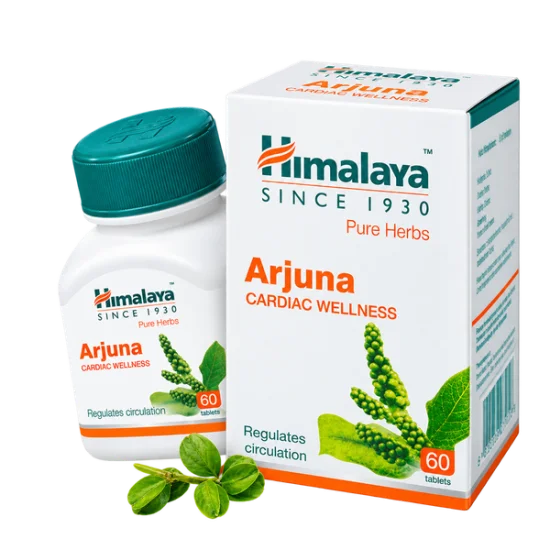
Arjuna

The product is presented as supporting circulation and heart function, while its effects may vary with health status and other medicines. It is intended as herbal wellness support and is not a…

Guaranteed quality Original product
Delivery: from 4 days Discreet shipping
24/7 Support Always available
Active ingredient: Arjuna
Select pack Package Per unit Price
$ 1.39 $ 250.58
Best value $ 0.79 $ 501.16 $ 286.11 Save 43%

Free delivery on orders from $ 374.00, free express delivery from $ 561.00

Secure payment methods:
VISA AMEX JCB DISCOVER

The product is presented as supporting circulation and heart function, while its effects may vary with health status and other medicines. It is intended as herbal wellness support and is not a replacement for prescribed cardiovascular treatment.

Product information

Arjuna is a traditional herbal tablet for adults seeking cardiovascular wellness support. It contains the Ayurvedic herb associated with Terminalia arjuna, a tree whose bark has long been used in Indian medicine.

Directions for use

The dose of Arjuna is decided individually, taking age, other medicines, and health conditions into account. Use is oral, with the tablet swallowed with water. A clinician or qualified herbal practitioner should determine whether the product fits alongside existing cardiovascular treatment.

Practical points include:

  • Take the tablet at the agreed time each day if a regular schedule has been recommended.
  • Swallow it with water rather than using alcohol or an untested herbal drink.
  • Do not crush, chew, or split the tablet unless the product has been designed for that use.
  • Do not compensate for a missed dose by taking extra tablets.
  • If a dose is missed, take the next planned dose unless an individual prescriber has given different instructions.
  • Do not change prescribed heart or blood-pressure treatment because Arjuna has been added.

Arjuna Bark prepared as a traditional decoction or milk-based infusion follows a different process from a tablet. Those methods should not be used to estimate the amount contained in a tablet.

Ingredients

Arjuna refers to the bark of Terminalia arjuna, a tree in the Combretaceae family native to the Indian subcontinent. In Ayurvedic practice, the bark is known as Arjun ki Chaal or Arjuna Bark and has been used in preparations associated with cardiovascular wellness.

The bark contains naturally occurring plant compounds, including tannins, flavonoids, triterpenoids, and minerals. The exact contribution of each compound depends on the plant material and preparation method. Traditional use does not establish that every preparation will produce the same physiological effect.

Botanical Characteristics of the Arjuna Tree

Terminalia arjuna is a large evergreen or semi-evergreen tree that commonly grows near riverbanks and other areas with moist soil. Its bark has a smooth grey outer surface and a lighter inner layer. Arjuna Bark is harvested, dried, and prepared for use in traditional herbal formulations.

WHO monographs describe traditional medicinal plants according to their historical use, preparation, and safety considerations rather than treating traditional use as proof of a specific clinical outcome [1].

How it affects the body

The plant constituents in Terminalia arjuna may contribute to antioxidant activity, vascular effects, lipid-related effects, and possible influence on cardiac muscle function. These effects may support normal circulation, vascular tone, and cardiovascular function, but the biological activity can vary according to the preparation and concentration of constituents.

Therapeutic indications

Arjuna has traditionally been used to support heart function, circulation, and cardiovascular resilience. Modern research has examined extracts of Terminalia arjuna for antioxidant activity, vascular effects, lipid-related markers, and possible influence on cardiac muscle function.

Possible areas of traditional and investigational interest include:

  • Supporting normal circulation.
  • Helping maintain cardiovascular wellness.
  • Providing plant antioxidants that help protect cells from oxidative stress.
  • Supporting normal vascular tone.
  • Contributing to general heart-health routines alongside diet, physical activity, sleep, and prescribed care.

A clinical review of Terminalia arjuna described traditional cardiovascular applications and early clinical research, while also identifying the need for better-designed human studies before firm therapeutic conclusions can be made [2].

Standardised extracts and crude bark preparations are not interchangeable. A concentrated extract may contain a different quantity and balance of plant constituents than powdered bark. This difference affects how evidence from one preparation should be applied to another.

Do not use Arjuna to delay urgent assessment for chest pressure, fainting, severe breathlessness, sudden palpitations, or pain spreading to the arm, jaw, or back.

Common mistakes

Several habits can reduce the usefulness of Arjuna or increase risk:

  • Treating a traditional herb as a replacement for prescribed cardiovascular treatment.
  • Starting Arjuna at the same time as several other supplements.
  • Forgetting to mention herbal products during a medicine review.
  • Assuming that a tablet made from bark has the same strength as a standardised extract used in research.
  • Taking extra tablets after a missed dose.
  • Continuing use despite faintness, palpitations, swelling, or an allergic rash.
  • Using the product before surgery without telling the surgical team.
  • Measuring success only by how the person feels while ignoring blood pressure or other monitoring advised for an existing condition.

One practical detail is easy to miss: symptoms can appear several hours after a tablet, so the timing of dizziness or nausea should be recorded rather than dismissed as unrelated.

Reasons not to use it

  • Known allergy to Terminalia arjuna or another ingredient in the tablets.
  • Pregnancy or breastfeeding, because adequate safety information is not established.
  • A diagnosed heart rhythm disorder without medical oversight.
  • Low blood pressure or repeated fainting.
  • Significant kidney or liver disease.
  • Planned surgery, especially when medicines affecting bleeding or blood pressure are used.
  • Use of prescription treatment for heart failure, angina, hypertension, arrhythmia, diabetes, or blood clot prevention without checking for interactions.

Potential interaction categories include:

  • Blood-pressure medicines: Combined effects may produce excessive lowering of blood pressure or dizziness.
  • Heart medicines: Arjuna may complicate treatment when cardiac rhythm, contraction, or conduction is already being managed.
  • Anticoagulants and antiplatelet medicines: The combination may increase concern about bruising or bleeding.
  • Diabetes medicines: Blood-glucose effects may overlap.
  • Diuretics: Changes in blood pressure, hydration, or electrolytes may become harder to interpret.
  • Sedating medicines: Dizziness can become more troublesome when several agents impair alertness.

Medsafe advises that complementary and traditional products should be disclosed when medicines are being prescribed or reviewed. This is especially relevant for people using treatment for cardiovascular disease.

When this is not for you

Arjuna is not suitable for everyone. Arjuna is not for you if you have an ingredient allergy, are pregnant or breastfeeding, have low blood pressure or repeated fainting, or use cardiovascular medicines without clinician review. It should be avoided or used only after specific medical assessment in the following situations:

Unwanted effects

Arjuna is a plant-based product, but “herbal” does not mean free from adverse effects. Possible problems include nausea, abdominal discomfort, loose stools, constipation, headache, dizziness, or an allergic reaction.

People with sensitive digestion may notice symptoms after starting a new herbal tablet. Taking the product with water and avoiding several new supplements at the same time can make it easier to identify the cause of a reaction.

Stop using the product and seek prompt medical assessment for facial swelling, wheezing, widespread rash, fainting, severe dizziness, new chest symptoms, or a sustained change in heartbeat. These symptoms can indicate allergy or a cardiovascular problem rather than a minor intolerance.

Arjuna may affect blood pressure or cardiac function in ways that are difficult to predict without monitoring. A person taking several medicines may notice the problem as light-headedness when standing, unusual fatigue, or a slower-than-usual pulse.

If you develop dizziness after starting Arjuna, sit down before standing again and record your symptoms, timing, and other medicines. Do not drive while feeling faint or unsteady.

Comparison

Arjuna belongs to the herbal-support category. Prescribed cardiovascular medicines, as reflected in guidance from the FDA and NICE, work through defined pharmacological targets and have established monitoring requirements. Lifestyle measures affect several cardiovascular risk factors but do not replace treatment when a diagnosed condition requires medicine.

Approach Main role Main limitation
Arjuna herbal tablets Traditional cardiovascular wellness support Clinical evidence is limited and preparation strength can vary
Prescribed cardiovascular medicine Treatment of diagnosed heart, blood-pressure, rhythm, or lipid conditions May require monitoring and can cause medicine-specific adverse effects
Lifestyle measures Supports blood pressure, fitness, weight, sleep, and metabolic health Benefits develop gradually and may not control established disease alone

A person with diagnosed hypertension, coronary disease, heart failure, or an abnormal heart rhythm should not use Arjuna as a substitute for prescribed treatment. Arjuna may also be unsuitable when its effects overlap with existing therapy.

What doctors say

In clinical practice, doctors generally separate two questions: whether a person wants general cardiovascular support, and whether a diagnosed disease needs targeted treatment. Arjuna may be discussed as a complementary product, but it does not provide the same evidence, dose precision, or monitoring framework as a prescribed cardiovascular medicine.

A physician would also consider blood pressure, pulse, kidney function, liver function, symptoms, pregnancy status, and the complete medicine list before advising use. A person with chest pain or unexplained breathlessness needs clinical assessment rather than a trial of a supplement.

The practical advantage of tablets is routine use. The limitation is that convenience can create false confidence; a tablet may be easy to swallow while its interaction profile remains relevant.

What customers often ask

Which condition rules out Arjuna?

A known allergy to Terminalia arjuna or another tablet ingredient rules out use. Pregnancy, breastfeeding, fainting, low blood pressure, and diagnosed heart-rhythm problems also require caution because safety and interaction information may be limited. Medsafe guidance published in 2023 on complementary medicines supports disclosing these products when treatment is being reviewed. A person with chest pain, severe breathlessness, or fainting needs urgent medical assessment rather than self-treatment. A clinician can also review whether another cause requires treatment.

How soon might an effect from Arjuna become noticeable?

There is no reliably established onset time for cardiovascular benefits from Arjuna tablets. Traditional use and small clinical studies do not provide a dependable timetable that applies to every preparation or person. A 2024 review of herbal cardiovascular research in PubMed described variation in extracts, doses, and study quality. Changes in blood pressure or symptoms should be assessed with appropriate clinical monitoring rather than judged by a single day of use.

How long does one Arjuna tablet keep working?

The duration of action of one tablet has not been established as a standard clinical measure for this herbal product. Plant constituents may be absorbed and eliminated at different rates, while the tablet’s preparation affects exposure. The EMA's 2022 guidance evaluates herbal medicines according to the evidence available for each substance and preparation, so findings from one Terminalia arjuna extract should not automatically be applied to every tablet. Do not take an additional tablet simply because an immediate effect is not felt.

Can an Arjuna tablet be split, crushed, or chewed?

Do not split, crush, or chew the tablet unless a qualified healthcare professional has confirmed that this is appropriate for the specific product. Altering a tablet can change how it dissolves and may make swallowing more difficult if fragments are inhaled. The WHO's 1999 monograph advises careful attention to preparation and administration when using medicinal plants. Swallowing the tablet with water is the practical default.

What should I do if the expected result does not come?

Do not increase the dose or combine Arjuna with another cardiovascular supplement without reviewing the plan. Record what you expected, how long you used the tablets, any symptoms, and every medicine or supplement taken at the same time. The 2023 WHO approach to traditional medicines emphasises appropriate evaluation of benefit, safety, and preparation quality. If the product was intended to address a diagnosed condition, arrange a clinical review instead of delaying established treatment.

Do you offer anonymous delivery?

Your order will be securely packed and shipped within 24 hours. This is exactly what your package will look like (images of an actual item sent). It has the size and look of a regular private letter (24x11x0.7 cm) and its contents cannot be seen.

How Buyers Rate Arjuna

Based on 5 reviews

Ben, 52 Verified
Rating: 3.5 out of 5

I used the tablets for about a month as part of a wider routine with walking and lower-salt meals. I did not notice a dramatic change, but I tolerated them well and found the tablet format easier than preparing bark tea.

New Plymouth About a month 4 Nov 2026
James, 57 Verified
Rating: 2.5 out of 5

After roughly two weeks I felt light-headed in the mornings. I was already taking blood-pressure medicine, so I stopped the herbal tablet and arranged a medication review. The symptom settled, but the experience reminded me that natural products can still overlap with treatment.

Te Awamutu Roughly two weeks 6 Oct 2026
Neil, 49 Verified
Rating: 3 out of 5

I took Arjuna for several weeks and had no stomach problems. My main disappointment was that I expected a noticeable change in energy and did not get one. I kept using the tablets only after discussing the plan with my clinician.

Whangārei Several weeks 14 Oct 2026
Jack, 49 Verified
Rating: 3 out of 5

The tablets were convenient because I did not need to prepare a drink. I missed doses during a busy work period, so I cannot say how consistent the trial really was. I did not change my prescribed medicines.

Lower Hutt 27 Oct 2026
Paul, 28 Verified
Rating: 2 out of 5

I tried the product briefly and stopped after mild nausea. It may have been the tablet, food, or another supplement I was taking, so I did not restart everything at once. I would use a clearer medicine list next time.

Whanganui Briefly 12 Oct 2026

Sources

  1. World Health Organization (1999). WHO Monographs on Selected Medicinal Plants, Volume 1.
  2. Indian Heart Journal (2002). Efficacy of Terminalia arjuna in chronic stable angina: a double-blind, randomized, placebo-controlled trial.
Get our free app Shop faster and track your orders Install