My nose opened quickly and I slept better during a cold. I stopped after the second night because I have high blood pressure and did not want to keep using it.
Palmerston North Two nights 4 Nov 2026Afrin
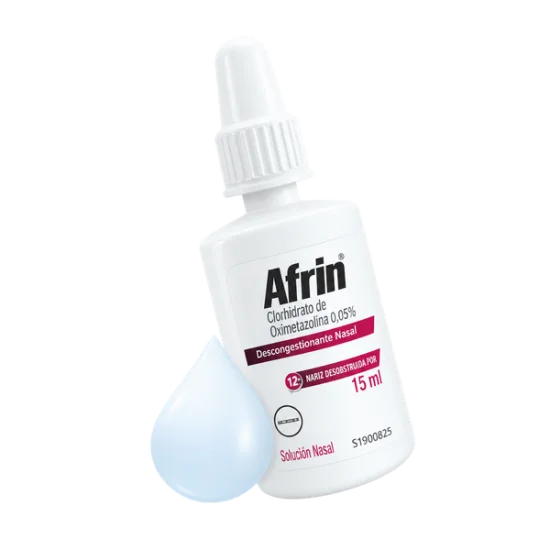
Afrin’s oxymetazoline hydrochloride narrows swollen blood vessels inside the nose, helping restore airflow within minutes. It is intended for short-term relief of nasal congestion linked with colds…
Afrin’s oxymetazoline hydrochloride narrows swollen blood vessels inside the nose, helping restore airflow within minutes. It is intended for short-term relief of nasal congestion linked with colds, sinusitis, or allergic rhinitis.
Product information
Afrin is a topical nasal decongestant containing oxymetazoline hydrochloride. The active ingredient reduces swelling in the nasal mucosa, making it easier to breathe when blocked nasal passages accompany an upper-respiratory illness or allergy.
Directions for use
Afrin is administered as a nasal spray from a bottle. Dosing differs between strengths and between users, so there is no single amount that suits everyone. The permitted dose, frequency, and age range must match the specific Afrin formulation and its regulatory directions.
Use the spray as follows:
- Clear the nose gently before application.
- Keep the head upright rather than tilting it far backwards.
- Apply the prescribed or authorised amount into each affected nostril.
- Breathe in gently during application instead of taking a forceful sniff.
- Wipe the nozzle after use and keep the bottle closed between applications.
- Do not share the device with another person.
Afrin should be used for no more than three consecutive days unless a clinician gives a different, specific plan. Longer use can produce rhinitis medicamentosa, also called rebound congestion. In this condition, the nasal tissues swell again when the medicine wears off, encouraging repeated use and creating a cycle of worsening blockage.
If an application is missed, do not compensate by using extra sprays. Resume the next permitted application according to the authorised dosing schedule. Do not combine separate oxymetazoline products unless a prescriber or pharmacist has specifically confirmed that the total exposure is appropriate.
Ingredients
Afrin contains oxymetazoline hydrochloride, a topical nasal decongestant. The active ingredient narrows swollen blood vessels in the nasal mucosa, helping reduce congestion and restore airflow. The spray is intended for short-term use according to the applicable product directions.
How it affects the body
Oxymetazoline hydrochloride stimulates alpha-adrenergic receptors in blood vessels within the nasal mucosa. These receptors respond by causing vasoconstriction, meaning the small blood vessels become narrower. Less blood reaches the swollen nasal tissue, so oedema decreases and the nasal airway becomes more open.
- Oxymetazoline reaches the nasal mucosa.
- It stimulates alpha-adrenergic receptors.
- Local blood vessels constrict.
- Tissue swelling decreases.
- Air moves more freely through the nose.
Afrin differs from saline nasal spray because saline moisturises and mechanically clears mucus without constricting blood vessels. It also differs from oral decongestants, which act throughout the body and may produce more systemic effects. The local route can limit systemic exposure, yet some absorption remains possible, especially when the spray is used too frequently or in excessive amounts.
Clinical pharmacology references describe oxymetazoline as an alpha-adrenergic agonist with prolonged local activity compared with some older topical decongestants. The European Medicines Agency uses the same pharmacological principle when describing sympathomimetic nasal products: vascular constriction reduces mucosal swelling, while excessive duration of use raises the risk of medication-induced congestion [2].
Therapeutic indications
Afrin is intended for temporary symptom control rather than treatment of the underlying infection or allergy. It may help adults and children within the age range permitted by the product’s regulatory directions when congestion is caused by:
- A common cold
- Acute sinusitis symptoms
- Allergic rhinitis
- Swollen nasal passages after exposure to an irritant
The spray is applied into the nose, where oxymetazoline hydrochloride acts on local blood vessels. Its benefit is usually felt quickly, while its main limitation is the strict need for short-duration use.
Primary Clinical Indications
Nasal congestion occurs when blood vessels and tissues inside the nose become swollen. Colds can trigger this response through inflammation and mucus production. Allergic rhinitis produces congestion through exposure to allergens such as pollen, dust mites, or animal dander. Sinusitis can add pressure, thick mucus, and difficulty breathing through the nose.
Afrin may reduce the blocked sensation associated with these conditions. It does not remove viral infection, eliminate an allergen, or replace treatment for severe bacterial sinus disease. Medsafe safety information for topical sympathomimetics supports careful, limited use because repeated application may worsen congestion after the initial benefit fades [1].
Common mistakes
Several everyday habits reduce benefit or increase risk:
- Continuing Afrin after the three-day limit because congestion returns.
- Using it more frequently than authorised when one application seems insufficient.
- Spraying directly onto the nasal septum.
- Sniffing hard enough to send the medicine into the throat.
- Sharing the bottle during a family cold.
- Using Afrin alongside another oxymetazoline or decongestant product.
- Treating every blocked nose as a reason for decongestant use.
- Forgetting that oral pseudoephedrine or phenylephrine may add systemic sympathomimetic effects.
- Increasing use at night without counting daytime applications.
- Continuing the spray when the nose is bleeding or severely irritated.
A common misconception is that a medicine applied in the nose cannot influence blood pressure or heart rate. Local delivery reduces exposure compared with many oral products, but it does not make systemic effects impossible.
Another mistake is stopping a saline rinse or other supportive measure because Afrin gives faster relief. Saline can help loosen mucus and reduce dryness, while oxymetazoline addresses vascular swelling. They serve different purposes.
Reasons not to use it
- Uncontrolled hypertension
- Severe cardiovascular disease
- A history of troublesome palpitations or certain rhythm disorders
- Hyperthyroidism
- Narrow-angle glaucoma
- Significant prostate-related difficulty passing urine
- Known sensitivity to oxymetazoline or another ingredient
- Recent nasal surgery, injury, or severe nasal bleeding
Monoamine oxidase inhibitors can increase concern about sympathomimetic effects. This includes current use and, depending on the medicine, the period after stopping treatment. Other medicines for depression, attention disorders, blood pressure, or heart rhythm may also require review before use.
Avoid combining Afrin with another topical nasal decongestant. Using two products from the same pharmacological group can increase irritation and raise total sympathomimetic exposure without providing a reliable extra benefit.
When this is not for you
Afrin is not suitable for everyone. It is NOT for you if you have uncontrolled hypertension, severe cardiovascular disease, or another listed contraindication without specific medical direction. Do not use it without specific medical direction if you have any of the following:
- Uncontrolled hypertension
- Severe cardiovascular disease
- A history of troublesome palpitations or certain rhythm disorders
- Hyperthyroidism
- Narrow-angle glaucoma
- Significant prostate-related difficulty passing urine
- Known sensitivity to oxymetazoline or another ingredient
- Recent nasal surgery, injury, or severe nasal bleeding
People with hypertension or cardiovascular disease may be more vulnerable to the effects of alpha-adrenergic stimulation. Even limited systemic absorption can matter in someone whose blood pressure or heart rhythm is unstable.
Pregnancy and breastfeeding require individual assessment. The low systemic exposure expected from correct topical use does not remove the need to consider the person’s blood pressure, treatment duration, and alternatives. Children need age-appropriate directions, and a child under six should not receive this product unless a clinician specifically directs it.
Unwanted effects
Most unwanted effects from oxymetazoline hydrochloride affect the nose. Possible reactions include temporary burning, stinging, dryness, sneezing, increased discharge, and irritation of the nasal lining. A small nosebleed may occur if the spray repeatedly contacts the nasal septum or if the nasal tissue is already dry.
Systemic absorption is usually limited with correct topical use, but it is not impossible. Sensitive people may experience headache, nervousness, tremor, palpitations, raised blood pressure, or difficulty sleeping. These effects deserve prompt attention if they are marked, persistent, or accompanied by chest discomfort or severe dizziness.
The most distinctive problem is rhinitis medicamentosa. Congestion may return or intensify after several days of continuous use. This can happen even when the original cold or allergy is improving. Increasing the number of applications does not solve the cause; it can deepen the rebound response.
Afrin can also make an already dry nose feel raw. A saline spray or humidified air may provide supportive comfort, provided it does not replace the required limit on oxymetazoline use. Avoid directing the nozzle at irritated tissue.
One practical detail is often missed: taste can travel into the throat if the spray is sniffed forcefully. Gentle inhalation is enough. Strong sniffing does not make the medicine work better and may increase throat irritation.

Comparison
Afrin provides local oxymetazoline, while other approaches work through different routes or mechanisms. The choice depends on how quickly relief is needed, whether congestion is caused by allergy or infection, and whether cardiovascular stimulation is a concern.
| Approach | Main practical feature | Main limitation |
|---|---|---|
| Oxymetazoline nasal spray | Local relief that usually begins within minutes and may last for several hours | Rebound congestion with prolonged use; possible local irritation |
| Phenylephrine or pseudoephedrine | Oral or topical decongestant action that may reduce nasal swelling | Greater potential for systemic effects such as palpitations, blood-pressure changes, or insomnia |
| Saline nasal spray or rinse | Moisturises tissue and helps loosen mucus without vasoconstriction | Relief may be gentler and less immediate when swelling is severe |
Phenylephrine and pseudoephedrine are not interchangeable with oxymetazoline. Pseudoephedrine can affect sleep, heart rate, and blood pressure because it circulates systemically. Oral phenylephrine also has systemic exposure, while topical phenylephrine shares the rebound-congestion concern associated with topical sympathomimetics.
Saline nasal spray is useful when dryness, thick mucus, or frequent cleansing is the main issue. It does not create the same vasoconstrictor effect, so it can be suitable for repeated supportive care. It may be used alongside a short course of a decongestant when the combination fits the person’s clinical situation.
Afrin’s advantage is speed and targeted action. Its trade-off is the limited treatment window. Saline has a gentler profile but may not open severely swollen nasal passages as rapidly.
What doctors say
In clinical practice, doctors usually view oxymetazoline as a short-term bridge: it opens the nose while a cold settles or while another treatment begins to control allergic inflammation. The spray can be useful at night when congestion disrupts sleep, but the three-day limit remains central.
A clinician will usually ask whether the blocked nose is new, recurrent, one-sided, associated with fever, or accompanied by facial pain. Persistent unilateral blockage, repeated nosebleeds, wheezing, severe facial swelling, or symptoms that keep returning need assessment rather than repeated decongestant use.
The World Health Organization describes nasal decongestants within the wider group of medicines requiring appropriate dosing and duration, especially when sympathomimetic effects are possible. The clinical aim is symptom relief with the smallest exposure that achieves a useful result [3].
Doctors also pay attention to the reason for congestion. Allergic rhinitis may need allergen control, an intranasal anti-inflammatory treatment, or another long-term approach. Sinusitis may require assessment of pain, fever, discharge, and symptom duration. Afrin can improve airflow while those decisions are made, but it does not treat every cause of a blocked nose.
What customers often ask
What condition rules out Afrin?
Uncontrolled hypertension is a condition that can rule out unsupervised Afrin use. Oxymetazoline stimulates alpha-adrenergic receptors, and systemic absorption may raise blood pressure or affect heart rate in susceptible people. Medsafe guidance published before 2026 supports caution with sympathomimetic decongestants in people with cardiovascular risk. A clinician should select another approach when blood pressure is unstable or severe heart disease is present.
Can Afrin be used during pregnancy or breastfeeding?
Pregnancy and breastfeeding require an individual risk assessment rather than automatic routine use. The EMA describes the need to consider systemic sympathomimetic exposure, treatment duration, and the mother’s cardiovascular history when these products are considered. Clinical advice available through 2025 supports using the shortest appropriate course when a topical decongestant is judged suitable. Do not extend treatment beyond the authorised short period.
Can Afrin affect driving, concentration, or work with machinery?
Afrin is not generally expected to impair driving when used correctly, though headache, dizziness, nervousness, blurred vision, or palpitations can occur. FDA drug-safety information reviewed through 2025 advises caution with any medicine that produces dizziness or visual symptoms before driving or operating machinery. The first application should not be followed by hazardous work if you feel light-headed or unusually stimulated. Avoid combining it with other medicines that make you drowsy or impair alertness.
What should be discussed with a doctor before starting Afrin?
Discuss high blood pressure, cardiovascular disease, hyperthyroidism, glaucoma, prostate symptoms, recent nasal surgery, pregnancy, breastfeeding, and medicines for depression or heart conditions. The American Academy of Family Physicians’ guidance available through 2025 emphasises medication review for decongestants because sympathomimetic effects can be clinically relevant in selected patients. Mention any other nasal spray or oral decongestant you use. The duration of congestion also matters, especially when symptoms are severe, one-sided, or repeatedly recurring.
How should the Afrin device be cleaned and handled?
Keep the nozzle clean and dry, wipe it after use, and close the bottle between applications. Do not rinse the device with shared household water or allow the nozzle to touch the inside of the nostril. The New Zealand Medicines and Medical Devices Safety Authority’s 2024 guidance advises hygienic handling of multidose nasal products to reduce contamination risk. Never share the bottle, even with someone experiencing similar cold symptoms.
Is Afrin suitable for older adults?
Older adults may use a topical decongestant only when their cardiovascular health, blood pressure, eye health, and current medicines have been considered. NICE guidance available through 2025 supports careful review of medicines that can worsen hypertension, urinary difficulty, glaucoma, or sleep disturbance. Age alone does not decide suitability, but several conditions become more common with age. A short course may be considered when the person has no relevant contraindication and uses the authorised directions.
Do you offer anonymous delivery?
Your order will be securely packed and shipped within 24 hours. This is exactly what your package will look like (images of an actual item sent). It has the size and look of a regular private letter (24x11x0.7 cm) and its contents cannot be seen.
How Buyers Rate Afrin
Based on 3 reviews
The first day was helpful, especially before bed. I kept reaching for it on day four because the blockage came back, and that made things worse. Once I stopped, the congestion settled gradually.
Lower Hutt Four days 6 Oct 2026It worked within a few minutes and made breathing easier at work. The nose felt dry afterward, so I used saline for comfort and kept Afrin to a short course.
Hamilton Three days 21 Oct 2026Sources
- Medsafe (2024). Data Sheet and Consumer Medicine Information — oxymetazoline hydrochloride nasal spray
- European Medicines Agency (2023). Summary of Product Characteristics (SmPC) — oxymetazoline hydrochloride
- World Health Organization (2008). WHO Model Formulary, 2nd edition