Skip to content
In stock Actonel
Osteoporosis

Actonel

Actonel supports long-term bone protection for adults with osteoporosis or increased risk of bone loss. Its action reduces excessive bone breakdown and helps lower the risk of fractures over time.

Guaranteed quality Original product
Delivery: from 4 days Discreet shipping
24/7 Support Always available
Active ingredient: Risedronate
Select pack Package Per unit Price
Free Regular Delivery $ 13.27 $ 424.49
Free Regular Delivery $ 13.09 $ 477.56 $ 471.24 Save 1%
Best value Free Regular Delivery $ 13.04 $ 530.61 $ 521.73 Save 2%

Free delivery on orders from $ 374.00, free express delivery from $ 561.00

Secure payment methods:
VISA AMEX JCB DISCOVER

Actonel supports long-term bone protection for adults with osteoporosis or increased risk of bone loss. Its action reduces excessive bone breakdown and helps lower the risk of fractures over time.

Product information

Actonel is used to treat osteoporosis, a condition that weakens bone and raises fracture risk. It contains risedronate sodium, a bisphosphonate that slows osteoclast-driven bone breakdown. Treatment is intended for adults whose bone protection plan has been agreed with a prescriber.

Directions for use

How much Actonel to use and how often depends on the purpose of treatment and is agreed with a doctor or pharmacist. The prescribed schedule should not be changed between daily and weekly use without professional direction.

For oral administration:

  • Take the tablet with plain water while upright.
  • Swallow it whole rather than chewing, sucking, or crushing it.
  • Take it before the first food, drink, or medicine of the day when that schedule has been prescribed.
  • Remain upright after taking it.
  • Keep calcium, iron, magnesium, aluminium, antacids, and mineral supplements separate because they can reduce risedronate absorption.
  • If a dose is missed, follow the instructions for the specific daily or weekly schedule rather than taking extra tablets.

The tablet should not be taken with tea, coffee, juice, milk, mineral water, or another beverage. Plain water gives the medicine the best opportunity to reach the absorption site before food and minerals interfere.

A practical routine is to keep the tablet beside a glass of plain water, take it before breakfast, and delay breakfast and supplements for the interval specified by the prescriber.

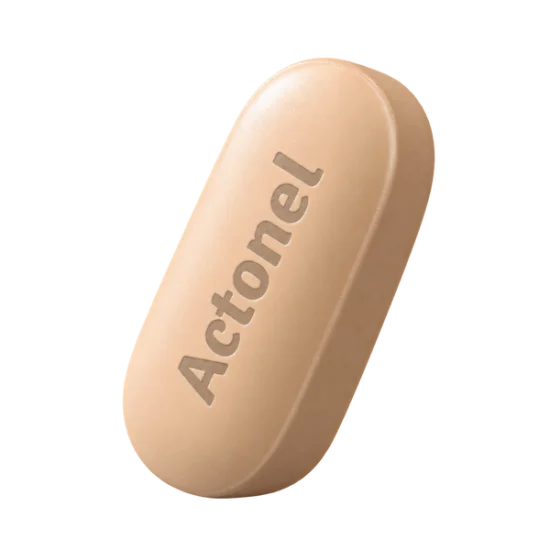
Generic risedronate products contain the same active substance as Actonel when they are approved for the same use and strength. They may differ in tablet appearance, excipients, and naming, while the pharmacological effect is based on risedronate sodium.

Ingredients

Active ingredient and tablet formulation

The daily and weekly schedules are not interchangeable. A weekly tablet must be taken on the designated day, while a daily schedule requires a regular daily routine. The prescription determines which schedule applies.

Choose a fixed weekday for a weekly regimen and record it in your phone calendar. Accidentally taking a weekly tablet on several consecutive days can increase irritation of the oesophagus.

Actonel is prescribed to reduce fracture risk rather than to provide immediate pain relief. Bone density changes gradually, so treatment decisions usually consider fracture history, bone mineral density, age, and other risk factors.

How it affects the body

Risedronate has a high affinity for hydroxyapatite, the calcium-phosphate mineral that gives bone much of its hardness. After reaching bone surfaces undergoing resorption, the drug becomes concentrated where osteoclasts are active.

Osteoclasts take up risedronate during bone breakdown. Risedronate then interferes with enzymes in the mevalonate pathway, a biochemical pathway needed for the formation and function of several proteins inside the osteoclast. This reduces osteoclast activity and promotes loss of these cells through programmed cell death.

The result is slower bone resorption. Bone formation by osteoblasts can continue, allowing bone mineral density to stabilise or rise over time. The balance is gradual; Actonel does not rebuild severely weakened bone within days.

Therapeutic indications

Actonel belongs to the bisphosphonate class. Its active substance is risedronate sodium, which reduces bone resorption by osteoclasts. Osteoclasts are specialised cells that remove old bone during normal bone remodelling; excessive activity can reduce bone density and increase fragility.

Risedronate is used in osteoporosis affecting postmenopausal women and men. It can also be prescribed when prolonged glucocorticoid treatment increases the risk of bone loss. The Medsafe-approved prescribing information determines which indications, strengths, and schedules apply to a specific presentation [1].

Clinical trials and regulatory reviews support risedronate use for reducing vertebral and non-vertebral fracture risk in suitable patients with osteoporosis [2]. The benefit depends on regular administration, adequate calcium and vitamin D status, and correction of factors that worsen bone loss.

Do not judge the treatment by pain levels. Osteoporosis often causes no symptoms until a fracture occurs, so follow-up usually relies on fracture history, clinical review, and bone-density assessment rather than day-to-day sensations.

Common mistakes

Several practical errors can reduce the benefit or increase irritation:

  • taking the tablet with coffee, juice, milk, or mineral water;
  • taking calcium or iron at the same time;
  • lying down immediately after swallowing it;
  • chewing or crushing the tablet;
  • treating a weekly schedule as a daily schedule;
  • doubling the next dose after a missed tablet;
  • stopping treatment after a normal-feeling week;
  • failing to report new thigh, groin, swallowing, or jaw symptoms;
  • forgetting to mention risedronate before dental surgery.

One missed dose does not usually justify taking two tablets together. The correct response depends on whether the regimen is daily or weekly.

Another common mistake is confusing osteoporosis treatment with pain treatment. Risedronate reduces bone resorption and fracture risk; it is not designed to act as a conventional analgesic.

Reasons not to use it

Actonel should not be taken in the presence of:

  • uncorrected hypocalcaemia;
  • a known allergy to risedronate or another ingredient;
  • inability to remain upright for the required period;
  • structural or functional oesophageal problems that delay passage of a tablet.

Low calcium must be corrected before treatment begins. Vitamin D deficiency, reduced dietary calcium, kidney disease, and malabsorption can contribute to low calcium and may change the treatment plan.

Calcium supplements, antacids, iron, magnesium, and aluminium can bind risedronate in the gastrointestinal tract. They should be taken at a separate time from Actonel. Other oral medicines may also require separation, so the complete medicines list should be reviewed before the first dose.

When this is not for you

Actonel is NOT for you if you have uncorrected low calcium, cannot remain upright, or have an oesophageal problem that delays tablet passage. It should not be used when a known contraindication makes oral risedronate unsafe.

Tell the prescriber about kidney disease, swallowing difficulty, reflux, previous oesophageal ulceration, dental surgery, and planned invasive dental treatment. Pregnancy and breastfeeding require a separate risk assessment because bisphosphonates remain associated with bone tissue for extended periods.

Keep calcium and iron supplements in a different part of your morning routine. Taking them alongside risedronate can leave less active medicine available for absorption.

Unwanted effects

Digestive symptoms are among the more common problems with oral risedronate. These can include indigestion, abdominal discomfort, nausea, diarrhoea, constipation, and irritation of the upper digestive tract. Muscle, bone, or joint pain may also occur.

Correct administration reduces avoidable irritation. Taking the tablet with plain water, swallowing it whole, and remaining upright helps limit contact with the oesophagus. Taking it with food may feel gentler, but food can substantially reduce absorption, so the prescribed timing should be followed.

Rare but serious complications include:

  • inflammation, ulceration, or narrowing of the oesophagus;
  • low blood calcium, especially when calcium or vitamin D deficiency is not corrected;
  • osteonecrosis of the jaw, involving delayed healing of jawbone;
  • atypical femoral fracture after prolonged bisphosphonate exposure;
  • severe musculoskeletal pain that persists or affects normal movement.

Jaw osteonecrosis is uncommon in osteoporosis treatment, yet the risk can rise with invasive dental procedures, cancer treatment, poor oral health, corticosteroids, and higher cumulative bisphosphonate exposure. Tell the dental team about risedronate before an extraction or implant procedure.

Atypical femoral fractures may cause new aching in the thigh, hip, or groin before a complete fracture occurs. Persistent symptoms in these areas require prompt medical assessment.

Thigh or groin pain is easy to dismiss as a muscle strain. When it persists or affects walking, mention risedronate specifically and ask whether imaging of the femur is appropriate.

Comparison

Risedronate, alendronic acid, and clodronic acid are bisphosphonates, but their chemical structures, approved uses, administration schedules, and evidence bases differ. Risedronate and alendronic acid are nitrogen-containing bisphosphonates that act through the mevalonate pathway. Clodronic acid is a non-nitrogen bisphosphonate with a different cellular mechanism.

Treatment category Pharmacological distinction Practical consideration
Risedronate Nitrogen-containing bisphosphonate Oral tablet schedules may be daily or weekly
Alendronic acid Nitrogen-containing bisphosphonate Oral dosing also requires careful separation from food and minerals
Clodronic acid Non-nitrogen bisphosphonate Uses and schedules differ according to the clinical indication

A clinician may choose risedronate when its fracture-prevention evidence, dosing schedule, gastrointestinal profile, kidney function requirements, and patient routine fit the treatment goal. Alendronic acid is another established oral option, while clodronic acid is selected for different clinical circumstances and should not be treated as a direct schedule-for-schedule substitute.

The right comparison is not simply which tablet is strongest. It includes fracture type, previous fractures, renal function, ability to remain upright, swallowing comfort, adherence, calcium status, and the duration of therapy.

What doctors say

Doctors generally frame Actonel as a long-term fracture-prevention treatment. The absence of pain does not mean that osteoporosis has resolved, because bone loss can progress silently.

A prescriber will usually review fracture risk, calcium and vitamin D status, kidney function, gastrointestinal history, dental factors, and other medicines before choosing oral risedronate. The treatment plan may include weight-bearing activity, fall-risk reduction, adequate nutrition, and assessment of secondary causes of osteoporosis.

Clinical practice also places emphasis on administration technique. A patient who takes risedronate with breakfast every morning may receive much less absorbed medicine than someone who takes it correctly with plain water before food. Poor absorption can look like treatment failure.

The duration of therapy is individual. Long-term use requires periodic review because the balance between fracture protection and rare skeletal complications changes with cumulative exposure.

What customers often ask

Can Actonel be used during pregnancy or breastfeeding?

Risedronate is not routinely selected during pregnancy or breastfeeding. Bisphosphonates bind to bone and may remain in the skeleton for a long time, so treatment decisions require a careful assessment of potential benefit and risk. The EMA (2023) product information describes pregnancy and lactation restrictions for risedronate-containing medicines [3]. Medsafe (2024) product information should also be checked for local prescribing guidance. Any pregnancy, planned pregnancy, or breastfeeding should be reported before treatment continues.

How should Actonel be stored at home and while travelling?

Keep Actonel in a dry place at ordinary room temperature, away from excessive heat and moisture. A bathroom cabinet is unsuitable because repeated humidity can affect tablet storage conditions. During travel, keep the tablets in their supplied medicine container and avoid leaving them in a hot car or direct sunlight; Medsafe (2022) storage advice supports protecting medicines from heat and moisture [4].

Which symptoms mean stopping Actonel and seeking urgent medical help?

Urgent assessment is needed for chest pain, new or worsening difficulty swallowing, painful swallowing, vomiting blood, black stools, facial swelling, or breathing difficulty. New thigh, hip, or groin pain also needs prompt medical review because it can precede an atypical femoral fracture. Jaw pain, swelling, exposed bone, or delayed healing after dental work should be reported quickly. The WHO (2002) pharmacovigilance framework treats serious or unexpected suspected reactions as events requiring medical attention and reporting [5].

What happens when Actonel is stopped, and does it need tapering?

Risedronate is not usually tapered in the way some medicines are. The decision to stop, pause, or continue depends on fracture risk, treatment duration, bone-density results, new fractures, and other clinical factors. Bone protection does not disappear immediately because risedronate remains associated with bone mineral after treatment ends. Stopping without a planned review can leave osteoporosis untreated. Medsafe (2024) patient information recommends discussing any treatment change with a healthcare professional.

Can alcohol be used while taking Actonel?

Alcohol does not have a direct absorption interaction identical to calcium or iron, but heavy alcohol use increases osteoporosis and fall risk. Alcohol can also worsen reflux, gastritis, and balance problems, which may make oral bisphosphonate treatment less tolerable. Medsafe (2024) patient information advises attention to gastrointestinal and fracture-risk factors when using risedronate. Moderate use should be discussed within the person’s wider fracture and health-risk profile.

Should Actonel be taken with food or on an empty stomach?

Actonel is generally taken with plain water before food because food and mineral-containing drinks reduce absorption. Milk, calcium-fortified drinks, antacids, iron, magnesium, and aluminium need separation from the tablet. The tablet should be swallowed whole while upright. EMA (2023) prescribing information gives the administration requirements for risedronate products and should guide the prescribed schedule.

Is Actonel suitable for older adults?

Older adults are among the groups most likely to need osteoporosis treatment because fracture risk rises with age. Age alone does not prevent use, but kidney function, swallowing ability, mobility, calcium status, falls, and the ability to remain upright must be assessed. The WHO (2002) describes osteoporosis and fragility fractures as major causes of disability in older populations. A weekly schedule may simplify treatment for some people, while others need help remembering the correct day and separating supplements.

Do you offer anonymous delivery?

Your order will be securely packed and shipped within 24 hours. This is exactly what your package will look like (images of an actual item sent). It has the size and look of a regular private letter (24x11x0.7 cm) and its contents cannot be seen.

How Buyers Rate Actonel

Based on 5 reviews

Emily V., 49 Verified
Rating: 3.5 out of 5

I placed the tablet beside my water glass and took it before breakfast each week. The routine was easy, although I had mild indigestion during the first few doses.

Blenheim Three months 6 Oct 2026
Ruth G., 30 Verified
Rating: 3 out of 5

The instructions took some getting used to because I normally drank coffee as soon as I woke up. Separating breakfast and supplements made the morning less convenient, but I did not have further stomach irritation.

Napier Two months 15 Oct 2026
Louise, 46 Verified
Rating: 4.5 out of 5

I had no noticeable symptoms, so I nearly stopped taking it. The follow-up appointment explained that fracture prevention is the purpose, even when I feel unchanged.

Nelson Six months 25 Oct 2026
Gemma, 34 Verified
Rating: 3.5 out of 5

The first tablet caused throat discomfort after I lay down too soon. I changed the routine and stayed upright afterward, but I still reported the episode before continuing.

Palmerston North Several weeks 28 Oct 2026
Amanda, 46 Verified
Rating: 4.5 out of 5

The medicine fitted my schedule, though remembering the weekly day was difficult when I travelled. A calendar reminder solved that problem.

New Plymouth Four months 2 Nov 2026

Sources

  1. Medsafe (2024). Data Sheet and Consumer Medicine Information for risedronate-containing medicines.
  2. European Medicines Agency (2023). Risedronate-containing medicine product information.
  3. European Medicines Agency (2023). Risedronate product information: pregnancy and lactation sections.
  4. Medsafe (2022). Safe storage and use of medicines in the home.
  5. World Health Organization (2002). The importance of pharmacovigilance: safety monitoring of medicinal products.
Get our free app Shop faster and track your orders Install